personality-tests
Psychometric Data Analytics for HR: Using Personality and Assessment Data Responsibly
Explore how HR can responsibly use psychometric data analytics with dashboards, incremental validity monitoring, and governance for high-stakes decisions.
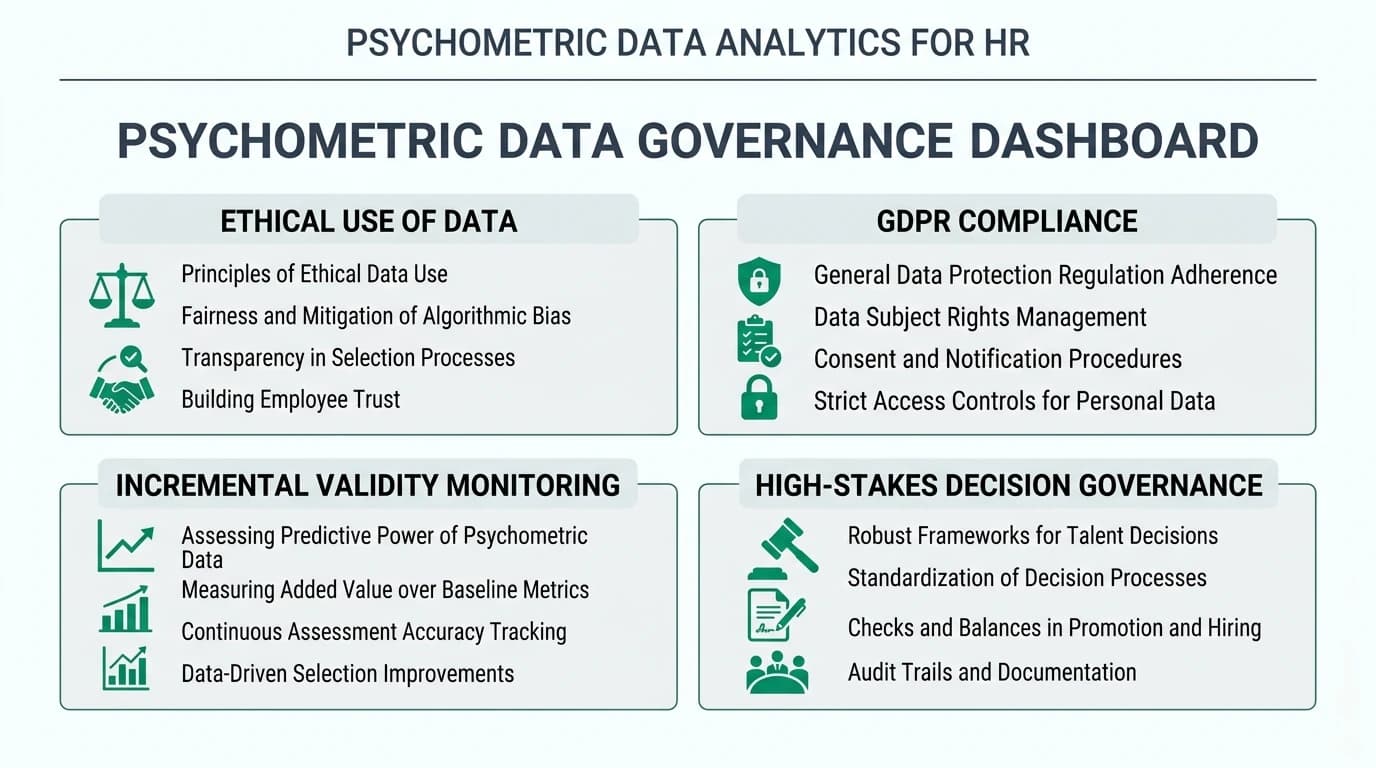
Quick answer
What is responsible use of psychometric data in HR?
Responsible use means ensuring fair collection, transparency on purposes, enhanced GDPR protections like limited access and technical safeguards, and alignment with standards like ISO 10667 for reliable recruitment practices.
Source: Edgecumbe Consulting
Executive Summary
Psychometric data analytics can transform HR by providing insights into personality and assessment data. However, using this data responsibly is crucial to ensure fairness and compliance with regulations like GDPR. This article explores how HR can leverage dashboards, monitor incremental validity, and implement governance for high-stakes decisions.
The bottom line: Responsible use of psychometric data in HR requires a balance of ethical practices, compliance, and effective data visualization tools.
Critical Warning: Always consult legal experts for GDPR compliance and ensure psychometrics complement other methods for decision-making.
What is Psychometric Data Analytics in HR?
Psychometric data analytics involves using personality assessments and test results to make informed HR decisions. It helps in:
- Objective Evaluation: Provides data on strengths and weaknesses.
- Bias Reduction: Minimizes subjective judgments.
- Performance Prediction: Enhances accuracy when combined with other methods.
| Method | Pros | Cons | Use Case |
|---|---|---|---|
| Psychometrics | Objective data | Costly training | Recruitment, development |
| Interviews | Quick | Subjective | Initial candidate screening |
How to Use Psychometric Data Responsibly?
Responsible use involves ethical considerations and compliance with standards. Key practices include:
- Transparency: Clearly explain the purpose of data collection.
- Consent: Obtain explicit consent from individuals.
- Access Control: Limit data access to authorized personnel only.
| Requirement | Description | Source |
|---|---|---|
| Transparency | Explain use and purpose of data | [1] |
| Access Limits | Restrict to authorized personnel | [1] |
| Safeguards | Implement technical measures | [1] |
What are Dashboards in Psychometric Analytics?
Dashboards visualize psychometric data, making it easier to interpret and act upon. They offer:
- Real-time Insights: Quick access to data trends.
- Custom Reports: Tailored views for specific needs.
- Performance Tracking: Monitor employee progress and fit.
| Feature | Benefit |
|---|---|
| Real-time Insights | Immediate data access |
| Custom Reports | Tailored information for stakeholders |
| Performance Tracking | Ongoing monitoring of employee fit |
What is Incremental Validity Monitoring?
Incremental validity refers to the added predictive value of psychometric tests over traditional methods. Monitoring involves:
- Regular Evaluation: Assessing test effectiveness.
- Comparative Analysis: Comparing with other assessment methods.
- Outcome Tracking: Measuring impact on performance.
| Aspect | Benefit | Risk |
|---|---|---|
| Ethics | Trust building | Misinterpretation |
| Analytics | Improved prediction | Privacy breaches |
How to Implement Governance for High-Stakes Decisions?
Governance ensures decisions like hiring and promotions are fair and defensible. Steps include:
- Framework Development: Establish guidelines aligned with ISO standards.
- Bias Monitoring: Regularly check for biases in data interpretation.
- Decision Review: Implement a review process for high-stakes decisions.
| Decision Type | Governance Check | Tool |
|---|---|---|
| Hiring | ISO alignment | Psychometric tools |
| Promotion | Incremental validity | Performance analytics |
Why is GDPR Compliance Important in Psychometric Data?
GDPR compliance is crucial as psychometric data is considered special category data. Compliance steps include:
- Explicit Consent: Obtain clear permission from individuals.
- Data Security: Use technical safeguards to protect data.
- Access Restrictions: Limit who can view and handle data.
| GDPR Requirement | Description |
|---|---|
| Explicit Consent | Clear permission from individuals |
| Data Security | Technical safeguards |
| Access Restrictions | Limited access to authorized personnel |
How Can Psychometrics Improve Employee Retention?
Psychometric data helps tailor retention strategies by:
- Job Fit Analysis: Matching employees to suitable roles.
- Motivational Insights: Understanding what drives employees.
- Reward Customization: Offering personalized incentives.
| Trait | Reward Example | Outcome |
|---|---|---|
| Money-driven | Bonus | Increased motivation |
| Knowledge seeker | Workshop | Enhanced engagement |
Action checklist
- Ensure transparency and consent in data collection.
- Use dashboards for effective data visualization.
- Regularly monitor incremental validity.
- Implement governance frameworks for high-stakes decisions.
FAQ
What are the ethical implications of psychometric tests in recruitment?
How does GDPR apply to psychometric data in HR?
What is incremental validity in psychometric assessments?
How can HR build dashboards for personality data analytics?
What training do HR professionals need for psychometrics?
How do psychometrics improve employee retention?
What governance frameworks exist for high-stakes HR decisions?
Notes
Primary Sources
| Source | Type | URL |
|---|---|---|
| Edgecumbe Consulting | Industry (GDPR Guide) | edgecumbe.co.uk |
| Psico-Smart Blogs | Industry/Peer-ref (HR Journals) | blogs.psico-smart.com |
Conclusion
Psychometric data analytics offers HR a powerful tool for making informed, fair, and defensible decisions. By implementing ethical practices, using dashboards, and ensuring compliance, HR can maximize the benefits of psychometric assessments.