career
Personality Teacher Effectiveness Big Five
Practical guide to understand and apply Personality Teacher Effectiveness Big Five.
md
title: "Personality and Teacher Effectiveness: Big Five Traits in Education" description: "Explore how the Big Five personality traits influence teacher effectiveness, classroom management, student engagement, burnout, and job satisfaction." slug: "personality-teacher-effectiveness-big-five" category: "career" keywords: ["Teacher personality traits", "Big Five traits teacher effectiveness", "Conscientiousness teacher burnout", "Extraversion student engagement teachers", "Teacher neuroticism job satisfaction"] author: "Editorial Team" datePublished: "2026-03-26" lastUpdated: "2026-03-26" featured: true images:
- url: "/images/guides/personality-teacher-effectiveness-big-five.webp" alt: "A diverse group of teachers engaging with students in a classroom, illustrating the impact of personality traits on teaching." caption: "Personality traits influence various aspects of teaching effectiveness, from classroom management to job satisfaction." relatedGuides:
- "personality-tests-education-teachers-guide"
- "personality-academic-performance-student-success"
- "personality-burnout-prevention-big-five"
Quick answer
Which Big Five traits predict teacher effectiveness?
Conscientiousness, extraversion, openness, and emotional stability are linked to better teacher effectiveness.
Source: PMC (NIH)
Executive Summary
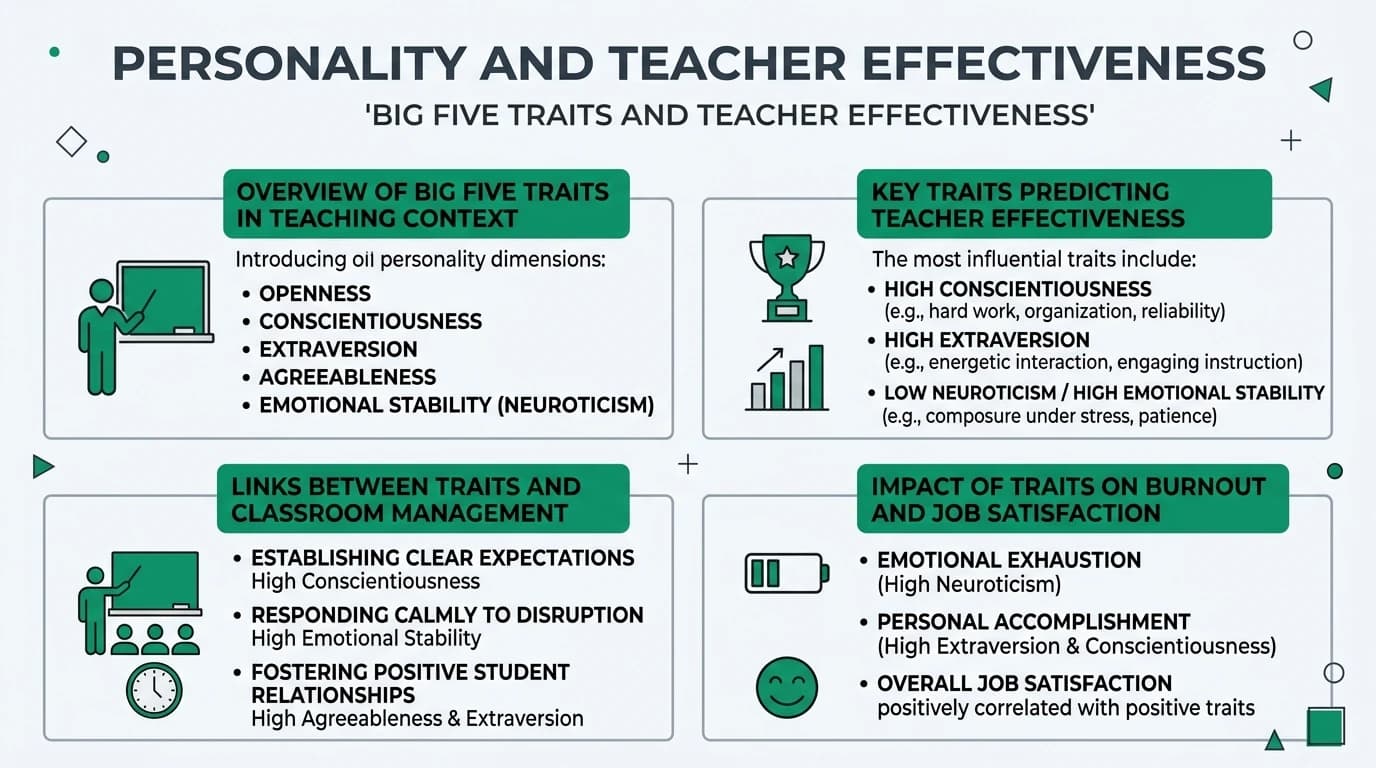
Understanding how personality impacts teaching can help improve educational outcomes. The Big Five traits—openness, conscientiousness, extraversion, agreeableness, and neuroticism—play a significant role in teacher effectiveness. Research shows that conscientiousness and extraversion are particularly important for positive teaching evaluations and reducing burnout.
The bottom line: Personality traits can guide hiring and training practices to boost teacher effectiveness and satisfaction.
Critical: While personality traits are influential, they are not the sole predictors of teaching success. Context and individual differences matter.
What are the Big Five Personality Traits?
The Big Five personality traits offer a framework to understand human behavior. Here's a quick look at each trait:
- Openness: Creativity and willingness to try new things.
- Conscientiousness: Organization and dependability.
- Extraversion: Sociability and energy.
- Agreeableness: Cooperation and kindness.
- Neuroticism: Emotional instability and anxiety.
| Trait | Description |
|---|---|
| Openness | Creativity, open to new experiences |
| Conscientiousness | Organization, reliability |
| Extraversion | Sociability, enthusiasm |
| Agreeableness | Cooperation, empathy |
| Neuroticism | Emotional instability, anxiety |
How Do These Traits Affect Teacher Effectiveness?
Certain traits are linked to better teaching outcomes:
- Conscientiousness: Strongly predicts teaching effectiveness.
- Extraversion: Positively impacts classroom engagement.
- Openness: Encourages innovative teaching methods.
- Emotional Stability: Reduces burnout and enhances effectiveness.
| Trait | Effectiveness Link | Burnout Link |
|---|---|---|
| Conscientiousness | High | Low |
| Extraversion | High | Low |
| Openness | Moderate | - |
| Emotional Stability | High | Low |
What Role Does Personality Play in Classroom Management?
Effective classroom management often relies on personality:
- Extraversion: Helps in maintaining lively and engaging classrooms.
- Conscientiousness: Leads to well-organized and disciplined environments.
| Trait | Classroom Management Impact |
|---|---|
| Extraversion | Engaging, lively |
| Conscientiousness | Disciplined, organized |
How Do Traits Influence Student Engagement?
Traits like openness and extraversion can significantly boost student engagement:
- Openness: Encourages creativity in lesson plans.
- Extraversion: Facilitates interactive and dynamic classes.
| Trait | Student Engagement Role |
|---|---|
| Openness | Creative, innovative |
| Extraversion | Interactive, dynamic |
What Predicts Teacher Burnout?
Burnout is a critical issue in teaching, and certain traits can buffer against it:
- Emotional Stability: Lowers burnout risk.
- Extraversion and Conscientiousness: Both help in maintaining enthusiasm and organization.
| Trait | Burnout Buffer |
|---|---|
| Emotional Stability | High |
| Extraversion | Moderate |
| Conscientiousness | High |
How Do Traits Affect Job Satisfaction?
Job satisfaction is crucial for teacher retention:
- Extraversion and Conscientiousness: Positively correlated with job satisfaction.
- Neuroticism: Negatively impacts satisfaction and increases intent to leave.
| Trait | Job Satisfaction Correlation |
|---|---|
| Extraversion | Positive |
| Conscientiousness | Positive |
| Neuroticism | Negative |
Are Certain Traits More Common in Teachers?
Research shows some traits are more prevalent among teachers:
- Agreeableness: Most common trait.
- Conscientiousness: Also highly prevalent.
| Trait | Prevalence Rank |
|---|---|
| Agreeableness | Highest |
| Conscientiousness | High |
| Openness | Moderate |
| Extraversion | Moderate |
| Neuroticism | Lowest |
Action checklist
- Assess personality traits during teacher hiring.
- Provide training to enhance desirable traits.
- Develop support systems to reduce burnout.
FAQ
Which Big Five trait is most important for teacher effectiveness?
Conscientiousness is often seen as the most important for effectiveness, linked to better organization and reliability. 1
How does extraversion affect classroom management?
Extraversion helps create engaging and interactive classroom environments, promoting better management. 2
Does neuroticism predict teacher burnout?
Yes, neuroticism is linked to higher burnout rates and lower job satisfaction. 3
Can personality traits improve student engagement?
Traits like openness and extraversion can enhance student engagement by fostering creativity and interaction. 2
What Big Five traits lead to higher job satisfaction in teachers?
Extraversion and conscientiousness are positively linked to higher job satisfaction. 3
How do conscientious teachers handle burnout?
They often use their organizational skills to manage stress and workload effectively. 2
Is agreeableness linked to teacher performance evaluations?
While agreeableness is common, it does not strongly predict performance evaluations. 4
Notes
Primary Sources
| Source | Type | URL |
|---|---|---|
| PMC (NIH) | Peer-reviewed meta-analysis | Link |
| ERIC (U.S. Dept. of Education) | Peer-reviewed | Link |
Conclusion
Personality traits significantly affect various aspects of teaching, from effectiveness and classroom management to burnout and job satisfaction. By understanding these traits, educators and policymakers can improve hiring practices and support systems.