career
Personality and Startup Founding: Big Five Traits in Entrepreneurs
Explore how the Big Five personality traits influence entrepreneurship, focusing on risk tolerance, networking, ambiguity tolerance, and venture stress.
Quick answer
What are the Big Five personality traits of successful entrepreneurs?
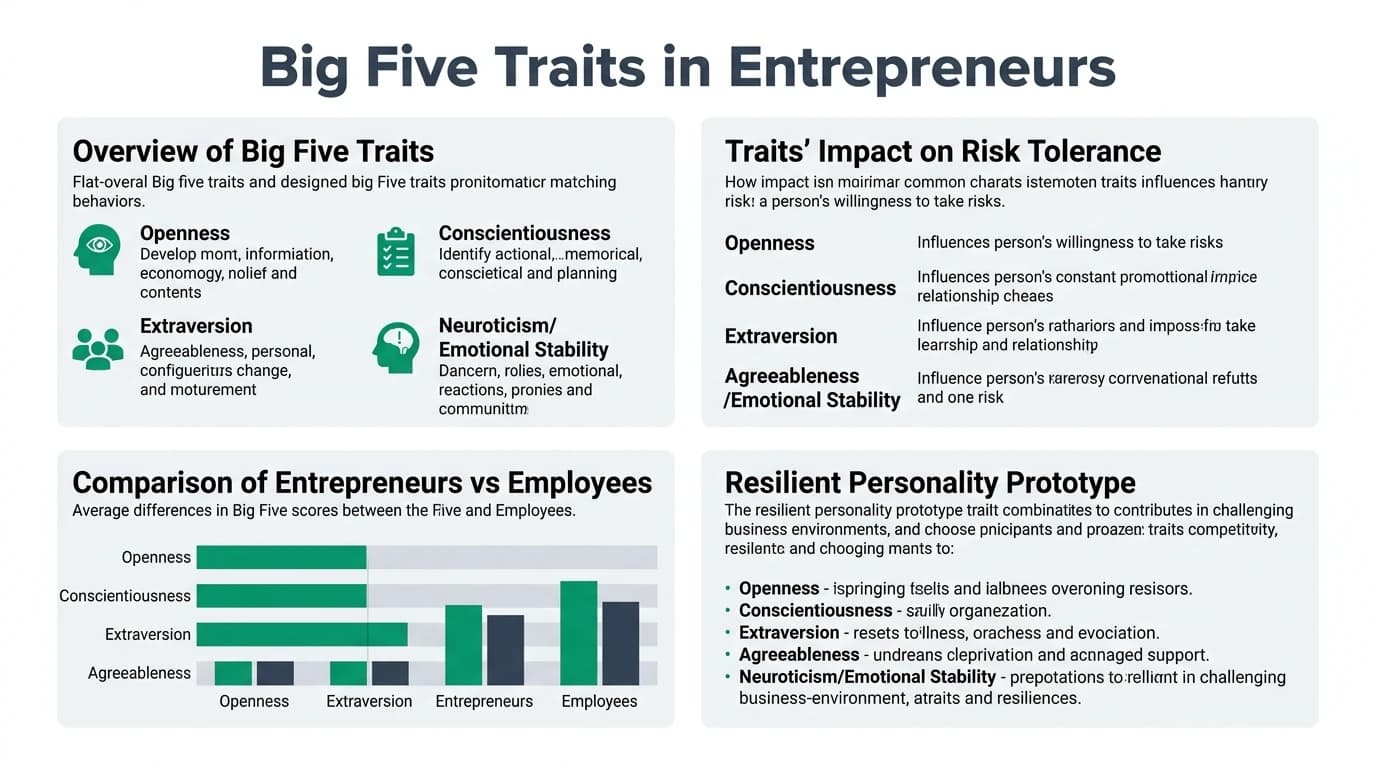
Successful entrepreneurs often score high on Openness to experience, Conscientiousness, and Extraversion, while scoring low on Neuroticism. Agreeableness can vary.
Source: PNAS
Executive Summary
Understanding how personality influences entrepreneurship can help aspiring founders and investors make informed decisions. The Big Five personality traits—Openness, Conscientiousness, Extraversion, Agreeableness, and Neuroticism—play a significant role in entrepreneurial success.
The bottom line: High Openness and Extraversion, along with low Neuroticism, are key traits for entrepreneurs.
Critical Warning: Personality traits are not destiny. They offer insights but do not guarantee success.
What Are the Big Five Personality Traits?
The Big Five personality traits provide a framework to understand human behavior. Here's a quick look:
- Openness: Creativity and curiosity.
- Conscientiousness: Organization and dependability.
- Extraversion: Sociability and assertiveness.
- Agreeableness: Compassion and cooperation.
- Neuroticism: Emotional stability and stress response.
| Trait | Description | Entrepreneurial Impact |
|---|---|---|
| Openness | Creativity and curiosity | Fuels innovation and adaptability |
| Conscientiousness | Organization and dependability | Enhances goal-setting and perseverance |
| Extraversion | Sociability and assertiveness | Aids networking and leadership |
| Agreeableness | Compassion and cooperation | Mixed; can hinder tough decision-making |
| Neuroticism | Emotional stability | Lower levels reduce stress vulnerability |
How Do Big Five Traits Predict Risk Tolerance in Entrepreneurs?
Risk tolerance is crucial in entrepreneurship. Here's how the Big Five traits influence it:
- Openness: Encourages risk-taking due to curiosity.
- Extraversion: Supports bold decision-making.
- Neuroticism: Low levels enhance risk tolerance.
| Trait | Effect on Risk Tolerance | Study Sample | Predictive Strength |
|---|---|---|---|
| Openness | Positive | Entrepreneurs in emerging markets | Strong |
| Extraversion | Positive | Various entrepreneurial settings | Moderate |
| Neuroticism | Negative | Diverse business environments | Strong |
Why Are Openness and Extraversion Important for Entrepreneurs?
Openness and Extraversion are particularly significant for entrepreneurs:
- Openness: Drives innovation and adaptability, essential for startups.
- Extraversion: Facilitates networking, crucial for business growth.
Key Takeaways:
- Openness: Leads to creative solutions.
- Extraversion: Enhances social capital and influence.
What Role Does Neuroticism Play in Venture Failure?
Neuroticism can negatively impact entrepreneurship:
- Effect: Increases stress and anxiety.
- Process: Leads to poor decision-making under pressure.
- Caveat: Some stress can drive performance if managed well.
Important: Entrepreneurs with high Neuroticism should focus on stress management techniques.
How Does Conscientiousness Affect Entrepreneurial Intention?
Conscientiousness boosts entrepreneurial intention:
- Goal Orientation: Encourages setting and achieving business goals.
- Perseverance: Helps overcome obstacles.
| Trait | Direct Effect | Risk Aversion Mediation | p-value |
|---|---|---|---|
| Conscientiousness | Positive | Partial | < 0.05 |
| Neuroticism | Negative | Full | < 0.05 |
| Openness | Positive | None | < 0.05 |
What Is Tolerance for Ambiguity in Entrepreneurs?
Tolerance for ambiguity is the ability to thrive in uncertain situations:
- Openness: Linked to comfort with new experiences.
- Locus of Control: Belief in controlling one's destiny aids ambiguity tolerance.
Key Takeaways:
- High Openness: Correlates with better ambiguity management.
- Internal Locus of Control: Enhances adaptability.
How Do Personality Traits Influence Stress in Startups?
Managing stress is vital for entrepreneurs:
- Low Neuroticism: Acts as a buffer against stress.
- High Extraversion: Provides social support networks.
| Trait | Stress Impact | Coping Strategy |
|---|---|---|
| Neuroticism | Increases | Stress management |
| Extraversion | Reduces | Social engagement |
FAQ
Which Big Five trait is most linked to entrepreneurial risk-taking?
Do entrepreneurs have higher openness to experience?
How does extraversion help in startup networking?
What role does neuroticism play in venture failure?
Can Big Five tests predict startup success?
How does conscientiousness affect entrepreneurial intention?
What is tolerance for ambiguity in entrepreneurs?
Notes
Primary Sources
| Source | Type | URL |
|---|---|---|
| PNAS | Peer-reviewed | Link |
| TPM | Peer-reviewed | Link |
| Wiley | Peer-reviewed | Link |
| PMC/NCBI | Peer-reviewed | Link |
| US Chamber of Commerce | Industry | Link |
| Harvard Business School | Academic review | Link |
Conclusion
Understanding the Big Five traits can help predict entrepreneurial tendencies and challenges. While these traits provide valuable insights, they are not definitive predictors of success.