relationships
Personality and Romantic Jealousy: Big Five Traits, Attachment, Insecurity, and Relationship Research
Explore how personality traits, attachment styles, and relationship dynamics influence romantic jealousy.
Quick answer
How do personality traits affect romantic jealousy?
Personality traits like neuroticism, agreeableness, and openness influence romantic jealousy, with relationship dynamics playing a significant role.
Executive Summary
Romantic jealousy is influenced by personality traits and relationship dynamics. The Big Five traits—especially neuroticism, agreeableness, and openness—play a key role. However, relationship-specific factors like partner behavior and attachment styles often have a greater impact.
The bottom line: Jealousy isn't just about who you are; it's about the relationship you're in.
Critical Warning: Persistent, controlling jealousy may require professional support.
What is Romantic Jealousy?
Romantic jealousy involves feelings of insecurity and fear of losing a partner's affection. It's a complex emotion influenced by both personality and relationship dynamics.
Key Points
- Emotional Experience: Insecurity, fear, and anxiety.
- Triggers: Perceived threats, past experiences, personality traits.
- Impact: Can lead to relationship conflict if unmanaged.
| Aspect | Description |
|---|---|
| Emotional | Involves fear and insecurity |
| Cognitive | Thoughts about partner's fidelity |
| Behavioral | Actions taken to secure relationship |
How Do the Big Five Traits Affect Jealousy?
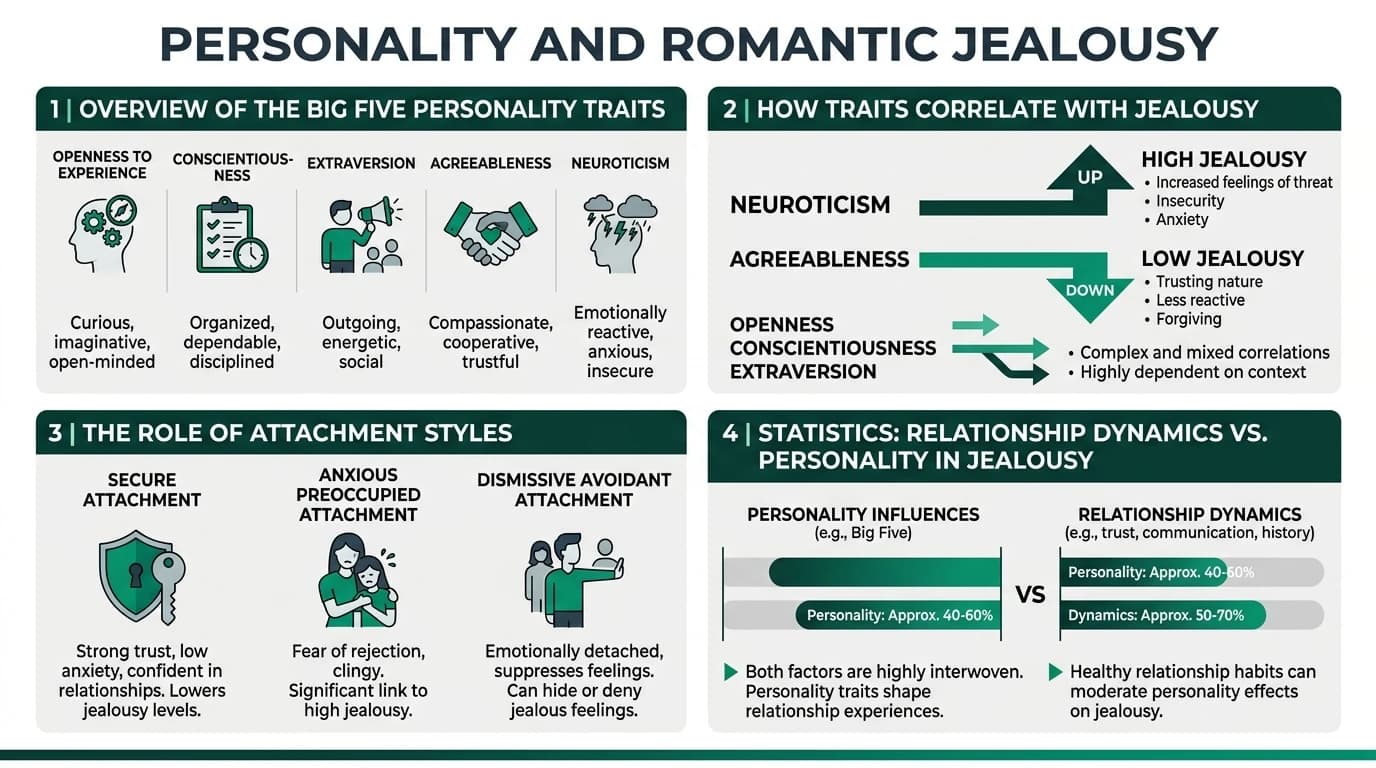
The Big Five personality traits—neuroticism, agreeableness, openness, conscientiousness, and extraversion—affect how people experience jealousy.
Trait Effects
- Neuroticism: Higher levels predict more jealousy.
- Agreeableness: Lower levels predict more jealousy.
- Openness: Lower levels predict more jealousy.
| Trait | Jealousy Correlation | Explanation |
|---|---|---|
| Neuroticism | Positive | Emotional instability |
| Agreeableness | Negative | Empathy and trust |
| Openness | Negative | Flexibility and perspective |
What Role Does Attachment Play?
Attachment styles, formed early in life, influence how individuals experience jealousy in relationships.
Attachment Styles
- Secure: Low jealousy; trustful.
- Anxious: High jealousy; fear of abandonment.
- Avoidant: Variable jealousy; emotional distance.
| Style | Jealousy Level | Relationship Impact |
|---|---|---|
| Secure | Low | Stable and trusting |
| Anxious | High | Fearful and vigilant |
| Avoidant | Variable | Emotionally distant |
Are Relationship Dynamics More Important?
Research shows that relationship dynamics often have a greater impact on jealousy than personality traits alone.
Dynamics Impact
- Partner Behavior: Infidelity history increases jealousy.
- Relationship Quality: Poor communication and trust issues exacerbate jealousy.
| Factor | Percentage Impact | Focus Area |
|---|---|---|
| Personality | 28.2% | Trait management |
| Relationship Dynamics | 39.8% | Communication and trust |
How Does Insecurity Influence Jealousy?
Insecurity, often linked to attachment anxiety and neuroticism, fuels jealousy.
Insecurity Factors
- Attachment Anxiety: Fear of rejection.
- Low Self-Esteem: Doubts about self-worth.
- Past Experiences: Previous betrayals.
| Insecurity Source | Jealousy Trigger | Management Strategy |
|---|---|---|
| Attachment Anxiety | Fear of abandonment | Therapy and self-awareness |
| Low Self-Esteem | Self-doubt | Confidence-building activities |
| Past Experiences | Betrayal history | Open communication |
Can Jealousy Change Over Time?
Jealousy can fluctuate based on relationship quality and personal growth.
Change Factors
- Personal Development: Increases in openness and agreeableness reduce jealousy.
- Relationship Improvement: Enhanced communication and trust-building.
| Change Factor | Effect on Jealousy | Example |
|---|---|---|
| Personal Growth | Decreases | Developing empathy |
| Improved Dynamics | Decreases | Building trust |
How to Manage Jealousy in Relationships?
Managing jealousy involves understanding its roots and implementing strategies to address it.
Management Strategies
- Self-Reflection: Identify triggers and patterns.
- Communication: Openly discuss feelings with your partner.
- Professional Help: Consider therapy for persistent issues.
| Strategy | Benefit | Example |
|---|---|---|
| Self-Reflection | Awareness | Journaling thoughts |
| Communication | Trust-building | Regular check-ins |
| Therapy | Professional support | Couples counseling |
Action checklist
- Identify personal jealousy triggers.
- Discuss feelings openly with your partner.
- Seek professional help if needed.
FAQ
What personality traits make someone more jealous?
Does attachment style affect jealousy?
Can jealousy change in a relationship?
Is jealousy a sign of insecurity?
How does past infidelity affect jealousy?
Do men and women experience jealousy differently?
Can you reduce jealousy through personality change?
Notes
Primary Sources
| Source | Type | URL |
|---|---|---|
| Richter et al., Frontiers in Psychology | Peer-reviewed research | Link |
| Psychology Today | Expert-reviewed | Link |
| PsyPost | Science journalism | Link |
Conclusion
Understanding the interplay between personality traits, attachment styles, and relationship dynamics is key to managing romantic jealousy. By focusing on both personal growth and relationship quality, individuals can reduce jealousy and improve relationship satisfaction.