relationships
Personality Infidelity Big Five
Practical guide to understand and apply Personality Infidelity Big Five.
md
title: "Personality and Infidelity: Big Five Traits, Sociosexuality Research, Betrayal Risk Factors, and Relationship Repair Evidence" description: "Explore how personality traits like the Big Five influence infidelity risk, sociosexuality's role, and relationship repair strategies." slug: "personality-infidelity-big-five" category: "relationships" keywords: ["Big Five personality infidelity", "Personality traits cheaters", "Sociosexuality and cheating", "Neuroticism infidelity risk", "Low conscientiousness cheating"] author: "Editorial Team" datePublished: "2026-03-26" lastUpdated: "2026-03-26" featured: true images:
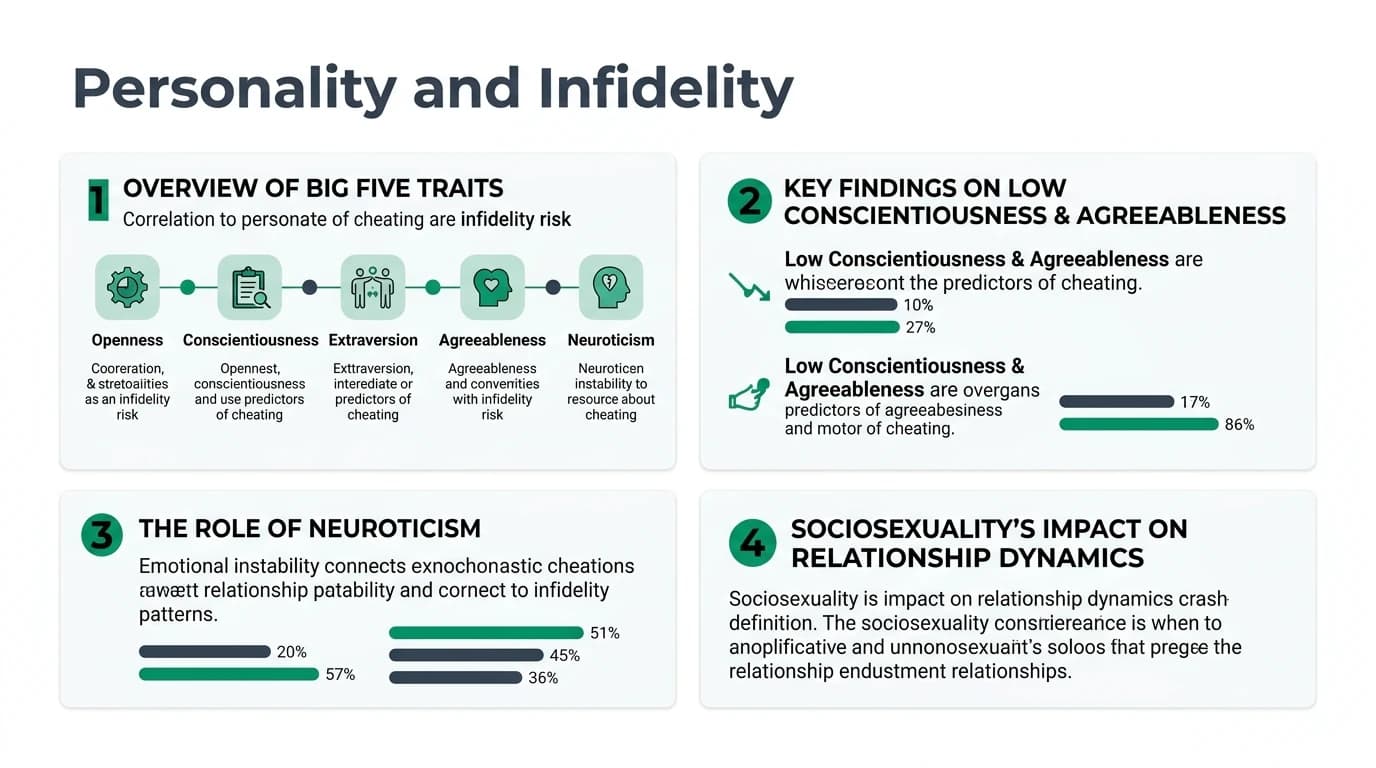
- url: "/images/guides/personality-infidelity-big-five.webp" alt: "A visual representation of the Big Five personality traits and their correlation with infidelity risk, including sociosexuality and relationship dynamics." caption: "Understanding personality traits can provide insights into infidelity risk and relationship dynamics." relatedGuides:
- "personality-jealousy-insecurity-romantic-big-five"
- "couple-compatibility-big-five-science"
- "personality-attachment-styles-big-five"
Quick answer
Which Big Five traits predict infidelity?
Low Conscientiousness, low Agreeableness, and high Neuroticism are most linked to infidelity.
Source: Psychology Today
Executive Summary
Ever wondered how personality traits might influence the likelihood of infidelity? Research shows that certain Big Five traits, like low Conscientiousness and Agreeableness, are linked to higher cheating risks. Sociosexuality, or one's openness to casual sex, also plays a role.
The bottom line: Understanding these traits can help in recognizing potential risks and working towards healthier relationships.
Critical Warning: Self-reports and correlational data suggest trends, not certainties. Consult professionals for personal advice.
What Are the Big Five Personality Traits?
The Big Five traits—Openness, Conscientiousness, Extraversion, Agreeableness, and Neuroticism—shape how we interact with the world.
- Openness: Creativity and curiosity.
- Conscientiousness: Organization and dependability.
- Extraversion: Sociability and assertiveness.
- Agreeableness: Compassion and cooperation.
- Neuroticism: Emotional instability and moodiness.
| Trait | High Risk of Infidelity | Key Facet |
|---|---|---|
| Openness | Moderate | Creativity |
| Conscientiousness | High | Duty |
| Extraversion | Moderate | Ascendance |
| Agreeableness | High | Trust |
| Neuroticism | High | Emotional Instability |
How Do Conscientiousness and Fidelity Relate?
Low Conscientiousness is a strong predictor of infidelity. People low in this trait may struggle with commitment and self-control.
- Effect: Increased risk of cheating.
- Process: Lack of planning and impulsivity.
- Caveat: Not everyone low in Conscientiousness will cheat.
Why Does Agreeableness Matter?
Low Agreeableness is linked to cheating due to a lack of empathy and cooperation.
- Effect: Higher infidelity likelihood.
- Process: Difficulty in maintaining harmonious relationships.
- Gender Differences: Some studies suggest men may show more infidelity when low in Agreeableness.
What Role Does Neuroticism Play?
High Neuroticism involves emotional instability, which can lead to infidelity through stress and dissatisfaction.
- Early Marriage Risk: Higher infidelity likelihood in the first few years.
- Stress Pathways: Emotional volatility can strain relationships.
Extraversion and Openness: What's the Connection?
Extraversion and Openness can increase infidelity risk, especially with traits like Ascendance (boldness) and Excitement-Seeking.
| Trait | Facet | Infidelity Risk |
|---|---|---|
| Extraversion | Ascendance | High |
| Openness | Excitement-Seeking | Moderate |
How Does Sociosexuality Influence Cheating?
Sociosexuality refers to one's willingness to engage in casual sex. Those with unrestricted sociosexuality are more likely to cheat.
- Overlap: Often linked with low Conscientiousness and high Openness.
- Betrayal Risk: Increased likelihood of infidelity.
What Are Partner Trait Mismatches?
Cheaters often report lower partner traits in Openness, Extraversion, and Agreeableness, indicating mismatches.
- Risk: Higher infidelity odds with mismatched traits.
- Example: A highly neurotic partner may increase stress and infidelity risk.
What Are Other Betrayal Risk Factors?
Beyond personality, factors like relationship dissatisfaction and external temptations contribute to infidelity.
- Dark Triad Traits: Narcissism, Machiavellianism, and Psychopathy can exacerbate risks.
- Protective Traits: High Agreeableness and Conscientiousness can guard against cheating.
Is There Evidence for Relationship Repair?
While limited, some evidence suggests that aligning traits post-infidelity can aid in repair.
- Forgiveness: More likely with high Agreeableness.
- Trait Alignment: Couples therapy focusing on trait understanding.
How Are These Traits Measured?
Personality assessments, like the Big Five Inventory, help predict infidelity risk.
- Self-Reports: Often used in studies but have limitations.
- MIDUS Study: Provides comprehensive data on personality and infidelity.
Action checklist
- Identify your key personality traits using a Big Five test.
- Discuss trait mismatches with your partner.
- Consider therapy if infidelity has occurred.
FAQ
Which Big Five trait is most linked to infidelity?
Does high extraversion mean someone will cheat?
How does low conscientiousness lead to cheating?
Is neuroticism a predictor of relationship betrayal?
What role does sociosexuality play in infidelity?
Can personality tests predict cheating risk?
Do agreeable people cheat less?
Notes
Primary Sources
| Source | Type | URL |
|---|---|---|
| University of Wisconsin (MIDUS) | Peer-reviewed PDF | https://www.midus.wisc.edu/findings/pdfs/2124.pdf |
| Psychology Today | Expert summary | https://www.psychologytoday.com/us/blog/experimentations/202012/predicting-infidelity-precise-personality-sub-traits |
| Wiley Online Library | Peer-reviewed journal | https://onlinelibrary.wiley.com/doi/abs/10.1111/pere.12315 |
Conclusion
Understanding how personality traits influence infidelity can help in recognizing potential risks and fostering healthier relationships. While traits like low Conscientiousness and Agreeableness increase risk, awareness and proactive communication can mitigate these factors.