personality-tests
Personality and Humor: What Makes People Laugh
Explore how personality traits influence humor preferences. Discover the Big Five traits and their connection to different comedy styles.
Quick answer
How do personality traits affect humor preferences?
Personality traits, especially the Big Five, influence humor styles. Extraversion is linked to affiliative humor, while neuroticism often connects to self-defeating humor.
Source: Psychology Today
Executive Summary
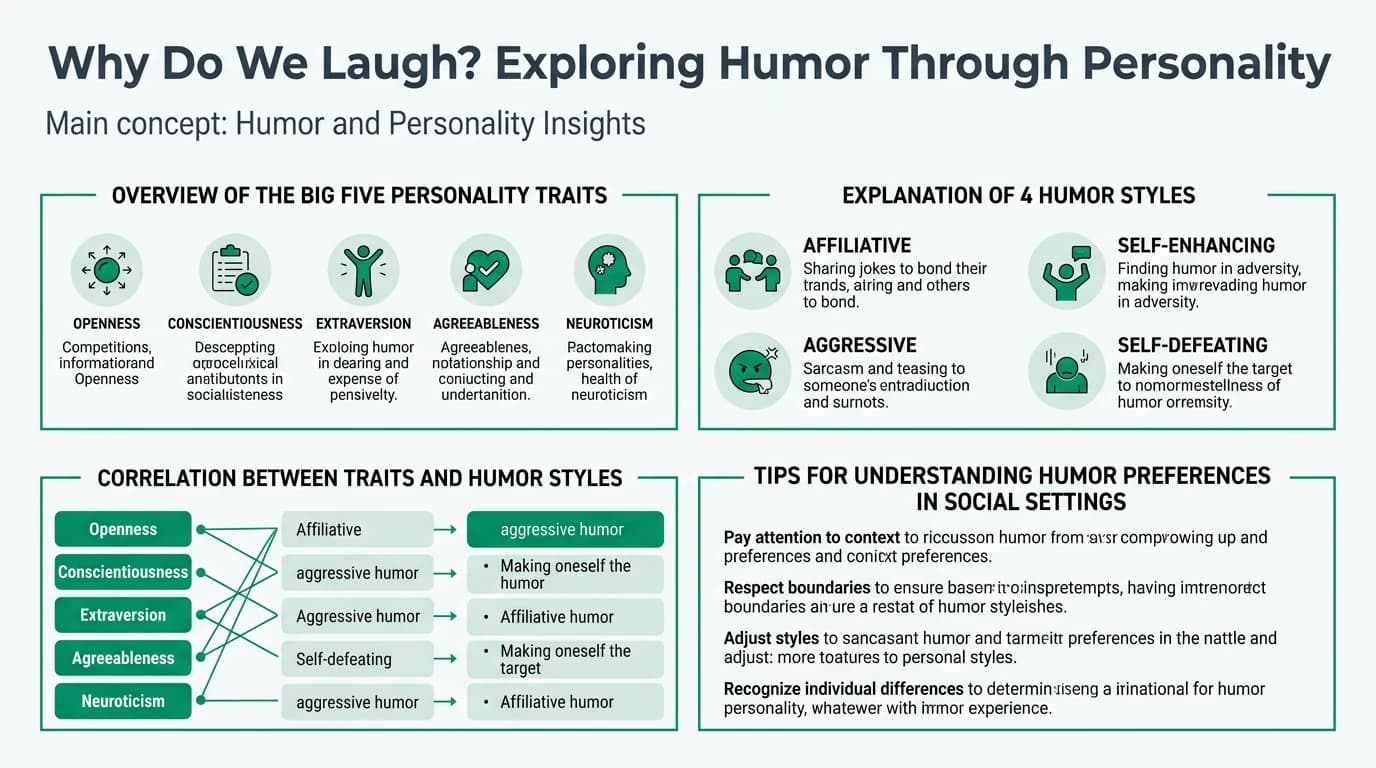
Ever wondered why some jokes leave you in stitches while others fall flat? It might be your personality. The Big Five personality traits—Extraversion, Agreeableness, Conscientiousness, Neuroticism, and Openness—play a big role in what makes us laugh.
The bottom line: Understanding your humor style can improve relationships and boost well-being.
Critical Warning: Humor preferences are personal; avoid assuming everyone shares your taste.
What Are the Big Five Personality Traits?
The Big Five are key traits that shape how we interact with the world:
- Extraversion: Outgoing and energetic.
- Agreeableness: Cooperative and compassionate.
- Conscientiousness: Organized and dependable.
- Neuroticism: Sensitive and nervous.
- Openness: Curious and inventive.
These traits influence our humor preferences in fascinating ways.
| Trait | Description |
|---|---|
| Extraversion | Sociable, enjoys group activities |
| Agreeableness | Friendly, avoids conflict |
| Conscientiousness | Detail-oriented, prefers structure |
| Neuroticism | Prone to stress, mood swings |
| Openness | Embraces new experiences |
How Do Humor Styles Differ?
Humor styles are ways we express and enjoy humor. They include:
- Affiliative: Sharing jokes to bond.
- Self-enhancing: Using humor to cope.
- Aggressive: Sarcasm at others' expense.
- Self-defeating: Mocking oneself for approval.
Healthy styles (affiliative, self-enhancing) promote well-being, while malign styles (aggressive, self-defeating) can harm relationships.
| Humor Style | Positive Traits | Negative Traits |
|---|---|---|
| Affiliative | Extraversion | Low Neuroticism |
| Self-enhancing | Openness | Low Neuroticism |
| Aggressive | Low Agreeableness | High Neuroticism |
| Self-defeating | High Neuroticism | Low Conscientiousness |
Why Do Extraverts Love Affiliative Humor?
Extraverts thrive on social interaction and often use humor to connect with others. They enjoy:
- Group laughter: Jokes that everyone can enjoy.
- Positive vibes: Humor that uplifts and unites.
Effect: Builds social bonds.
Process: Encourages group participation.
Caveat: Can overwhelm introverts.
How Does Agreeableness Affect Humor?
Agreeable people prefer humor that fosters harmony. They typically avoid:
- Aggressive jokes: Which can hurt feelings.
- Dark humor: That might offend.
Effect: Maintains peace.
Process: Uses gentle teasing.
Caveat: May avoid confronting issues.
What About Neuroticism and Self-Defeating Humor?
Those high in neuroticism often use self-defeating humor as a defense mechanism. They may:
- Mock themselves: To preempt criticism.
- Seek reassurance: Through laughter.
Effect: Temporary relief.
Process: Self-deprecation.
Caveat: Can lower self-esteem.
Do Open People Enjoy Absurd Humor?
Openness is linked to a love for novelty and creativity, making absurd or surreal humor appealing. They enjoy:
- Wordplay: Clever puns and jokes.
- Absurdity: Unexpected twists.
Effect: Stimulates creativity.
Process: Embraces the unconventional.
Caveat: Not everyone appreciates abstract humor.
How Do Conscientious Individuals Respond to Humor?
Conscientious people often prefer structured, clean humor. They appreciate:
- Orderly jokes: With clear punchlines.
- Clean comedy: Avoids offensive content.
Effect: Consistent enjoyment.
Process: Prefers predictability.
Caveat: May find edgy humor off-putting.
Key Takeaways
- Extraverts: Thrive on affiliative humor.
- Agreeable: Avoid aggressive jokes.
- Neurotic: Use self-defeating humor.
- Open: Enjoy wordplay and absurdity.
- Conscientious: Prefer clean, structured jokes.
Action checklist
- Identify your humor style.
- Consider how your personality influences your humor preferences.
- Use humor to enhance your relationships.
FAQ
What Big Five trait loves puns and wordplay?
Do introverts have a different sense of humor?
Why do agreeable people avoid dark jokes?
How does neuroticism affect laughter?
Which personality uses sarcasm most?
Can humor styles change with age?
What's the link between openness and absurd humor?
Notes
Primary Sources
| Source | Type | URL |
|---|---|---|
| PMC/Italian researchers | Peer-reviewed | Link |
| Democritus Univ. of Thrace | Peer-reviewed | Link |
| Wiley/Scandinavian J Psych | Peer-reviewed | Link |
| Psychology Today | Industry summary | Link |
| Univ. of Vienna/Portland State | Peer-reviewed | Link |
Conclusion
Understanding how personality traits influence humor can deepen self-awareness and improve social interactions. Whether you're an extravert loving group laughs or an open-minded individual enjoying absurdity, humor is a window into personality.