lifestyle
Personality and Video Gaming: Big Five Traits, Esports Performance, Motivation, and Play Style Research
Explore how the Big Five personality traits influence gaming motives, play styles, esports performance, and the risk of disordered gaming.
Quick answer
How do Big Five personality traits affect video gaming?
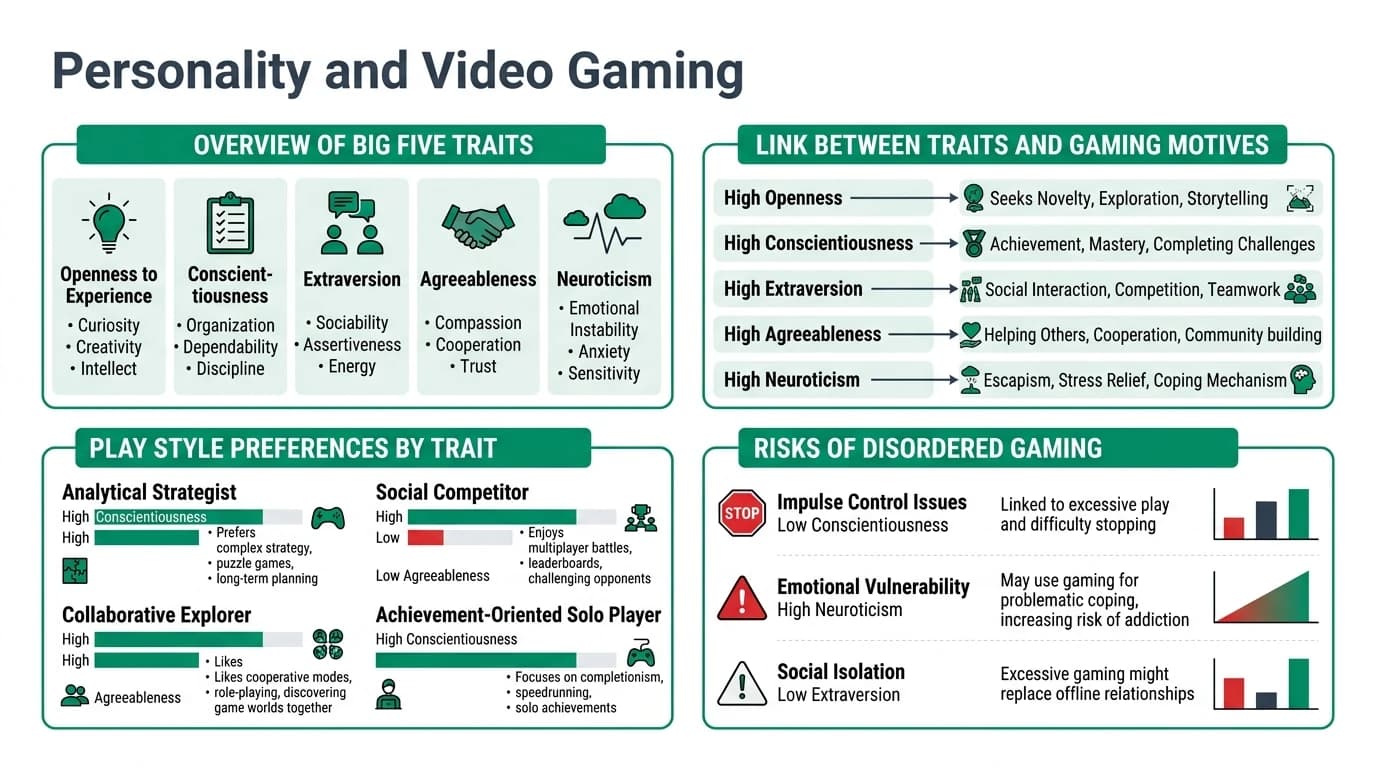
The Big Five traits—Openness, Conscientiousness, Extraversion, Agreeableness, and Neuroticism—impact gaming motives, styles, and performance. They influence time spent gaming, genre preferences, and the risk of disordered gaming through motives like coping and social interaction.
Source: Addict Behav, Epub May 1, 2024
Executive Summary
The Big Five personality traits play a significant role in how individuals engage with video games. These traits influence gaming motives, such as playing for social interaction or coping, and can affect the risk of developing disordered gaming habits. Understanding these links can help gamers, parents, and esports professionals optimize gaming experiences and manage potential risks.
The bottom line: Personality traits shape gaming behaviors and preferences. Awareness of these traits can guide healthier gaming habits.
Critical Warning: Correlations exist, but individual experiences may vary. Consult professionals for personalized advice.
What are the Big Five Personality Traits?
The Big Five personality traits are a widely accepted model in psychology used to describe human personality. Here's a quick overview:
- Openness: Curiosity and creativity.
- Conscientiousness: Discipline and organization.
- Extraversion: Sociability and enthusiasm.
- Agreeableness: Cooperation and kindness.
- Neuroticism: Emotional instability and anxiety.
Big Five vs. Gaming Outcomes
| Trait | Weekly Gaming Link | Disordered Risk |
|---|---|---|
| Openness | Positive | Low |
| Conscientiousness | Negative | Protective |
| Extraversion | Positive | Weak direct links |
| Agreeableness | Neutral | Neutral |
| Neuroticism | Positive | Higher via coping motives |
How Do Big Five Traits Link to Gaming Motives?
Personality traits influence why people play games. Here's how:
- Coping Motives: Neuroticism often leads to gaming as a coping mechanism.
- Social Interaction: Extraversion predicts playing for social reasons.
- Recreation: Openness and extraversion relate to gaming for fun and exploration.
Motives Mediation Strength
| Motive | Outcome (Hours/Disorder) | Effect Size |
|---|---|---|
| Coping | Disorder | High |
| Social | Hours | Moderate |
| Recreation | Hours | Moderate |
What Play Styles and Genre Preferences Emerge from Traits?
Different traits lead to preferences for certain game genres:
- Extraversion: Prefers sports games.
- Openness: Enjoys creative genres like RPGs.
- Neuroticism: May avoid high-stress games.
Genre Attitudes by Trait
| Genre | Key Trait | Correlation (r value) |
|---|---|---|
| Sports | Extraversion | 0.383 |
| RPG | Openness | 0.298 |
| Action | Low Neuroticism | Negative |
How Do Personality Traits Affect Esports Performance?
Personality traits can predict success in esports:
- Extraversion: Beneficial for team-based games.
- Conscientiousness: Important for strategic planning.
- Agreeableness: Enhances teamwork and communication.
Pros/Cons: High vs. Low Trait in Esports
| Trait | High Pros | High Cons | Low Pros | Low Cons |
|---|---|---|---|---|
| Extraversion | Team synergy | Overconfidence | Focused play | Social isolation |
| Conscientiousness | Strategic discipline | Rigidity | Flexibility | Lack of planning |
Are There Risks of Disordered Gaming?
Certain traits can increase the risk of disordered gaming:
- Neuroticism: High risk due to emotional coping.
- Conscientiousness: Protective against disorders.
Risk Factors Table
| Trait/Facet | Disorder Odds | Source |
|---|---|---|
| Neuroticism | High | Addict Behav, 2024[1] |
| Conscientiousness | Low | Sage Journals, 2024[3] |
Do Cultural Differences Affect Personality-Gaming Links?
Research shows minor differences across cultures:
- U.S. and Spain: Similar patterns in gaming motives.
- Argentina: Slightly higher disordered gaming risk.
Cross-National Comparisons
| Country | Key Difference |
|---|---|
| U.S. | Moderate coping motives |
| Spain | Similar to U.S. patterns |
| Argentina | Higher disordered gaming risk |
Practical Implications for Gamers
Understanding personality traits can guide better gaming habits:
- Self-awareness: Helps identify gaming motives.
- Parental monitoring: Guides healthy gaming for teens.
- Esports training: Tailors strategies based on traits.
Action checklist
- Identify your primary gaming motive.
- Match your personality traits to suitable game genres.
- Monitor gaming habits for signs of disorder.
FAQ
How do Big Five traits predict gaming addiction?
Which personality type excels in esports?
Does extraversion make you play more video games?
What gaming motives link to neuroticism?
Can personality change your play style?
How does openness affect game genre choice?
Are conscientious gamers less likely to have disorders?
Notes
Primary Sources
| Source | Type | URL |
|---|---|---|
| PubMed/Elsevier | Peer-reviewed | Link |
| Atlantis Press | Peer-reviewed | Link |
| Sage Journals | Peer-reviewed | Link |
Conclusion
Understanding the link between personality traits and gaming can enhance both enjoyment and performance while mitigating risks. By aligning gaming habits with personality insights, players can foster healthier gaming experiences.