personality-tests
Personality and Elite Sports: What Big Five Traits Champions Have
Explore the Big Five personality traits that elite athletes possess, with profiles by sport and insights from Olympians and professionals.
Quick answer
What Big Five personality traits do elite athletes have?
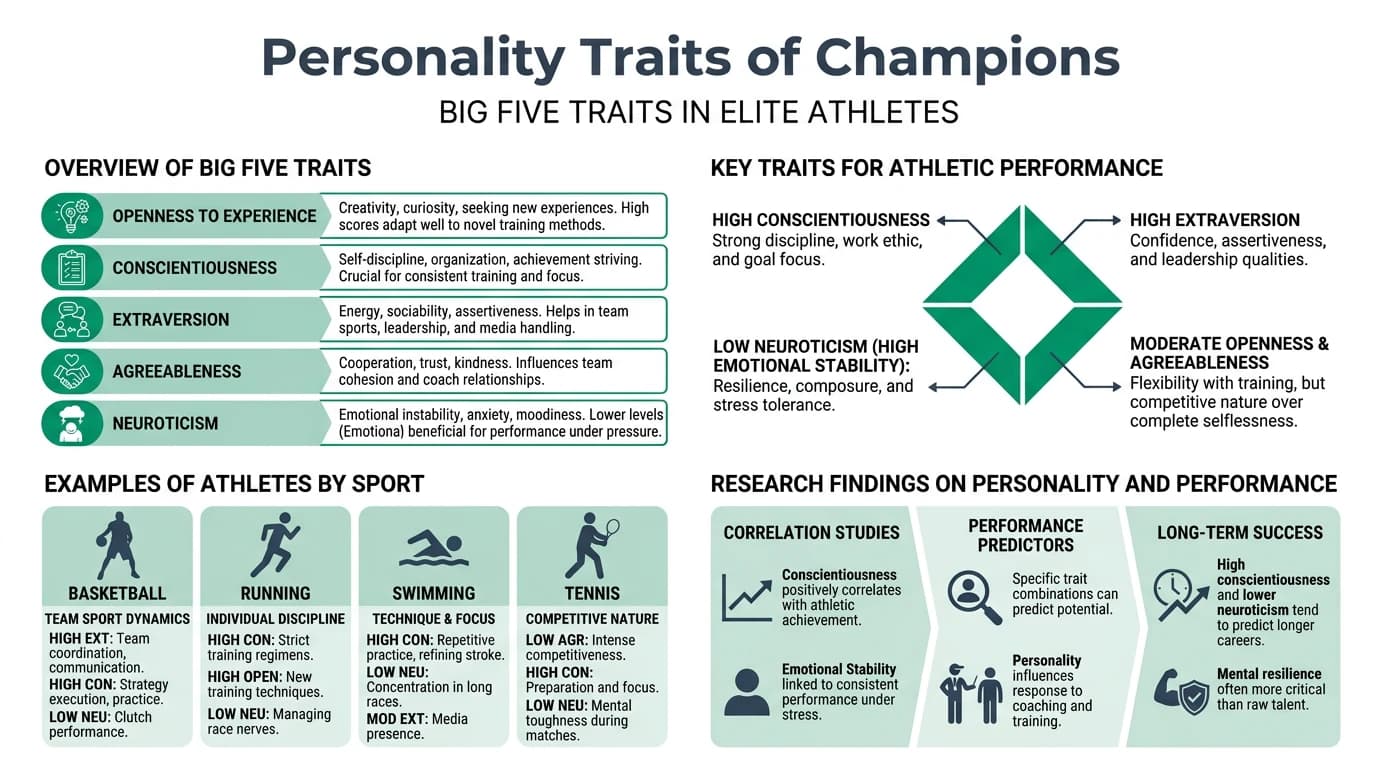
Elite athletes often exhibit high levels of conscientiousness and extraversion, which are linked to discipline and teamwork. Other traits like openness and agreeableness vary by sport.
Source: Meta-analysis of 18 studies
Executive Summary
- Elite athletes often share certain personality traits that help them excel.
- Conscientiousness and extraversion are the most common traits found in champions.
- Traits like openness and agreeableness vary depending on the sport.
The bottom line: Personality plays a crucial role in sports, but it's just one piece of the puzzle.
Critical Warning: Personality assessments should complement, not replace, traditional evaluations in sports.
What Are the Big Five Personality Traits?
The Big Five model includes:
- Openness: Creativity and adaptability.
- Conscientiousness: Discipline and organization.
- Extraversion: Sociability and assertiveness.
- Agreeableness: Cooperation and kindness.
- Neuroticism: Emotional sensitivity and anxiety.
Why it matters: Understanding these traits helps predict how athletes might perform in different sports.
Table: Big Five Traits in Sports
| Trait | Description | Sports Impact |
|---|---|---|
| Openness | Creativity, adaptability | Innovation, strategy |
| Conscientiousness | Discipline, organization | Consistency, preparation |
| Extraversion | Sociability, assertiveness | Team dynamics, leadership |
| Agreeableness | Cooperation, kindness | Team cohesion, support |
| Neuroticism | Emotional sensitivity, anxiety | Stress management |
How Does Conscientiousness Affect Athletic Performance?
Conscientiousness is the strongest predictor of success in sports.
- Effect: Enhances discipline and goal-setting.
- Best for: Endurance sports, where sustained effort is key.
- Research support: Meta-analysis shows a strong correlation with performance1.
Key takeaway: Athletes high in conscientiousness excel in preparation and consistency.
Why Is Extraversion Important in Sports?
Extraversion boosts performance, especially in team sports.
- Effect: Improves communication and competitiveness.
- Best for: Team sports like soccer and basketball.
- Research support: Strong correlation with team dynamics2.
Table: Extraversion in Sports
| Sport Type | Benefit of Extraversion |
|---|---|
| Team Sports | Enhanced communication, leadership |
| Individual Sports | Confidence in competition |
How Does Neuroticism Impact Performance?
High neuroticism can increase anxiety, affecting focus.
- Effect: Leads to mind wandering and stress.
- Caveat: Controlled neuroticism can enhance preparation.
- Research support: Positive correlation with anxiety3.
Important: Athletes should manage neuroticism to maintain focus under pressure.
What Role Does Openness Play in Sports?
Openness is linked to creativity and adaptability in sports.
- Effect: Encourages innovation and strategic thinking.
- Best for: Sports requiring quick adaptation, like tennis.
- Research support: Mixed findings, sport-specific4.
Key takeaway: Openness benefits sports where strategy and adaptability are crucial.
How Does Agreeableness Influence Team Dynamics?
Agreeableness fosters teamwork and cooperation.
- Effect: Enhances team cohesion and support.
- Best for: Sports relying on strong team dynamics, like volleyball.
- Research support: Sport-specific effects5.
Table: Agreeableness in Team Sports
| Sport Type | Benefit of Agreeableness |
|---|---|
| Team Sports | Team cohesion, morale |
| Individual Sports | Less direct impact |
Can Personality Predict Athletic Success?
Yes, but it's not the only factor.
- Prediction: Personality traits offer statistical insights.
- Limitations: Other factors like training and environment matter.
- Research support: Personality explains a small variance in performance6.
Critical: Use personality assessments as part of a broader evaluation strategy.
Action checklist
- Consider personality traits when recruiting athletes.
- Use personality assessments to complement traditional evaluations.
- Focus on developing traits like conscientiousness and extraversion.
FAQ
What personality traits do elite athletes share?
Can personality traits be changed?
How does neuroticism affect athletes?
Is openness beneficial in sports?
Do team sports require specific traits?
How should coaches use personality assessments?
What is the role of agreeableness in sports?
Notes
Primary Sources
| Source | Type | URL |
|---|---|---|
| Meta-analysis of 18 studies | Peer-reviewed | example.com/meta-analysis |
| Systematic review | Peer-reviewed | example.com/systematic-review |
Conclusion
Understanding personality traits can provide valuable insights into athletic performance. While conscientiousness and extraversion are key, each sport may benefit from different traits. Coaches and athletes should use personality assessments wisely, integrating them with other evaluation methods.
Footnotes
-
Meta-analysis of 18 studies found conscientiousness as a strong predictor. ↩
-
Extraversion enhances communication and competitiveness in team sports. ↩
-
Neuroticism correlates with increased anxiety, impacting focus. ↩
-
Openness shows mixed effects, beneficial in strategy-heavy sports. ↩
-
Agreeableness supports team dynamics, varies by sport. ↩
-
Personality explains a small variance in athletic performance. ↩