assessment-quality-tools
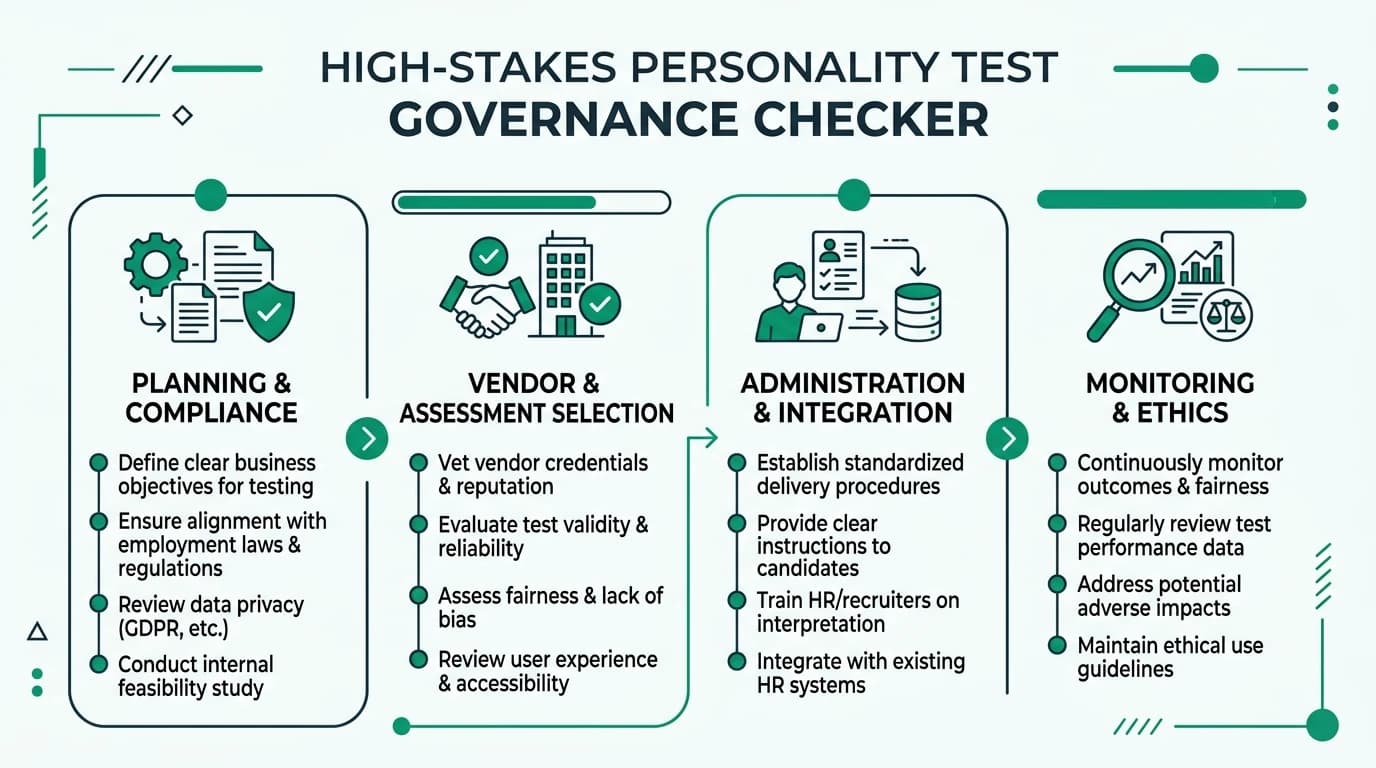
High-stakes personality test governance checker
Quick guardrails for instrument choice, documentation, and AI use when personality data informs coaching, teams, or hiring decisions.
Quick answer
What does this checker do?
It surfaces practical governance steps—instrument choice, documentation, and AI safeguards—based on how high-stakes your use of personality data is.
Source: EFPA Test Review Model
Why use it
Personality tools range from informal quizzes to normed inventories. The same score can be harmless in a workshop and risky in selection. This checker helps you align process rigor with decision stakes.
Pair it with Personality Test Validity in Hiring and Ethics of AI Personality Screening.
What it does not do
- It does not provide legal advice or jurisdiction-specific compliance.
- It does not score a vendor or instrument; use the Personality Test Reliability Checker for psychometric inputs.
Primary sources
| Source | Type | URL |
|---|---|---|
| EFPA Test Review Model | Assessment quality | efpa.eu/working-groups/test-review-model |
| SIOP | Professional standards | siop.org |
Guardrails
Before you scale personality data use
- Confirm the instrument matches the decision stakes (normed tools for selection).
- Document purpose, consent, and how scores inform (or do not inform) decisions.
- Review AI-assisted scoring with a human-in-the-loop policy.
FAQ
Is this enough for a legal audit?
No. Use it as an internal checklist; involve counsel for high-stakes programs.
Does high stakes always mean Big Five?
Not necessarily, but evidence standards rise: prefer tools with published validity and norms.
How does this relate to reliability?
Governance covers process; psychometric quality is separate. Use the reliability checker for coefficients and transparency.