mental-health
Personality and Therapy Fit: Evidence Linking Big Five Traits to CBT, Psychodynamic Therapy, ACT, and DBT Outcomes
Explore how the Big Five personality traits influence therapy outcomes in CBT, psychodynamic therapy, ACT, and DBT.
Quick answer
How do Big Five personality traits impact therapy outcomes?
The Big Five traits can influence therapy success, with traits like Extraversion and Conscientiousness offering protective benefits against depression. However, evidence on specific therapy outcomes remains mixed.
Source: IntechOpen
Executive Summary
Understanding how personality traits affect therapy can improve mental health outcomes. The Big Five traits—Openness, Conscientiousness, Extraversion, Agreeableness, and Neuroticism—play roles in therapy success. While some traits like Extraversion and Conscientiousness are linked to better outcomes, evidence is mixed.
The bottom line: Matching therapy to personality traits may enhance treatment, but more research is needed.
Critical Warning: Personality traits should not be the sole factor in choosing therapy. Consult a mental health professional for personalized advice.
What Are the Big Five Personality Traits?
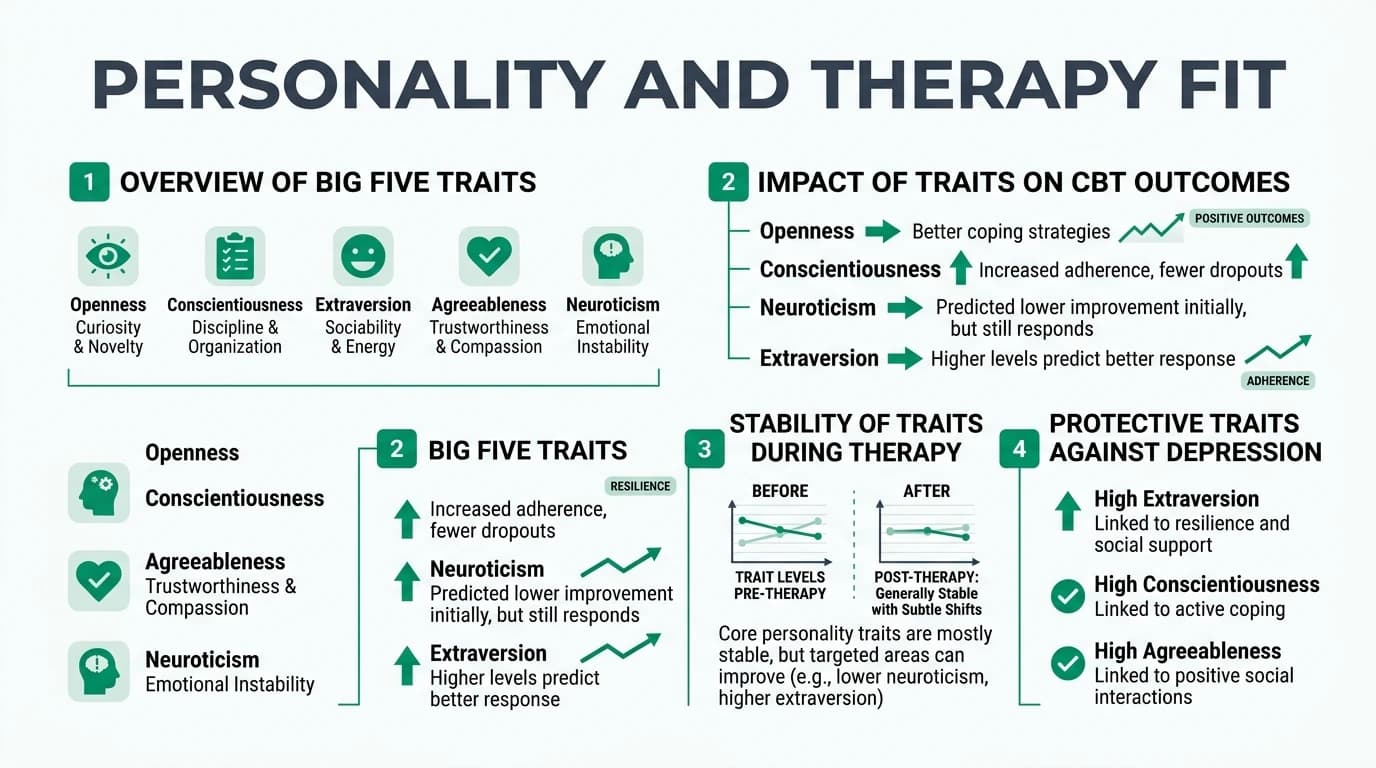
The Big Five traits are a popular way to describe human personality. Here's a quick overview:
- Openness: Creativity and open-mindedness.
- Conscientiousness: Organization and dependability.
- Extraversion: Sociability and enthusiasm.
- Agreeableness: Kindness and cooperation.
- Neuroticism: Emotional instability and anxiety.
| Trait | Description |
|---|---|
| Openness | Creativity, open to new experiences |
| Conscientiousness | Responsible, organized |
| Extraversion | Outgoing, energetic |
| Agreeableness | Cooperative, compassionate |
| Neuroticism | Prone to stress, mood swings |
How Do Big Five Traits Affect CBT Outcomes?
Cognitive Behavioral Therapy (CBT) is a common therapy method. Here's how the Big Five traits relate to CBT:
- Neuroticism: Linked to poorer outcomes, possibly due to emotional challenges.
- Extraversion and Conscientiousness: May aid in better coping strategies.
| Trait | Effect on CBT Outcomes | Evidence Source |
|---|---|---|
| Neuroticism | Poorer outcomes | UBC Hewitt Lab |
| Extraversion | Better coping, social support | IntechOpen |
| Conscientiousness | Improved adherence | IntechOpen |
Are Big Five Traits Stable During Therapy?
Personality traits tend to be stable, even during therapy. A study found:
- High Stability: Most traits remain consistent over six months of therapy.
- Neuroticism: Shows moderate change, but still stable.
| Trait | Stability Level | Study Reference |
|---|---|---|
| All Traits | High stability (r > 0.6) | PMC Zurich Study |
| Neuroticism | Moderate change (d < 0.5) | PMC Zurich Study |
Can Extraversion and Conscientiousness Protect Against Depression?
These traits can help buffer against depression:
- Extraversion: Provides social support and lowers stress.
- Conscientiousness: Encourages effective coping and resilience.
| Trait | Protective Mechanism | Therapy Example |
|---|---|---|
| Extraversion | Social support, low stress | Group therapy |
| Conscientiousness | Effective coping, resilience | CBT, DBT |
How Does Neuroticism Impact Therapy?
Neuroticism can negatively affect therapy outcomes:
- Higher Stress: May lead to challenges in managing emotions.
- Targeted Interventions: CBT can help manage these challenges.
| Trait | Impact on Therapy | Suggested Intervention |
|---|---|---|
| Neuroticism | Higher stress, poorer outcomes | Individual CBT |
What About Openness and Innovative Therapies?
Openness may enhance therapy experiences:
- Cognitive Flexibility: Helps in therapies like ACT and psychodynamic therapy.
- Insight Generation: Encourages novel problem-solving.
| Trait | Benefit in Therapy | Example Therapy |
|---|---|---|
| Openness | Cognitive flexibility, insight | ACT, Psychodynamic |
Are There Limitations to Personality-Therapy Matching?
While promising, matching therapy to personality has limitations:
- Mixed Evidence: Not all studies show clear benefits.
- Methodological Issues: More research is needed for specific therapies like ACT and DBT.
| Limitation | Description |
|---|---|
| Mixed Evidence | Inconsistent outcomes across studies |
| Research Gaps | Need for more therapy-specific data |
Action checklist
- Consider personality traits when choosing therapy.
- Consult a mental health professional for personalized advice.
- Stay informed about new research in therapy outcomes.
FAQ
Do Big Five traits change during therapy?
Is high Neuroticism bad for CBT results?
Which personality predicts better psychotherapy outcomes?
How does Extraversion help in mental health treatment?
Can Conscientiousness improve therapy success?
Does Openness affect help-seeking in therapy?
Are Big Five traits stable in psychodynamic therapy?
Notes
Primary Sources
| Source | Type | URL |
|---|---|---|
| UBC Hewitt Lab | Peer-reviewed PDF | Link |
| IntechOpen | Peer-reviewed chapter | Link |
| ERIC | Peer-reviewed PDF | Link |
| PMC Zurich Study | Peer-reviewed | Link |
Conclusion
Understanding the link between personality traits and therapy outcomes can guide personalized treatment plans. While traits like Extraversion and Conscientiousness show promise in improving therapy success, more research is needed to fully understand these relationships.