personality-tests
Big Five Personality Traits in Management Consulting and Professional Services Careers
Explore how the Big Five personality traits impact management consulting careers, focusing on client-facing work, project delivery, firm culture fit, and career success.
Quick answer
How do the Big Five personality traits impact consulting careers?
The Big Five traits influence consulting success by affecting client relationships, project delivery, and firm culture fit. High conscientiousness and emotional stability are particularly crucial for leadership roles.
Source: Michigan State University Online
Executive Summary
The Big Five personality traits—Openness, Conscientiousness, Extraversion, Agreeableness, and Neuroticism—play a significant role in management consulting and professional services. These traits influence how consultants interact with clients, manage projects, and fit into firm culture.
The bottom line: Understanding and leveraging these traits can enhance career success and firm performance.
Critical: Personality assessments should complement skills and experience evaluations, not replace them.
What Are the Big Five Personality Traits?
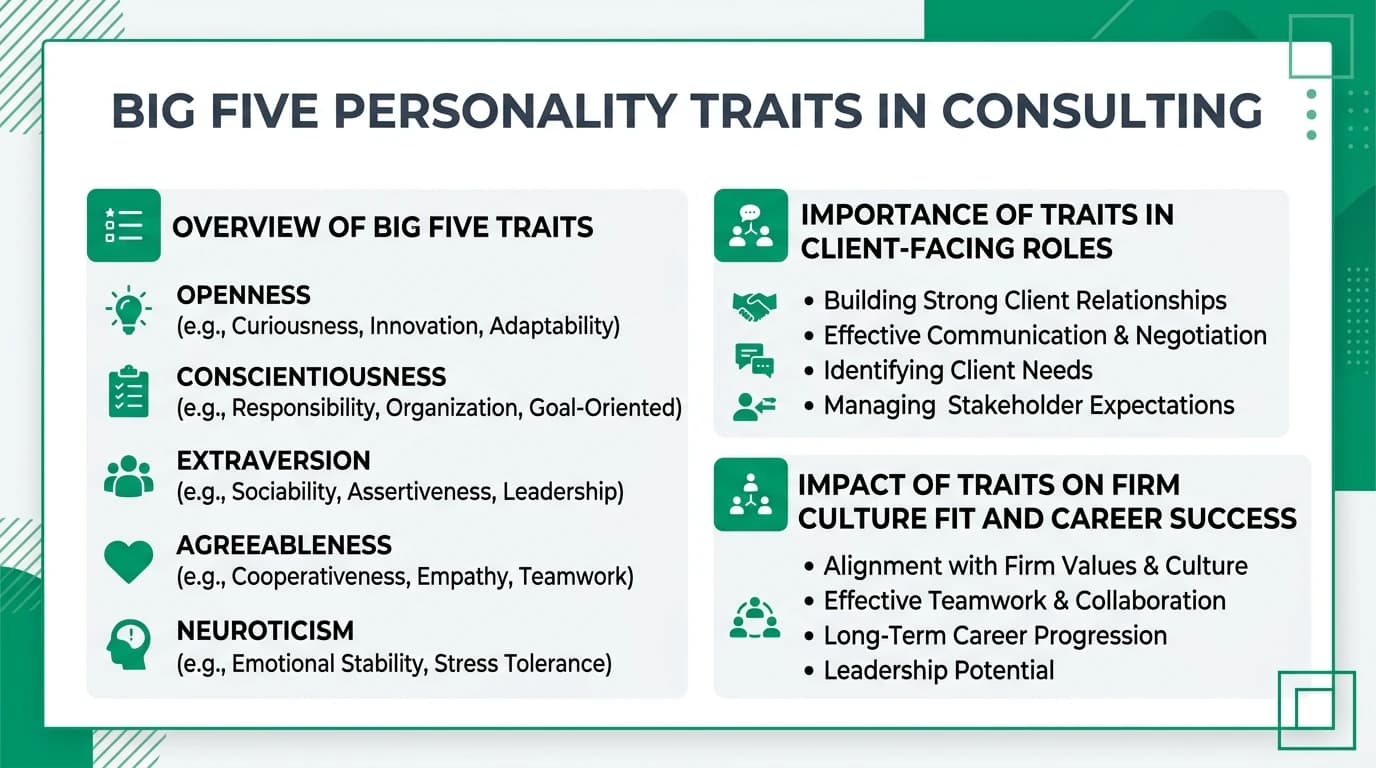
The Big Five, also known as OCEAN, includes:
- Openness: Creativity and curiosity.
- Conscientiousness: Reliability and organization.
- Extraversion: Sociability and assertiveness.
- Agreeableness: Compassion and cooperation.
- Neuroticism (Low = Emotional Stability): Calmness and emotional regulation.
Why it matters: These traits help predict job performance, team dynamics, and leadership effectiveness in consulting.
| Trait | Description | Consulting Relevance |
|---|---|---|
| Openness | Creative and adaptable | Innovation and problem-solving |
| Conscientiousness | Organized and reliable | Project delivery and accountability |
| Extraversion | Social and assertive | Client engagement and team influence |
| Agreeableness | Cooperative and empathetic | Trust-building and collaboration |
| Neuroticism (Low) | Emotionally stable | Leadership under pressure |
How Do These Traits Affect Client-Facing Advisory Work?
Extraversion and Agreeableness are key for client interactions:
- Extraversion: Helps build rapport and maintain visibility with clients.
- Agreeableness: Fosters trust and empathy, crucial for long-term relationships.
Impact: High extraversion and agreeableness enhance client satisfaction and retention.
| Trait | High Score Impact | Low Score Impact |
|---|---|---|
| Extraversion | Strong client rapport | Limited engagement |
| Agreeableness | High trust | Perceived detachment |
What Role Does Conscientiousness Play in Project Delivery?
Conscientiousness drives successful project outcomes through:
- Planning: Ensures structured approaches.
- Reliability: Promotes consistent delivery.
Effect: High conscientiousness reduces project risk and enhances accountability.
| Aspect | High Conscientiousness | Low Conscientiousness |
|---|---|---|
| Planning | Detailed and organized | Unstructured |
| Reliability | Consistent follow-through | Missed deadlines |
How Does Firm Culture Fit Relate to Personality?
Firm culture aligns with personality traits:
- Innovation-Driven Cultures: Attract high openness.
- Execution-Focused Cultures: Favor high conscientiousness.
Key takeaway: Aligning personality with firm culture boosts engagement and retention.
| Culture Type | Dominant Traits | Challenges |
|---|---|---|
| Innovation-Driven | High Openness | Execution gaps |
| Execution-Focused | High Conscientiousness | Slow innovation |
How Do Traits Influence Career Success?
Career progression often aligns with specific traits:
- Junior Consultants: Benefit from high conscientiousness and agreeableness.
- Partners: Require high emotional stability and conscientiousness.
Insight: Matching traits to roles enhances career advancement.
| Role | Key Traits | Rationale |
|---|---|---|
| Junior Consultant | Conscientiousness, Agreeableness | Task-oriented, team collaboration |
| Partner | Emotional Stability, Conscientiousness | Decision-making under pressure |
Can Personality Traits Be Developed?
While traits are relatively stable, they can be developed through:
- Coaching: Tailored interventions for growth.
- Training: Focused skill-building.
Important: Development requires intentional practice and feedback.
Critical: Personality development should be part of a broader professional growth strategy.
How Are Big Five Assessments Used in Hiring?
Consulting firms use Big Five assessments to:
- Screen Candidates: Identify role fit.
- Compose Teams: Balance diverse traits.
Benefit: Structured assessments reduce bias and improve hiring decisions.
| Tool | Application | Validity |
|---|---|---|
| NEO-PI-R | Comprehensive assessment | High |
| BFI | Quick screening | High |
Action checklist
- Identify your dominant Big Five traits.
- Align your traits with suitable consulting roles.
- Seek development opportunities for weaker traits.
FAQ
What are the Big Five personality traits?
How does conscientiousness affect consulting success?
Can introverts succeed in client-facing roles?
How do firms use Big Five assessments?
What is the impact of low neuroticism in consulting?
Can personality traits change over time?
How do personality traits affect firm culture fit?
Notes
Primary Sources
| Source | Type | URL |
|---|---|---|
| Michigan State University Online | Academic | Link |
| Costa, P. T., & McCrae, R. R. | Research | Link |
Conclusion
The Big Five personality traits significantly impact consulting careers, influencing client interactions, project success, and cultural fit. By understanding and leveraging these traits, consultants can enhance their career trajectories and contribute positively to their firms.