career
Personality Legal Careers Big Five
Practical guide to understand and apply Personality Legal Careers Big Five.
md
title: "Personality and Legal Careers: Big Five Traits in Lawyers, Judges, Litigation Stress, Ethics, and Professional Performance Research" description: "Explore how Big Five personality traits influence legal professionals, including lawyers and judges, in areas like stress, ethics, and performance." slug: "personality-legal-careers-big-five" category: "career" keywords: ["Big Five traits lawyers", "Personality types in law", "Litigation stress lawyers", "Lawyer ethics personality", "Professional performance lawyers"] author: "Editorial Team" datePublished: "2026-03-25" lastUpdated: "2026-03-25" featured: true images:
- url: "/images/guides/personality-legal-careers-big-five.webp" alt: "A courtroom scene showing lawyers and judges, highlighting the influence of personality traits in legal settings." caption: "Personality traits play a significant role in the performance and stress levels of legal professionals." relatedGuides:
- "personality-negotiation-style-big-five"
- "personality-decision-making-styles-big-five"
- "personality-stress-management-coping-strategies"
Quick answer
What are the Big Five personality traits in lawyers?
Lawyers often score lower in extraversion and higher in neuroticism, competitiveness, and introversion. They tend to prefer thinking over feeling.
Source: Journal of Student Research
Executive Summary
Understanding how personality traits affect legal careers can help aspiring lawyers and judges navigate stress, ethics, and performance. The Big Five traits—Openness, Conscientiousness, Extraversion, Agreeableness, and Neuroticism—play a crucial role in shaping behaviors and career outcomes.
The bottom line: Personality traits like introversion and neuroticism are common in lawyers, impacting their stress levels and ethical decisions.
Critical Warning: While personality traits provide insights, individual differences are significant, and not all lawyers fit a single mold.
What Are the Big Five Traits in Lawyers?
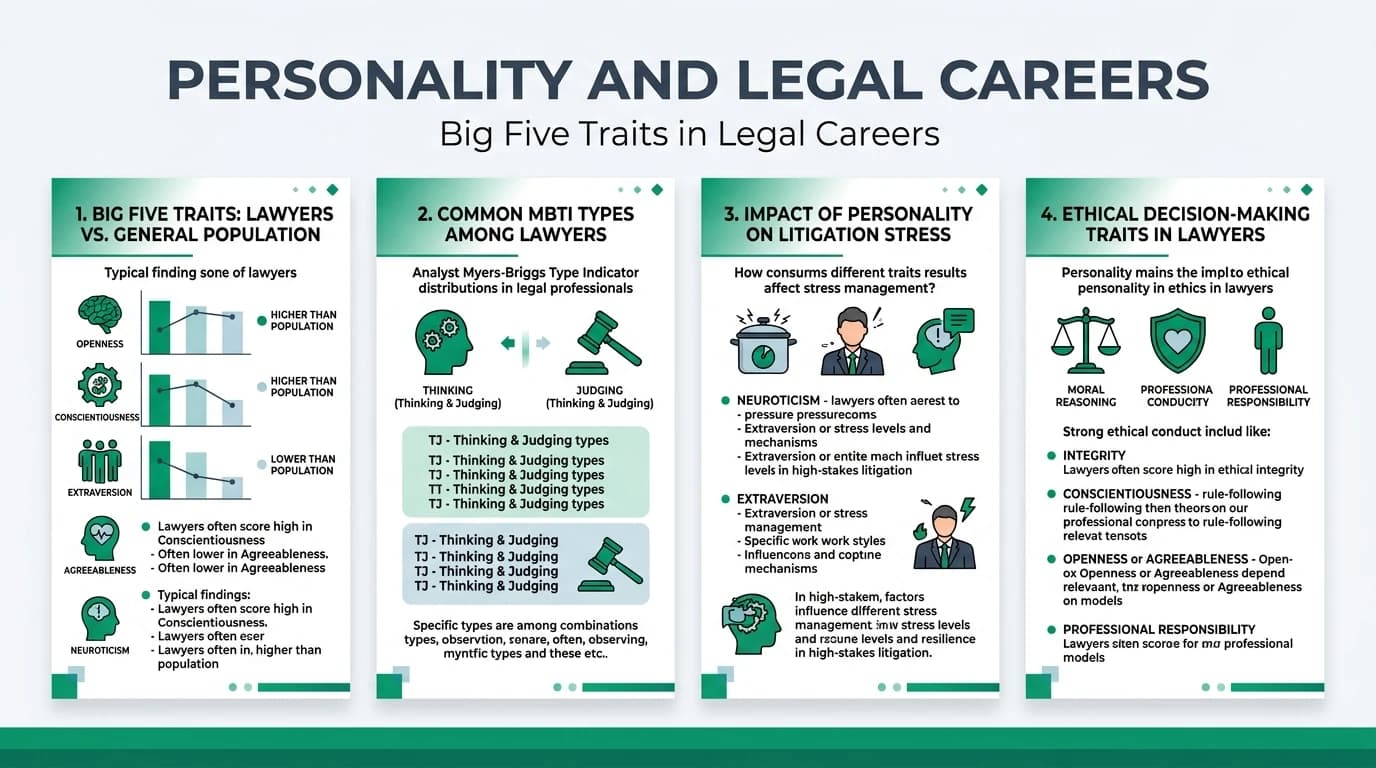
The Big Five personality traits offer a framework to understand lawyers' behaviors and tendencies.
| Trait | Lawyers | General Population | Source |
|---|---|---|---|
| Extraversion | Lower | Higher | [1] |
| Neuroticism | Higher | Average | [1] |
| Agreeableness | Lower | Average | [1] |
- Extraversion: Lawyers often score lower, preferring solitary work.
- Neuroticism: Higher levels may lead to stress but also drive perfectionism.
- Agreeableness: Lower scores can enhance argumentativeness, useful in litigation.
How Do MBTI Preferences Affect Lawyers?
MBTI (Myers-Briggs Type Indicator) preferences provide additional insights into lawyer personalities.
| Type | % Lawyers | Key Strengths |
|---|---|---|
| INTJ | High | Strategic, analytical |
| ISTJ | High | Detail-oriented, reliable |
| ENTJ | Moderate | Leadership, decisiveness |
| ENTP | Moderate | Innovative, adaptable |
- Introversion vs. Extraversion: Most lawyers prefer introversion, aiding focus.
- Thinking vs. Feeling: A strong preference for thinking over feeling is common.
How Does Personality Affect Judges?
Judges often exhibit different personality traits compared to lawyers.
| Trait | Judges | Lawyers | Source |
|---|---|---|---|
| Conscientiousness | Higher | Moderate | [1] |
| Agreeableness | Higher | Lower | [1] |
- Conscientiousness: Judges score higher, supporting their need for diligence.
- Agreeableness: Higher agreeableness aids in fair, balanced decision-making.
What Causes Litigation Stress in Lawyers?
Litigation stress is a significant issue, often linked to personality traits.
| Trait | Stress Impact | Mitigation |
|---|---|---|
| Neuroticism | High burnout | Resilience training |
| Perfectionism | Overwork | Time management skills |
- Neuroticism: Leads to high stress; resilience training can help.
- Perfectionism: Can cause overwork; managing time effectively is crucial.
How Do Personality Traits Influence Legal Ethics?
Personality traits can impact ethical decision-making in law.
| Quality | Pro | Con |
|---|---|---|
| Argumentative | Persuasive | Confrontational |
| Empathetic | Builds client rapport | Can lead to emotional drain |
- Argumentativeness: Useful for persuasion but may lead to conflicts.
- Empathy: Enhances client relationships but can be emotionally taxing.
What Predicts Professional Performance in Lawyers?
Certain traits predict success in legal careers.
| Trait | Role Success | Example |
|---|---|---|
| Ego Drive | Rainmaking | Closing deals |
| Autonomy | Solo practice | Independent work |
- Ego Drive: Essential for client acquisition and retention.
- Autonomy: Benefits those in solo or specialized practices.
How Does Law School Influence Personality?
Law school can shape or reinforce certain personality traits.
| MBTI Style | Dropout Rate | Reason |
|---|---|---|
| Feeling | 4x higher | Emotional mismatch |
- Feeling-style students: Higher dropout rates due to emotional demands.
- Thinking-style adaptation: Better suited for law's analytical nature.
How Do Gender and Personality Stereotypes Play Out?
Gender stereotypes can influence perceptions in the legal field.
- Masculine Traits: Dominance and aggression are often valued.
- Female Lawyers: May face biases but also bring unique strengths.
What Are Effective Stress Management Strategies?
Managing stress is crucial for long-term success.
- Resilience Training: Helps manage high neuroticism.
- Empathy Training: Balances aggressive tendencies with client needs.
Key Takeaways
- Introversion and Neuroticism: Common in lawyers, affecting stress and performance.
- Ethical Decisions: Influenced by argumentative and empathetic traits.
- Performance Predictors: Ego drive and autonomy are key for success.
Action checklist
- Identify your Big Five traits.
- Consider MBTI preferences for career fit.
- Develop stress management strategies.
FAQ
Do lawyers have a specific personality type?
What Big Five traits predict success in law?
How does introversion impact lawyer performance?
Are lawyers more neurotic than other professions?
What causes high litigation stress in lawyers?
How do personality traits affect legal ethics?
Which MBTI types are most common in judges?
Notes
Primary Sources
| Source | Type | URL |
|---|---|---|
| Journal of Student Research | Peer-reviewed | Link |
| University of Michigan Law Repository | Peer-reviewed | Link |
Conclusion
Personality traits significantly influence legal careers, affecting stress, ethics, and performance. Understanding these traits can guide career choices and stress management strategies.