career
Personality and First Responders: Big Five Traits in Police, Firefighters, and Paramedics
Explore how Big Five personality traits influence police, firefighters, and paramedics, focusing on trauma exposure, teamwork, and resilience.
Quick answer
How do Big Five traits affect first responders?
Traits like high Conscientiousness and low Neuroticism help prevent burnout and enhance resilience in police, firefighters, and paramedics.
Source: PubMed
Executive Summary
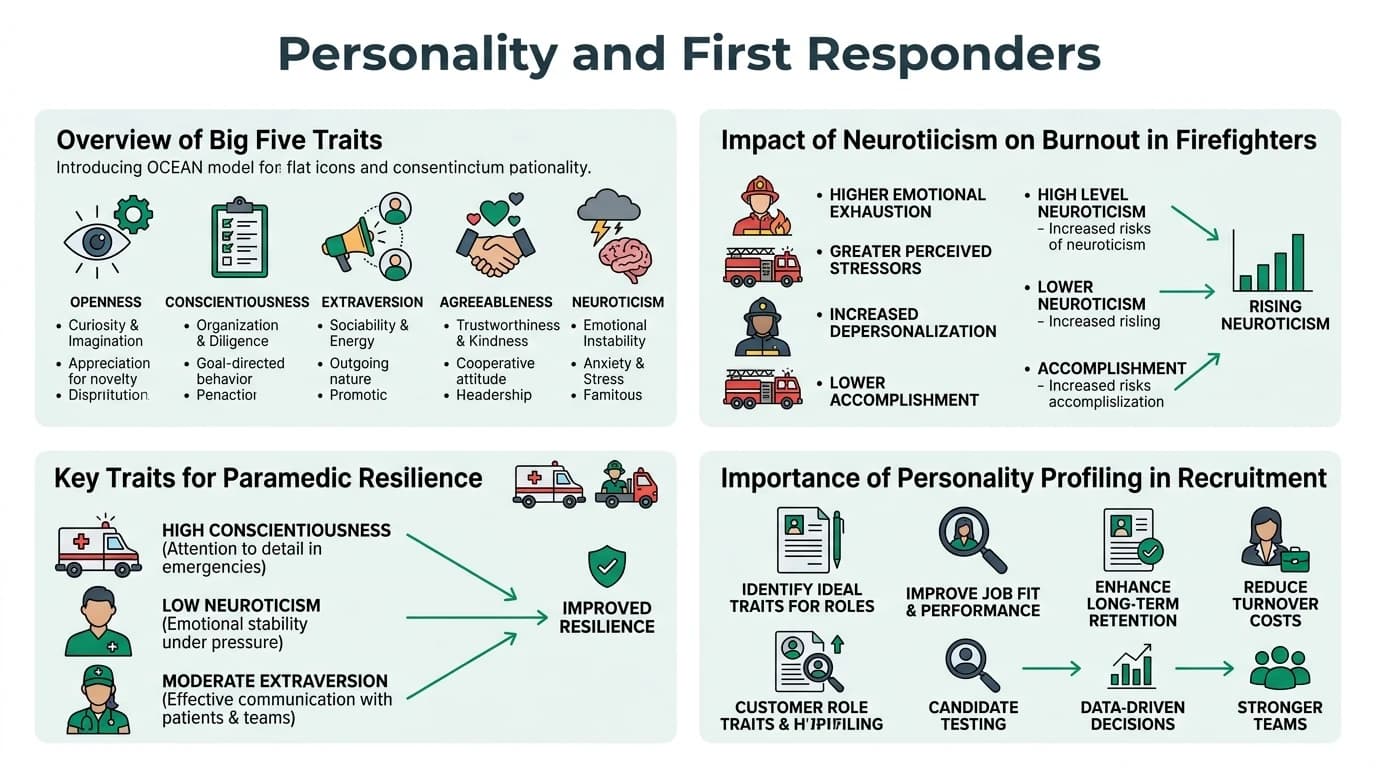
Understanding the Big Five personality traits—Openness, Conscientiousness, Extraversion, Agreeableness, and Neuroticism—can help predict how first responders like police, firefighters, and paramedics handle stress and trauma. Research shows that high Conscientiousness and low Neuroticism are crucial for resilience and teamwork.
The bottom line:
Critical: Profiling these traits can improve recruitment and support systems for first responders, reducing burnout and enhancing performance.
What are the Big Five Personality Traits?
The Big Five personality traits are a widely accepted model for understanding human personality:
- Openness: Creativity and open-mindedness.
- Conscientiousness: Organization and dependability.
- Extraversion: Sociability and assertiveness.
- Agreeableness: Compassion and cooperativeness.
- Neuroticism: Emotional instability and anxiety.
These traits influence how first responders cope with their demanding roles.
How Do These Traits Affect Firefighters?
Research highlights specific traits that impact firefighter burnout:
| Trait | Impact on Burnout |
|---|---|
| Neuroticism | Increases emotional exhaustion and depersonalization. |
| Conscientiousness | Reduces physical fatigue through mastery approach goals. |
| Openness | Associated with reduced physical fatigue. |
Key takeaways:
- High Neuroticism: Increases burnout risk.
- High Conscientiousness/Openness: Offers protection against fatigue.
What Traits Make Good Paramedics?
Paramedics benefit from a unique blend of traits:
| Trait | Resilience Impact |
|---|---|
| Conscientiousness | Enhances reliability and task completion. |
| Extraversion | Boosts teamwork and morale. |
| Agreeableness | Improves empathy and patient care. |
Key takeaways:
- Low Neuroticism: Essential for emotional stability.
- High Conscientiousness/Extraversion: Key for resilience.
How Does Neuroticism Affect First Responders?
Neuroticism is a critical factor in burnout:
| Role | Neuroticism Impact |
|---|---|
| Police | Heightens stress and burnout. |
| Firefighters | Directly linked to all burnout dimensions. |
| Paramedics | Increases emotional exhaustion. |
Important:
Low Neuroticism is vital for maintaining mental health in high-stress environments.
Why Profile Personality in First Responders?
Profiling helps in several ways:
- Risk Management: Identifies traits like high Neuroticism for intervention.
- Recruitment: Ensures candidates fit the role demands.
- Performance Reviews: Monitors ongoing suitability.
- Post-Incident Debriefs: Offers targeted support.
Key takeaways:
- Profiling Benefits: Enhances recruitment and support systems.
- Interventions: Tailored to individual needs.
How Does Extraversion Help Teamwork?
Extraversion plays a crucial role in teamwork:
| Benefit | Description |
|---|---|
| Optimism | Encourages positive team dynamics. |
| Communication | Facilitates clear and effective exchanges. |
| Support | Fosters a supportive environment. |
Key takeaways:
- High Extraversion: Enhances team cooperation and morale.
- Effective Communication: Key to successful teamwork.
Can Personality Profiling Improve Hiring?
Yes, personality profiling can refine hiring processes:
- Identifies Best Fits: Matches traits to job demands.
- Reduces Turnover: Ensures candidates are well-suited.
- Enhances Training: Tailors programs to individual strengths.
Key takeaways:
- Profiling: Improves recruitment accuracy.
- Training: Benefits from personalized approaches.
Action checklist
- Implement personality profiling in recruitment.
- Focus on Conscientiousness and low Neuroticism in candidates.
- Develop support systems for high-risk traits.
FAQ
What are the Big Five personality traits in firefighters?
How does neuroticism affect first responder burnout?
Which personality traits predict resilience in paramedics?
Do conscientious firefighters experience less fatigue?
What Big Five scores are typical for police officers?
How does extraversion help teamwork in trauma response?
Can personality profiling improve first responder hiring?
Notes
Primary Sources
| Source | Type | URL |
|---|---|---|
| PubMed | Peer-reviewed | Link |
| Sage Journals | Peer-reviewed | Link |
Conclusion
Understanding the Big Five personality traits is crucial for enhancing the performance and well-being of first responders. By focusing on traits like Conscientiousness and low Neuroticism, organizations can better support their teams through targeted recruitment and training.