personality-tests
Personality Dentistry Dental Careers Big Five
Practical guide to understand and apply Personality Dentistry Dental Careers Big Five.
md
title: "Big Five Personality Traits in Dentistry and Dental Careers: Chairside Practice, Patient Anxiety Management, Clinical Precision, Practice Ownership, and Specialty Fit" description: "Explore how the Big Five personality traits influence dental careers, from managing patient anxiety to choosing the right specialty." slug: "personality-dentistry-dental-careers-big-five" category: "personality-tests" keywords: ["Big Five personality traits dentistry", "Personality traits for dentists", "Dental anxiety and neuroticism", "Conscientiousness in dental careers", "Best personality for orthodontists"] author: "Editorial Team" datePublished: "2026-04-21" lastUpdated: "2026-04-21" featured: true images:
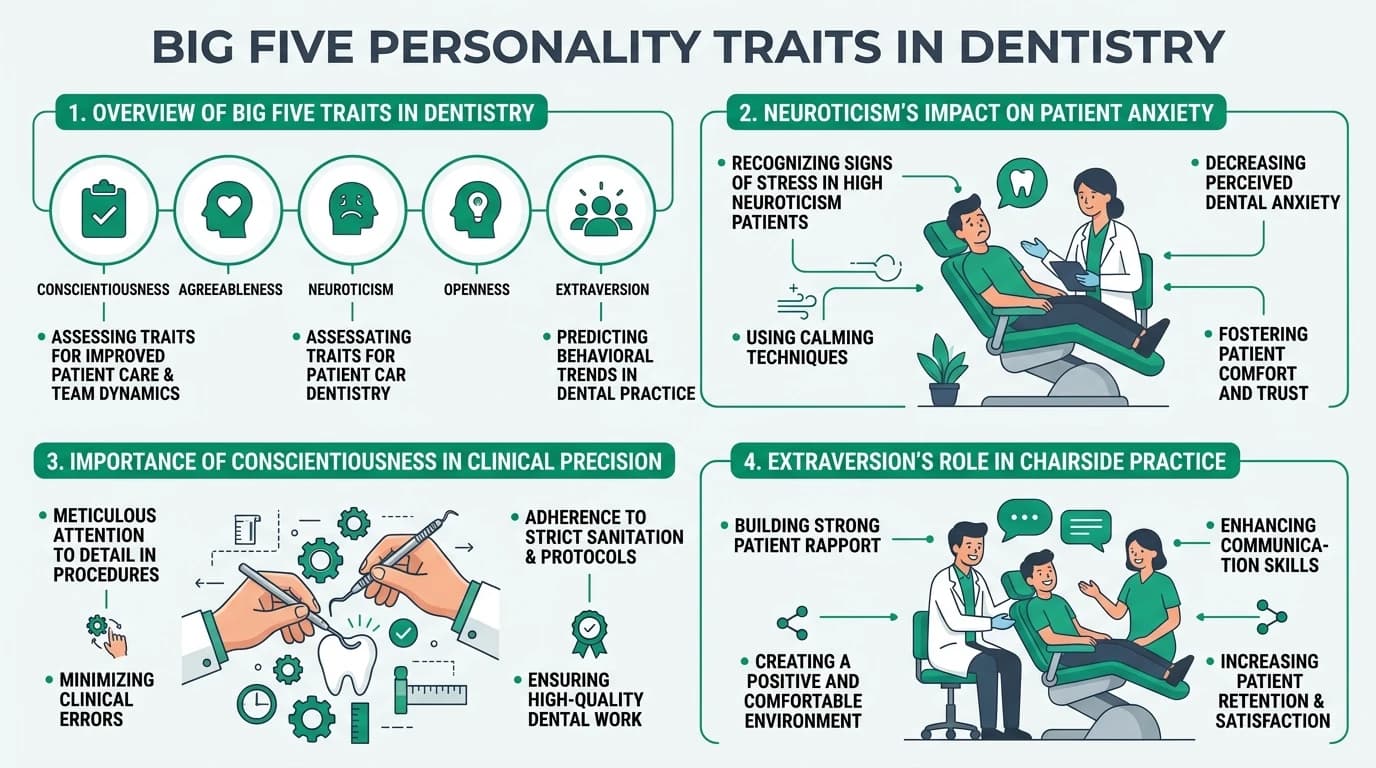
- url: "/images/guides/personality-dentistry-dental-careers-big-five.webp" alt: "Illustration of a dentist interacting with a patient, showcasing the impact of personality traits in dental practice." caption: "Understanding personality traits can enhance dentist-patient interactions and career satisfaction." relatedGuides:
- "personality-physician-medicine-careers-big-five"
- "personality-nursing-healthcare-big-five"
- "personality-customer-service-excellence-big-five"
Quick answer
How do the Big Five personality traits affect dental careers?
The Big Five traits—Openness, Conscientiousness, Extraversion, Agreeableness, and Neuroticism—impact dental careers by influencing patient interactions, clinical precision, and specialty fit.
Source: PMC
Executive Summary
Understanding the Big Five personality traits can significantly impact dental careers. These traits influence how dentists manage patient anxiety, maintain clinical precision, and choose suitable specialties.
The bottom line: Knowing your personality traits can help you find the right fit in dentistry and improve patient outcomes.
Critical: Consult a career advisor or psychologist for personalized guidance on using personality traits in career planning.
What Are the Big Five Personality Traits?
The Big Five personality traits are:
- Openness: Creativity and willingness to try new things.
- Conscientiousness: Organization and attention to detail.
- Extraversion: Sociability and energy.
- Agreeableness: Cooperation and kindness.
- Neuroticism: Emotional stability and anxiety levels.
These traits are crucial in dentistry for predicting career success and patient management1.
| Trait | Description |
|---|---|
| Openness | Creativity, innovation |
| Conscientiousness | Organization, precision |
| Extraversion | Sociability, energy |
| Agreeableness | Cooperation, empathy |
| Neuroticism | Emotional stability, anxiety |
How Does Neuroticism Affect Patient Anxiety?
Effect: High neuroticism can increase patient anxiety.
Process: Dentists with high neuroticism may struggle with anxious patients but can use tailored protocols to manage this2.
| Trait | Correlation Strength | p-value |
|---|---|---|
| Neuroticism | Strong | below 0.05 |
Key takeaways:
- High neuroticism: May require anxiety management strategies.
- Low neuroticism: Generally better for patient comfort.
Why Is Conscientiousness Important in Clinical Precision?
Effect: High conscientiousness leads to better precision in dental procedures.
Process: Conscientious dentists excel in detail-oriented tasks, crucial for orthodontics3.
| Trait | Specialty Fit |
|---|---|
| Conscientiousness | Orthodontics |
Key takeaways:
- High conscientiousness: Ideal for specialties requiring precision.
- Low conscientiousness: May suit roles with less technical demand.
Is Extraversion Beneficial for Chairside Practice?
Effect: Extraversion enhances patient rapport and visit regularity.
Process: Extraverted dentists build strong relationships, encouraging regular visits4.
| Trait | Patient Impact | Management Tips |
|---|---|---|
| Extraversion | Improved rapport | Focus on communication |
Key takeaways:
- High extraversion: Beneficial for patient interactions.
- Low extraversion: May require additional communication training.
How Does Agreeableness Influence Team Roles?
Effect: High agreeableness fosters teamwork and patient satisfaction.
Process: Agreeable dental nurses excel in collaborative environments3.
| Role | Key Traits |
|---|---|
| Dental Nurses | High Agreeableness |
Key takeaways:
- High agreeableness: Suited for team-based roles.
- Low agreeableness: May face challenges in collaborative settings.
Can Openness Enhance Innovation and Specialty Fit?
Effect: Openness drives creativity in treatment planning.
Process: Dentists high in openness innovate in cosmetic dentistry and treatment approaches56.
| Specialty | Ideal Traits | Why |
|---|---|---|
| Cosmetic Dentistry | High Openness | Innovation in design |
Key takeaways:
- High openness: Ideal for innovative specialties.
- Low openness: May prefer traditional roles.
How to Assess Your Big Five Traits for Dental Career Fit
Step-by-step:
- Take a personality test: Use online tools to assess your traits.
- Consult professionals: Seek guidance from career advisors.
- Align traits with roles: Match your traits to suitable dental careers4.
Checklist:
- Understand your traits
- Identify suitable roles
- Seek professional advice
FAQ
How does neuroticism affect dental anxiety?
Which Big Five trait is most common in dentists?
Are extraverted people better at patient interactions in dentistry?
Does conscientiousness predict success in dental precision work?
What personality fits dental practice ownership?
How do Big Five traits influence orthodontic careers?
Can openness to experience improve dental treatment planning?
Notes
Primary Sources
| Source | Type | URL |
|---|---|---|
| Thieme | Peer-reviewed | Link |
| PMC/NCBI | Peer-reviewed | Link |
| Digital Smile Design | Industry interview | Link |
| AJO-DO | Peer-reviewed summary | Link |
| PubMed | Peer-reviewed | Link |
| ADEA | Official/industry | Link |
Conclusion
The Big Five personality traits play a crucial role in shaping dental careers. By understanding these traits, aspiring dentists can align their strengths with suitable roles, enhancing both career satisfaction and patient care.