personality-tests
DISC vs Enneagram for Team Coaching: A Comprehensive Comparison
Explore the differences between DISC and Enneagram for team coaching, including models, workshop language, conflict styles, and when to use each framework.
Quick answer
What is the difference between DISC and Enneagram?
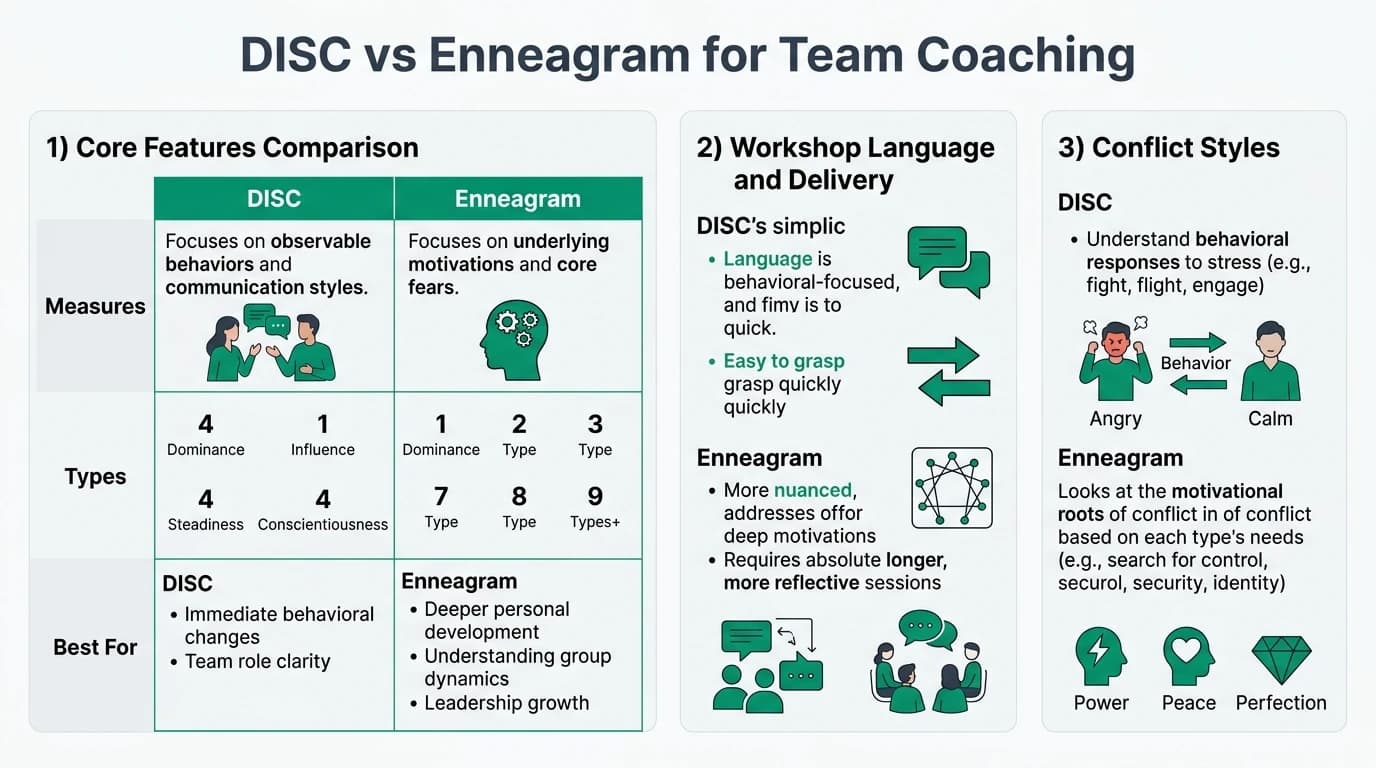
DISC measures observable behaviors with 4 primary styles, while Enneagram focuses on core motivations with 9 types.
Source: Crystal Knows
Executive Summary
If you're wondering whether to use DISC or Enneagram for team coaching, you're not alone. DISC is great for understanding observable behaviors, while Enneagram dives into core motivations. Both have their strengths, but choosing the right one depends on your team's needs.
The bottom line: Use DISC for quick insights and communication training, and Enneagram for deeper motivation exploration.
Critical Warning: Neither framework is a magic bullet. They provide insights, not definitive answers. Always tailor your approach to your team's unique dynamics.
What is DISC?
DISC Overview:
- Measures: Observable behavior.
- Types: 4 primary styles (Dominance, Influence, Steadiness, Conscientiousness) with 12 sub-styles.
- Best for: Quick team insights and communication.
Table: DISC Core Features
| Feature | Description |
|---|---|
| Behavior | Observable actions in workplace settings. |
| Types | 4 primary styles with 12 sub-styles. |
| Use | Team communication and interaction improvements. |
What is Enneagram?
Enneagram Overview:
- Measures: Core motivations and fears.
- Types: 9 core types plus wings and subtypes.
- Best for: Personal growth and self-awareness.
Table: Enneagram Core Features
| Feature | Description |
|---|---|
| Motivation | Core desires and fears driving behavior. |
| Types | 9 types with wings and subtypes for depth. |
| Use | Deep personal development and motivation insights. |
Workshop Language and Delivery
DISC Language:
- Simple: Direct and actionable terms.
- Delivery: Suitable for single-session workshops.
Enneagram Language:
- Nuanced: Requires understanding of deeper concepts.
- Delivery: Best for multi-session workshops for depth.
Table: Workshop Language Comparison
| Framework | Language Style | Delivery Method |
|---|---|---|
| DISC | Simple | Single-session, quick application. |
| Enneagram | Nuanced | Multi-session, deeper exploration. |
Conflict Styles Comparison
DISC Conflict Styles:
- D (Dominance): Direct confrontation.
- S (Steadiness): Avoidance of conflict.
Enneagram Conflict Styles:
- Type 8: Assertive, confronts fears.
- Type 9: Avoids conflict, seeks peace.
Table: Conflict Styles
| Framework | Style Example | Team Impact |
|---|---|---|
| DISC | D: Direct | Quick resolution or escalation. |
| Enneagram | Type 8 | Challenges fears, can be assertive. |
When to Use DISC vs Enneagram
- Quick Team Insights: Use DISC for fast, actionable insights.
- Deep Motivation Exploration: Use Enneagram for understanding underlying motivations.
- Combined Use: Ideal for balanced workplace playbook plus self-awareness.
Table: When to Use Each Framework
| Scenario | Recommended Framework | Why |
|---|---|---|
| Quick team insight | DISC | Fast applicability with 10-min assessment. |
| Motivation exploration | Enneagram | In-depth understanding of core motivations. |
Team Roles and Communication
DISC Roles:
- Leader: High D, direct and decisive.
- Supporter: High S, reliable and steady.
Enneagram Roles:
- Type 3: Achiever, driven by success.
- Type 6: Loyalist, seeks security.
Table: Team Roles Mapping
| Role | DISC Fit | Enneagram Fit |
|---|---|---|
| Leader | High D | Type 8 |
| Supporter | High S | Type 6 |
Assessment Process
DISC Assessment:
- Time: ~10 minutes.
- Ease: Simple and quick to apply in groups.
Enneagram Assessment:
- Time: ~15-30 minutes.
- Depth: Requires more time for thorough understanding.
Table: Assessment Benchmarks
| Metric | DISC | Enneagram |
|---|---|---|
| Time | ~10 minutes | ~15-30 minutes |
| Ease | Quick | More in-depth |
Scientific Backing
DISC:
- Validation: Moderate scientific basis, workplace validated.
- Origin: Developed by William Marston.
Enneagram:
- Validation: Limited empirical support, spiritual roots.
- Origin: Ancient spiritual traditions.
Table: Scientific Backing
| Framework | Validation Level | Origin |
|---|---|---|
| DISC | Moderate | William Marston's research |
| Enneagram | Limited | Spiritual traditions |
Pros and Cons for Coaching
DISC Pros:
- Simplicity: Easy to understand and apply.
- Quick Results: Fast insights for team dynamics.
DISC Cons:
- Depth: May oversimplify complex personalities.
Enneagram Pros:
- Depth: Offers deep insights into motivations.
- Growth: Encourages personal development.
Enneagram Cons:
- Complexity: Can be overwhelming for quick applications.
Table: Workshop Pros/Cons
| Framework | Pros | Cons |
|---|---|---|
| DISC | Simple, quick | Lacks depth |
| Enneagram | Deep insights | Complex, time-consuming |
Integration Strategies
- Combine for Balance: Use DISC for behavior and Enneagram for motivation.
- Real Examples: Coaches often use both for comprehensive team development.
Table: Integration Benefits
| Strategy | Benefit |
|---|---|
| Behavior + Motivation | Balanced team development |
| Real Examples | Practical application in coaching |
Action checklist
- Identify team needs: Quick insights or deep motivations?
- Choose appropriate framework: DISC for speed, Enneagram for depth.
- Consider combining both for a balanced approach.
FAQ
What are the 4 DISC types?
How many Enneagram types are there?
Is DISC or Enneagram better for team building?
Can DISC and Enneagram be used together in coaching?
What does DISC measure vs Enneagram?
How long does a DISC assessment take?
Is Enneagram scientifically validated?
Notes
Primary Sources
| Source | Type | URL |
|---|---|---|
| Crystal Knows | Industry | crystalknows.com |
| Big 5 of Strategy | Industry | big5ofstrategy.com |
Conclusion
Choosing between DISC and Enneagram depends on your team's needs. DISC offers quick insights into behaviors, while Enneagram provides a deeper dive into motivations. Both can be powerful tools when used effectively.