personality-tests
Dark Triad Personality Traits in the Workplace: Assessment, Research Implications, and Ethical Use
Explore the impact of Dark Triad personality traits in the workplace, including assessment methods, research implications, and ethical considerations.
Quick answer
What are the Dark Triad personality traits?
The Dark Triad consists of narcissism, Machiavellianism, and psychopathy, which are linked to workplace toxicity and performance issues.
Executive Summary
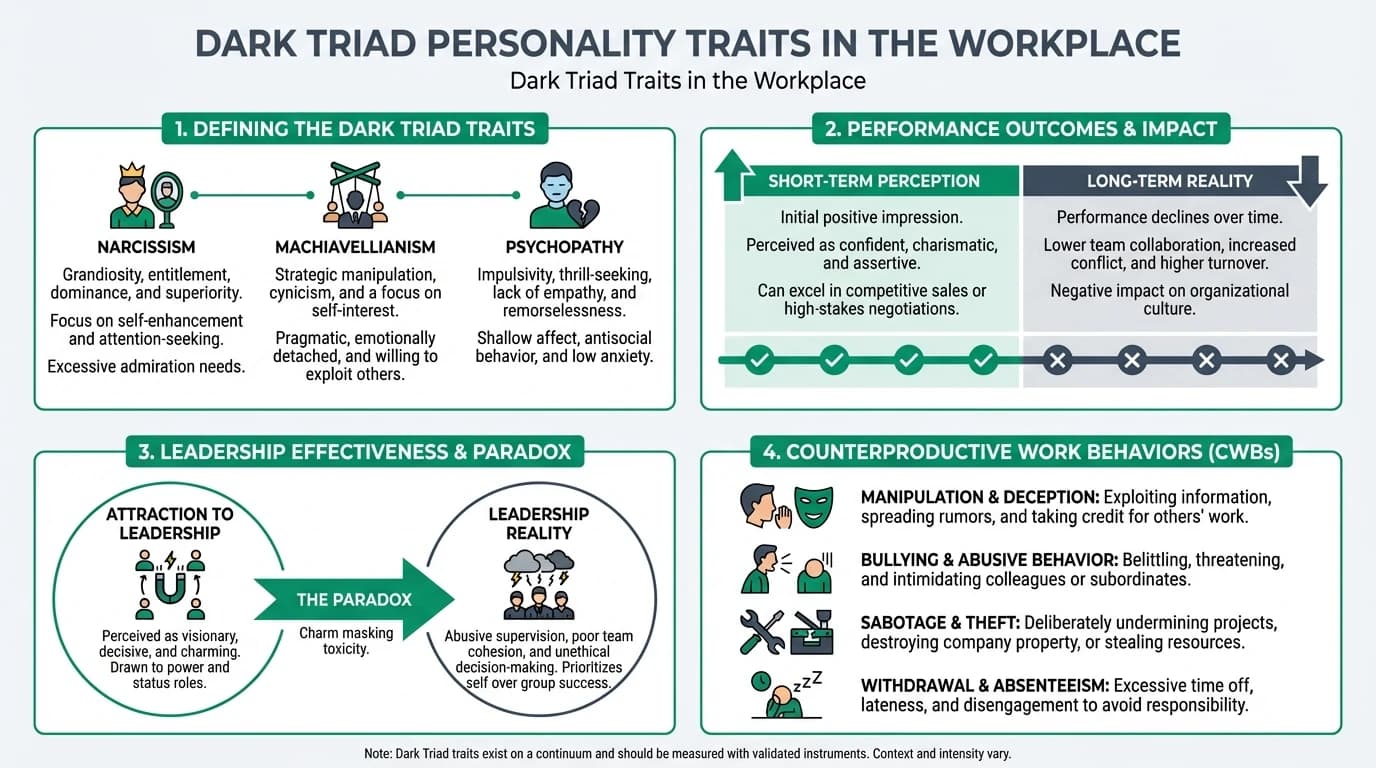
The Dark Triad—narcissism, Machiavellianism, and psychopathy—represents a set of personality traits with significant implications in workplace settings. These traits can influence job performance, leadership effectiveness, and interpersonal dynamics, though their impact varies based on organizational context.
The bottom line: Organizations must carefully assess and manage these traits to balance performance with ethical workplace culture.
Critical Warning: Mismanagement of Dark Triad traits can lead to toxic work environments and decreased organizational effectiveness.
What is the Dark Triad?
The Dark Triad consists of:
- Narcissism: Excessive self-interest, difficulty with team focus.
- Machiavellianism: Manipulative tendencies, power-seeking behavior.
- Psychopathy: Emotional dysregulation, impulse control deficits.
These traits, while distinct, often cluster together and can have varied effects on workplace dynamics.
| Trait | Definition | Behavioral Manifestation |
|---|---|---|
| Narcissism | Excessive self-interest | Difficulty adopting team-focused mindsets |
| Machiavellianism | Manipulative and power-seeking | Distrust and amoral actions |
| Psychopathy | Emotional dysregulation | Impulse control deficits |
Performance Outcomes
Dark Triad traits can undermine job performance:
- Machiavellianism and psychopathy correlate with decreased job performance and counterproductive behaviors1.
- Individuals with high Dark Triad scores often receive poorer performance evaluations2.
| Trait | Performance Impact | Supervisor Evaluation |
|---|---|---|
| Narcissism | Variable | Mixed |
| Machiavellianism | Decreased | Poor |
| Psychopathy | Decreased | Poor |
Leadership Effectiveness
Leaders with elevated Dark Triad traits often struggle with:
- Performance: Reduced effectiveness, especially in lower hierarchical roles1.
- Paradox: Initial attraction to narcissistic leaders can lead to long-term damage3.
| Leadership Role | Effectiveness with Dark Triad Traits |
|---|---|
| Lower Hierarchical | Reduced |
| Higher Hierarchical | Variable |
Counterproductive Work Behaviors
Dark Triad traits are linked to negative workplace behaviors:
- Toxicity: Traits create knock-on effects when colleagues model these behaviors2.
- Cultural Factors: Systemic issues can enable Dark Triad expression.
| Behavior | Dark Triad Influence | Organizational Impact |
|---|---|---|
| Blame-shifting | High | Toxic culture |
| Information hoarding | High | Reduced collaboration |
Contextual Moderators
Certain environments may amplify or suppress Dark Triad traits:
- Volatile Environments: Traits may thrive in sales or negotiations2.
- Regulatory Contexts: Strong ethics cultures can suppress these traits.
| Context | Amplifies Traits | Suppresses Traits |
|---|---|---|
| Sales/Negotiations | Yes | No |
| Regulated Industries | No | Yes |
Ethical Considerations
Using Dark Triad assessments in hiring raises ethical questions:
- Transparency: Obligation to communicate assessment results.
- Privacy: Considerations for using personality data.
| Consideration | Ethical Requirement |
|---|---|
| Transparency | High |
| Privacy | High |
Action checklist
- Implement Dark Triad assessments with transparency.
- Ensure privacy and ethical use of data.
- Consider contextual factors when assessing traits.
FAQ
What are the Dark Triad traits?
How do these traits affect job performance?
Can these traits be beneficial?
What ethical considerations exist for assessments?
How can organizations manage these traits?
Are Dark Triad traits always harmful?
What are red flags for identifying these traits?
Notes
Primary Sources
| Source | Type | URL |
|---|---|---|
| National Center for Biotechnology Information | Systematic Review | NCBI |
| Walden University | Empirical Study | Walden |
Conclusion
Understanding the Dark Triad in workplace settings is crucial for balancing performance with ethical considerations. Organizations must implement strategic assessments and cultivate strong cultures to manage these traits effectively.