personality-tests
Conscientiousness Peak Age Lifespan Trends
Practical guide to understand and apply Conscientiousness Peak Age Lifespan Trends.
md
title: "When Does Conscientiousness Peak? Age Trends in Big Five Conscientiousness" description: "Explore the age trends of conscientiousness in the Big Five personality model, focusing on midlife maturity and longitudinal changes." slug: "conscientiousness-peak-age-lifespan-trends" category: "personality-tests" keywords: ["conscientiousness peak", "Big Five personality", "age trends", "midlife maturity", "personality change"] author: "Editorial Team" datePublished: "2026-04-13" lastUpdated: "2026-04-13" featured: true images:
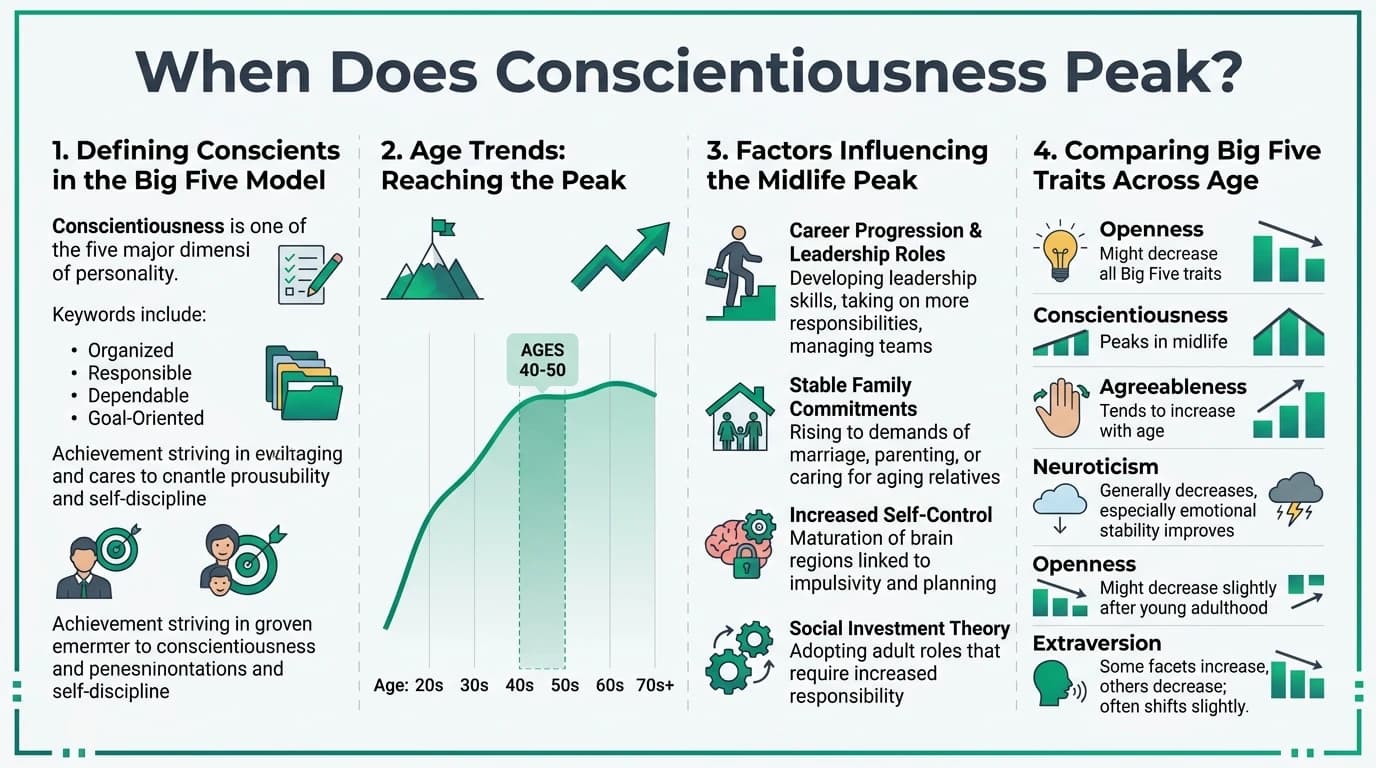
- url: "/images/guides/conscientiousness-peak-age-lifespan-trends.webp" alt: "Graph illustrating conscientiousness trends across different ages, highlighting the midlife peak." caption: "Conscientiousness peaks during midlife, reflecting increased work and life responsibilities." relatedGuides:
- "conscientiousness-complete-guide-big-five"
- "personality-changes-lifespan-science"
- "personality-retirement-transition-big-five"
Quick answer
When does conscientiousness peak?
Conscientiousness peaks during midlife, around ages 40–50, due to increased work and life responsibilities.
Executive Summary
- Quick Answer: Conscientiousness, a Big Five personality trait, peaks in midlife (ages 40–50). This aligns with increased responsibilities in work and life.
- Why It Matters: Understanding this trend helps in career planning and personal development, as conscientiousness influences productivity and reliability.
The bottom line: Conscientiousness is not static; it follows a predictable pattern, peaking in midlife due to life demands.
Critical Warning: Individual differences exist, and cultural factors may alter these patterns.
What is Conscientiousness?
Conscientiousness is one of the Big Five personality traits. It involves being:
- Organized: Keeping things in order.
- Disciplined: Sticking to plans and goals.
- Responsible: Being reliable and trustworthy.
Key Insight: Conscientiousness is crucial for success in work and personal life, influencing how people manage responsibilities.
When Does Conscientiousness Peak?
Age Trends
- Peak Age: 40–50 years.
- Pattern: Curvilinear increase, peaking in midlife.
| Age Range | Conscientiousness Level | Explanation |
|---|---|---|
| 20–30 | Increasing | Early career development |
| 40–50 | Peak | High work-life demands |
| 60+ | Plateau | Stabilization |
Takeaway: Conscientiousness peaks when life responsibilities are highest.
Why Does Conscientiousness Peak in Midlife?
Factors Influencing the Peak
- Work Demands: Increased career responsibilities.
- Life Transitions: Family and social roles intensify.
- Cultural Expectations: Western cultures emphasize personal achievement.
Important: Cultural variations can affect the timing and intensity of this peak.
How Do the Big Five Traits Change With Age?
Comparative Patterns
| Trait | Age Trend | Key Insight |
|---|---|---|
| Conscientiousness | Peaks in midlife | Driven by work-life demands |
| Agreeableness | Increases with age | Enhanced empathy and cooperation |
| Openness | Decreases with age | Less focus on novelty |
| Extraversion | Decreases with age | Reduced social energy |
| Neuroticism | Slight decrease | Greater emotional stability |
Key Takeaway: Each trait follows a unique trajectory, reflecting different life stages.
Do Gender Differences Affect Conscientiousness?
Gender Patterns
- Girls (Ages 12–22): Steady increase in conscientiousness.
- Boys (Ages 12–22): U-shaped pattern, with a dip in middle adolescence.
| Gender | Pattern | Explanation |
|---|---|---|
| Girls | Linear increase | Consistent growth in responsibility |
| Boys | U-shaped | Temporary dip, then recovery |
Conclusion: Gender influences conscientiousness development, especially during adolescence.
How Stable is Conscientiousness Over Time?
Stability Across the Lifespan
- Adolescence to Adulthood: High stability in personality traits.
- Key Finding: Personality is relatively stable, but conscientiousness peaks in midlife.
| Age Period | Stability Level | Interpretation |
|---|---|---|
| Adolescence | High | Early stability |
| Adulthood | Very High | Maintained consistency |
Note: While stable, conscientiousness shows predictable changes with age.
Can Conscientiousness Be Increased?
Influencing Factors
- Work Environment: Structured settings enhance conscientiousness.
- Life Experiences: Major life events can shift personality traits.
- Cultural Values: Emphasis on discipline and responsibility varies.
Practical Tip: Engaging in structured activities can boost conscientiousness over time.
Action checklist
- Understand your current conscientiousness level.
- Identify life stages that may influence changes.
- Consider cultural and environmental factors.
FAQ
At what age is conscientiousness highest?
Does conscientiousness increase or decrease with age?
Why does conscientiousness peak in midlife?
How do the Big Five personality traits change across the lifespan?
Is conscientiousness stable or does it change over time?
Do personality traits differ between men and women across age groups?
Can conscientiousness be increased or changed in adulthood?
Notes
Primary Sources
| Source | Type | URL |
|---|---|---|
| University of Wisconsin MIDUS | Longitudinal study | midus.wisc.edu |
| NIH/PubMed Central | Peer-reviewed research | pubmed.ncbi.nlm.nih.gov |
Conclusion
Conscientiousness peaks during midlife due to increased responsibilities. Understanding this pattern helps in career and personal development planning.