personality-tests
Real-World Applications of Psychometric Research: From Hiring to Personal Development
Explore how psychometric research is used in hiring, personal development, and beyond, with real-world examples and benefits.
Quick answer
What are the main applications of psychometric assessments?
1. Employee selection for cognitive and personality fit. 2. Talent development and training personalization. 3. Succession planning and leadership identification. 4. Team dynamics and cultural alignment.
Source: Edacen
Executive Summary
Psychometric research uses scientifically validated assessments to measure abilities, traits, and motivations. These tools help in hiring, personal development, and improving team dynamics.
The bottom line: Psychometric assessments provide valuable insights for both businesses and individuals, enhancing decision-making and personal growth.
Critical Warning: Ensure assessments are used ethically and align with fairness standards to avoid bias.
What Are Psychometric Assessments?
Psychometric assessments measure cognitive abilities, personality traits, and emotional intelligence. These tests are standardized and scientifically validated, ensuring reliable results.
Key Features:
- Cognitive Abilities: Measures problem-solving skills.
- Personality Traits: Evaluates characteristics like openness and conscientiousness.
- Emotional Intelligence: Assesses emotional awareness and management.
| Test Type | Measures | Best For |
|---|---|---|
| Big Five | Personality traits | Team dynamics |
| HPI | Work styles | Leadership potential |
| MBTI | Personality types | Personal development |
How Do Companies Use Psychometric Tests?
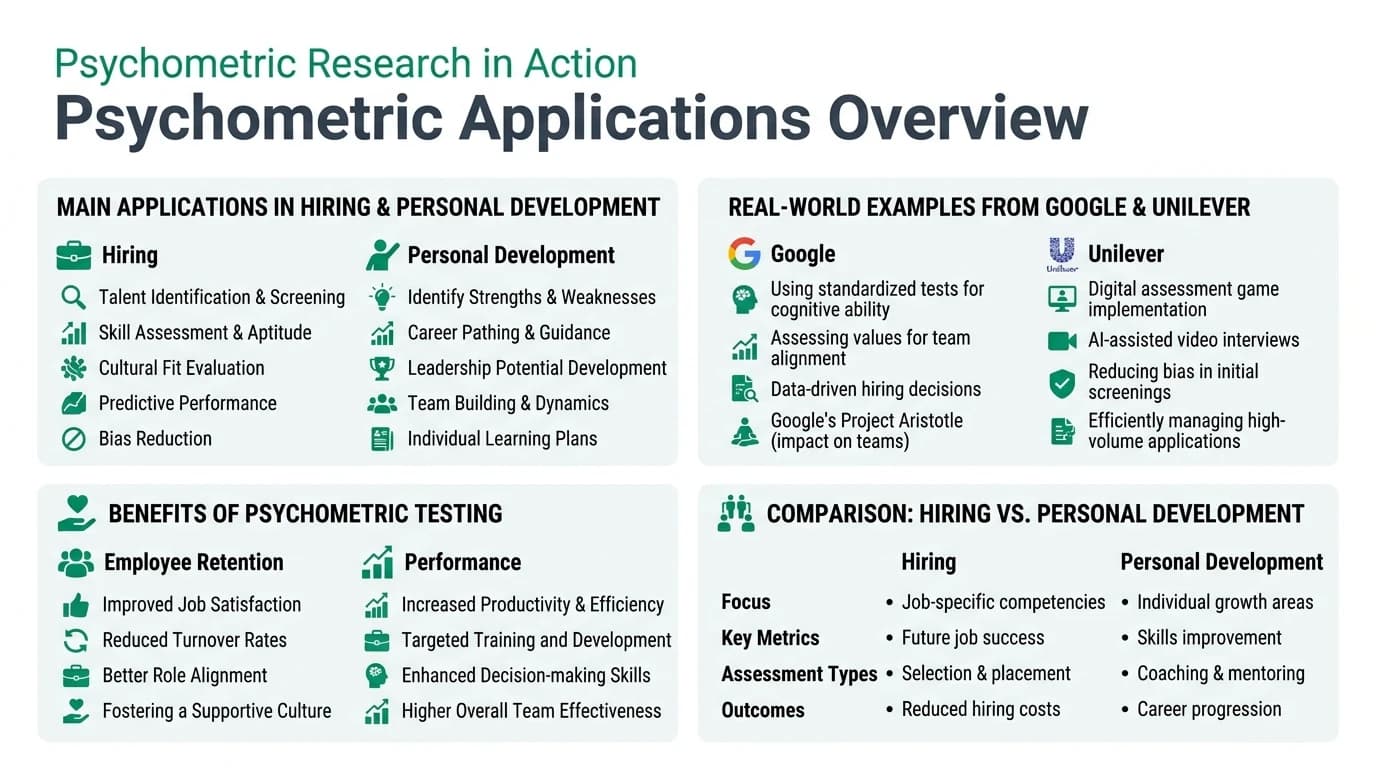
Companies like Google and Unilever use psychometric tests to improve hiring and development processes.
Examples:
- Google: Achieved 20% performance gains by aligning traits with skills.
- Unilever: Uses assessments in leadership programs to enhance retention.
| Company | Use Case | Outcome |
|---|---|---|
| Trait-skill alignment | 20% performance increase | |
| Unilever | Leadership retention | 5+ year retention |
Benefits of Psychometric Assessments in Hiring
Psychometric tests help identify the right candidates, reducing turnover and improving team fit.
Advantages:
- Reduced Turnover: Better candidate fit.
- Improved Selection: Objective data for decision-making.
- Enhanced Team Dynamics: Aligns personalities with roles.
| Aspect | Benefit |
|---|---|
| Turnover | 30% lower with better fit |
| Selection | Objective and data-driven |
| Dynamics | Enhanced compatibility |
Personal Development Through Psychometric Tools
These tools offer insights into personal traits, helping individuals in their growth journey.
Benefits:
- Self-Awareness: Understand strengths and weaknesses.
- Motivation Insights: Align career goals with personal values.
- Growth Strategies: Tailored development plans.
| Tool | Focus | Benefit |
|---|---|---|
| MBTI | Personality | Self-awareness |
| DISC | Behavior | Motivation insights |
Leadership Identification and Development
Psychometric assessments can predict leadership potential by evaluating emotional intelligence and other traits.
Key Traits:
- Emotional Intelligence: Essential for leadership roles.
- Conscientiousness: Indicates reliability and organization.
- Openness: Reflects adaptability and creativity.
| Trait | Importance |
|---|---|
| EI | Leadership potential |
| Conscientiousness | Reliability |
| Openness | Adaptability |
Common Psychometric Tests in HR
Several tests are popular in HR for hiring and development purposes.
Popular Tests:
- Big Five: Measures personality traits.
- HPI (Hogan Personality Inventory): Assesses work styles.
- MBTI (Myers-Briggs Type Indicator): Evaluates personality types.
| Test | Measures | Application |
|---|---|---|
| Big Five | Personality traits | Hiring, team building |
| HPI | Work styles | Leadership, development |
| MBTI | Personality types | Personal growth |
Implementation Best Practices
To effectively use psychometric assessments, align them with business goals and integrate them with interviews.
Steps:
- Define Goals: Align tests with organizational objectives.
- Select Tests: Choose based on role requirements.
- Integrate: Combine with traditional interviews for comprehensive evaluation.
| Step | Action |
|---|---|
| Define Goals | Align with objectives |
| Select Tests | Based on roles |
| Integrate | With interviews |
Action checklist
- Define clear objectives for using psychometric tests.
- Select appropriate tests for each role.
- Integrate assessments with interviews and other evaluation methods.
FAQ
How do psychometric assessments improve hiring decisions?
What are real-world examples of psychometric tests in companies like Google?
Can psychometric testing predict long-term employee success?
What personality traits do psychometric tests measure for leadership?
How do psychometric tools support personal development?
What is the role of emotional intelligence in psychometric hiring?
Which companies use psychometric assessments for talent development?
Notes
Primary Sources
Conclusion
Psychometric assessments are valuable tools for enhancing hiring processes, personal development, and leadership identification. By providing objective data, they help organizations make informed decisions and support individuals in their growth journeys.