career
Personality and Workplace Loneliness: Exploring Big Five Traits and Social Isolation
Discover how personality traits influence workplace loneliness, especially in remote work settings, and learn strategies to enhance belonging and wellbeing.
Quick answer
How do Big Five personality traits affect workplace loneliness?
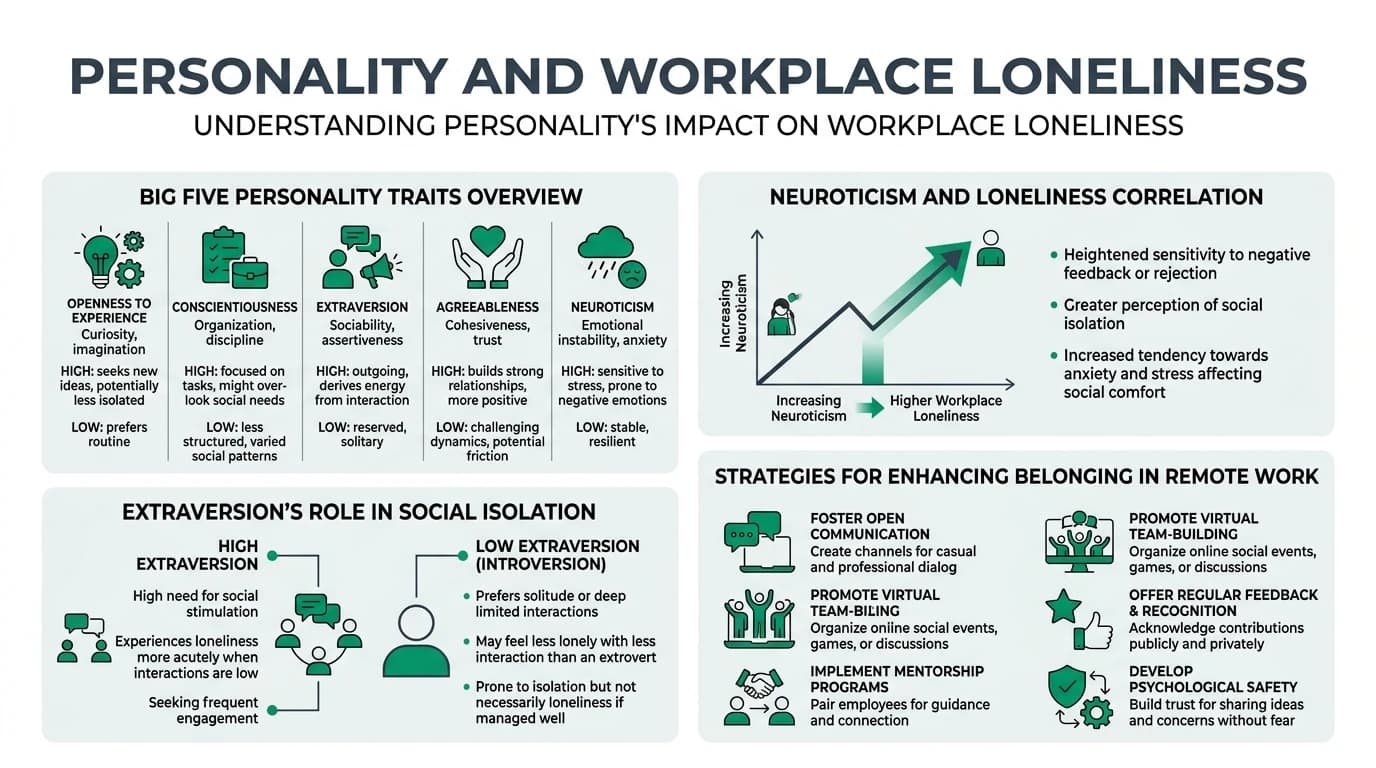
High neuroticism and low extraversion are key predictors of workplace loneliness, especially in remote work settings.
Source: PMC/NCBI
Executive Summary
Workplace loneliness is a growing concern, particularly with the rise of remote work. Personality traits, especially those from the Big Five model, play a significant role in how individuals experience loneliness at work.
The bottom line: Understanding these traits can help in crafting strategies to reduce loneliness and improve employee wellbeing.
Critical Warning: Loneliness can lead to serious mental health issues. Seek professional help if needed.
What Are the Big Five Personality Traits?
The Big Five personality traits are a widely accepted model in psychology. They include:
- Neuroticism: Emotional instability, anxiety.
- Extraversion: Sociability, energy.
- Openness: Creativity, open-mindedness.
- Agreeableness: Compassion, cooperativeness.
- Conscientiousness: Organization, responsibility.
Big Five vs. Loneliness Strength
| Trait | Loneliness Association | Strength (β/Correlation) | Key Context |
|---|---|---|---|
| Neuroticism | Positive, strongest | Significant predictor | All groups |
| Extraversion | Negative (low = higher) | β = -.16 to -.37 | Strongest in Japanese |
| Agreeableness | Negative | Significant in women/men | Independent of depression |
| Openness | Neutral/negative | Non-significant in most | Non-depressed only |
How Does Neuroticism Relate to Loneliness at Work?
Neuroticism is characterized by emotional instability, which can lead to higher levels of loneliness, especially during remote work or isolation.
Effect: Emotional instability increases loneliness.
Context: More pronounced during social isolation.
Caveat: Impacts daily mood fluctuations.
How Does Extraversion Influence Social Isolation?
Extraversion involves being outgoing and energetic. Low extraversion can increase feelings of loneliness, especially when working remotely.
Loneliness Contexts Pros/Cons
| Context | High Neuroticism Impact | Extraversion Buffer |
|---|---|---|
| Alone | Increased loneliness | Reduced by social interactions |
| With Others | Less impact | Enhanced by group activities |
What Role Does Agreeableness Play in Employee Belonging?
Agreeableness is about being cooperative and compassionate. It can influence how connected employees feel at work.
Effect: Enhances teamwork and belonging.
Process: Encourages positive interactions.
Caveat: Less impact if other traits dominate.
How Does Remote Work Increase Loneliness?
Remote work can amplify feelings of isolation, particularly for those with certain personality traits.
Remote Work Benchmarks
| Trait Level | Loneliness Risk | Wellbeing Strategy |
|---|---|---|
| High Neuroticism | High | Regular check-ins, mental health support |
| Low Extraversion | Medium | Virtual social events, team-building |
Are There Cultural Differences in Personality and Loneliness?
Cultural background can influence how personality traits affect loneliness.
Cultural Comparisons
| Group | Extraversion β | Neuroticism Effect | Fit Metrics |
|---|---|---|---|
| White Americans | β = -.16 | Moderate | High |
| Black Americans | β = -.20 | Moderate | High |
| Japanese | β = -.37 | Strong | Moderate |
How Can We Improve Workplace Wellbeing?
Improving workplace wellbeing involves understanding personality traits and creating supportive environments.
Key Strategies:
- Tailored Interventions: Match strategies to personality traits.
- Regular Feedback: Encourage open communication.
- Inclusive Policies: Foster a sense of belonging.
Action checklist
- Identify key personality traits in your team.
- Implement tailored wellbeing strategies.
- Encourage regular team interactions.
FAQ
Which Big Five trait most predicts workplace loneliness?
How does remote work increase loneliness for introverts?
Does neuroticism cause more loneliness in remote workers?
Can extraversion reduce social isolation at work?
What role does agreeableness play in employee belonging?
How do Big Five traits affect daily loneliness fluctuations?
Is loneliness higher in certain cultures based on personality?
Notes
Primary Sources
| Source | Type | URL |
|---|---|---|
| PMC/NCBI | Peer-reviewed | PMC Article |
| Marlies Maes site | Meta-analysis PDF | Marlies Maes PDF |
Conclusion
Understanding the interplay between personality traits and workplace loneliness can guide effective strategies to enhance employee wellbeing. By tailoring interventions to individual needs, organizations can foster a more inclusive and supportive work environment.