personality-tests
Personality Test Debriefing Best Practices for HR and Managers
Learn best practices for debriefing personality test results in HR: preparation, feedback structure, tone setting, ethical considerations, and integration.
Quick answer
What are the best practices for debriefing personality test results in HR?
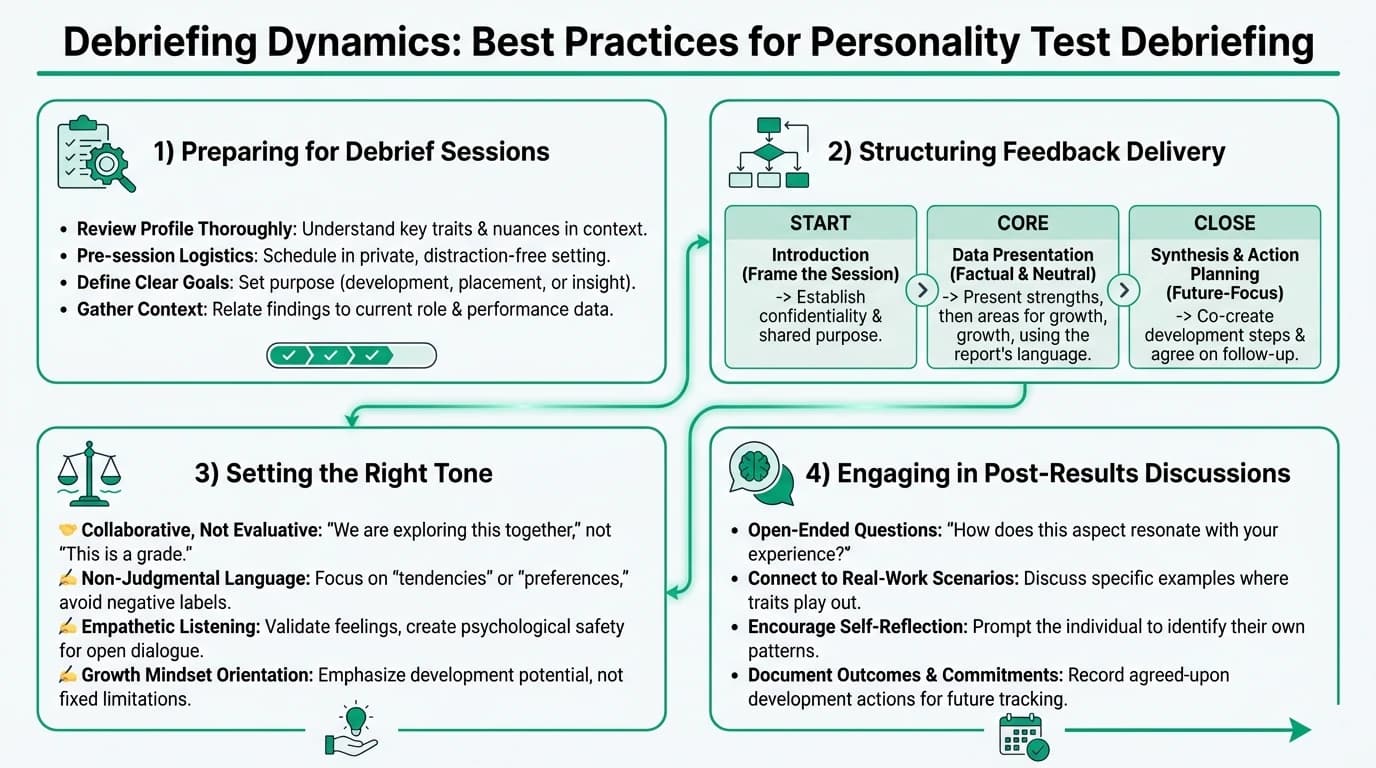
Best practices include preparing thoroughly, setting the right tone, structuring feedback effectively, and integrating results with other assessment methods.
Source: Central Test
Executive Summary
Personality test debriefing is a critical process in HR that involves delivering assessment results to candidates or employees. The goal is to enhance decision-making and individual growth by emphasizing clarity, empathy, and actionable insights. Best practices focus on balancing transparency with nuance, avoiding biases, and integrating results with job requirements.
The bottom line: Effective debriefing can significantly impact employee development and organizational success.
Critical Warning: Misinterpretation of test results can lead to biased decisions and negatively affect employee morale and trust.
1) Preparing for Debrief Sessions
What is Preparation in Debriefing?
Preparation involves defining job-specific criteria and analyzing results against role needs before discussions. This ensures that the debriefing process is relevant and targeted.
How Does Preparation Work?
Preparation requires understanding theoretical models and key dimensions. HR professionals should study reference standards for accurate interpretation and cross-check results with interviews or 360 feedback. For context on interpretation, see our Big Five complete guide.
Key Mechanics
- Define Criteria: Align results with specific job requirements.
- Analyze Results: Compare test outcomes with role needs.
- Cross-Check: Validate findings with additional feedback.
Common Mistakes and Pitfalls to Avoid
Avoid jumping to conclusions without a thorough analysis. Ensure that results are contextualized within the job role and organizational culture.
Key Takeaways:
- Always align test results with job-specific criteria.
- Cross-check with other data sources for a holistic view.
- Avoid assumptions based solely on test outcomes.
2) Structuring the Feedback Delivery
What is Feedback Structuring?
Structuring feedback involves organizing the delivery of test results in a coherent and meaningful way. This process helps in communicating results effectively to the recipient.
How Does Feedback Structuring Work?
Follow a four-step process: define criteria, analyze results, prepare questions, and conduct the interview. Present context, theoretical model, summary, detailed analysis, and conclusion tied to the role.
Key Mechanics
- Context: Explain the purpose and model used.
- Summary: Provide an overview of key findings.
- Detailed Analysis: Dive into specific traits and implications.
Example of Structuring
Start with strengths, move to areas for improvement, and end with vigilance points and action plans. For instance, highlight a candidate's high conscientiousness as a strength and suggest development areas for low extraversion.
Key Takeaways:
- Structure feedback to be clear and coherent.
- Focus on strengths before discussing improvements.
- Tie conclusions to actionable plans.
3) Setting the Right Tone and Expectations
What is Tone Setting?
Setting the right tone involves emphasizing that personality tests are tools for understanding preferences, not judgments. This approach builds trust and openness.
How Does Tone Setting Work?
Communicate the purpose, usage, and benefits of the tests transparently. Adopt a caring, non-judgmental attitude while highlighting strengths.
Key Mechanics
- Emphasize Understanding: Frame tests as tools for insight.
- Communicate Transparently: Explain how results will be used.
- Adopt a Positive Attitude: Focus on strengths and growth.
Common Mistakes and Pitfalls to Avoid
Avoid presenting results as definitive judgments. Ensure that the conversation is supportive and constructive.
Key Takeaways:
- Frame tests as tools for understanding, not judgment.
- Communicate the purpose and benefits clearly.
- Maintain a positive and supportive tone.
4) Duration and Format of Debrief Sessions
What is Debrief Duration and Format?
The duration and format of debrief sessions should be planned to ensure comprehensive coverage and reflection. Typically, sessions last 30-45 minutes.
How Does Debrief Duration and Format Work?
Use structured reports as conversation starters, not final verdicts. Facilitate in-person or virtual interviews with prepared, role-relevant questions. For remote teams, see our personality tests remote teams playbook.
Key Mechanics
- Allocate Time: Plan for 30-45 minutes per session.
- Use Reports: Start conversations with structured reports.
- Facilitate Engagement: Encourage questions and reflections.
Example of Duration Planning
For a sales role, allocate time to discuss high extroversion scores and their alignment with client-facing demands, while addressing potential impatience in team settings.
Key Takeaways:
- Plan sessions to balance depth and reflection.
- Use reports as starting points, not conclusions.
- Encourage interaction and engagement.
5) Engaging in Post-Results Discussions
What are Post-Results Discussions?
Post-results discussions involve engaging candidates or employees in reflecting on their test results and discussing fit or growth areas.
How Do Post-Results Discussions Work?
Encourage reflection, ask questions, and collaborate on action plans using frameworks like SMART goals. Seek recipient feedback to promote self-awareness and development.
Key Mechanics
- Encourage Reflection: Invite recipients to share thoughts.
- Collaborate on Plans: Develop action plans together.
- Seek Feedback: Use feedback to enhance self-awareness.
Common Mistakes and Pitfalls to Avoid
Avoid dominating the conversation. Ensure that the recipient feels heard and involved in the process.
Key Takeaways:
- Foster a reflective and collaborative environment.
- Use SMART goals for actionable plans.
- Encourage feedback for continuous improvement.
6) Training HR and Managers on Interpretation
What is HR and Manager Training?
Training HR and managers ensures consistent and ethical use of test results. This training is crucial for accurate interpretation and effective communication.
How Does HR and Manager Training Work?
Provide training on avoiding assumptions and over-reliance on tests. Use manager guides for confident, empathetic discussions.
Key Mechanics
- Provide Training: Ensure consistent interpretation.
- Avoid Assumptions: Base feedback on data, not biases.
- Use Guides: Support discussions with structured guides.
Example of Training Program
Develop a training module that includes case studies and role-playing exercises to practice debriefing scenarios.
Key Takeaways:
- Train consistently for accurate interpretations.
- Avoid assumptions and biases in feedback.
- Use structured guides for support.
7) Integrating with Other Assessment Methods
What is Integration with Other Methods?
Integration involves combining personality tests with interviews, skills tests, or 360 feedback to create a comprehensive assessment approach.
How Does Integration Work?
Treat tests as guides, not gatekeepers, for hiring decisions. Monitor for fairness by weighting variables appropriately. Verify instrument quality with our personality test reliability checklist.
Key Mechanics
- Combine Methods: Use multiple assessments for a holistic view.
- Treat as Guides: Use tests to inform, not decide.
- Ensure Fairness: Monitor for balanced assessments.
Common Mistakes and Pitfalls to Avoid
Avoid relying solely on personality tests. Ensure that other data sources are considered in decision-making.
Key Takeaways:
- Combine tests with other assessments for balance.
- Use tests as informative guides, not sole deciders.
- Monitor for fairness and balance.
8) Ensuring Candidate and Employee Experience
What is Candidate and Employee Experience?
Ensuring a positive experience involves offering feedback and maintaining respect throughout the assessment process.
How Does Candidate and Employee Experience Work?
Offer feedback where possible to maintain respect and employer brand. Involve everyone organization-wide for inclusivity and team alignment.
Key Mechanics
- Offer Feedback: Provide constructive feedback to recipients.
- Maintain Respect: Ensure a respectful and supportive process.
- Promote Inclusivity: Involve all stakeholders for alignment.
Common Mistakes and Pitfalls to Avoid
Avoid neglecting feedback opportunities. Ensure that the process is inclusive and respectful.
Key Takeaways:
- Provide feedback to enhance experience.
- Maintain respect and support throughout.
- Promote inclusivity and alignment.
9) Ethical Considerations and Bias Avoidance
What are Ethical Considerations?
Ethical considerations involve basing feedback solely on test data, respecting margins of error and nuances, and avoiding biases.
How Do Ethical Considerations Work?
Avoid comparisons to others or subjective interpretations. Align tests with company values and monitor for fairness.
Key Mechanics
- Base on Data: Use test data for feedback.
- Respect Margins: Acknowledge errors and nuances.
- Avoid Comparisons: Focus on individual results.
Common Mistakes and Pitfalls to Avoid
Avoid subjective interpretations or biased feedback. Ensure that feedback is data-driven and fair.
Key Takeaways:
- Use data-driven feedback for ethics.
- Respect test margins and nuances.
- Avoid biased comparisons.
10) Linking Results to Development and Role Fit
What is Linking to Development and Role Fit?
Linking results involves highlighting how traits align with job, team, and company needs, and suggesting tailored development actions.
How Does Linking Work?
Highlight how traits align with job needs. Suggest tailored development actions and growth opportunities.
Key Mechanics
- Align Traits: Connect traits to job requirements.
- Suggest Actions: Offer tailored development plans.
- Promote Growth: Encourage opportunities for development.
Example of Linking
For a leadership role, link high agreeableness to team collaboration and suggest development in decision-making assertiveness.
Key Takeaways:
- Align traits with job and team needs.
- Offer tailored development plans.
- Encourage growth and development.
Action checklist
- Prepare thoroughly by defining criteria and analyzing results.
- Structure feedback delivery with a clear and coherent approach.
- Set a positive and supportive tone during debriefing sessions.
- Integrate personality tests with other assessment methods.
- Ensure ethical considerations and avoid biases in feedback.
FAQ
How long should a debrief session last?
What should be included in a feedback structure?
How can HR avoid biases in debriefing?
What role does tone play in debriefing sessions?
Why integrate personality tests with other methods?
What are common mistakes in debriefing?
How can feedback be linked to development?
Notes
Primary Sources
| Source | Type | URL |
|---|---|---|
| Central Test | Blog | centraltest.com |
| Yuzu HR | Blog | yuzu.hr |
| Test Partnership | Blog | testpartnership.com |
| Predictive Index | Blog | predictiveindex.com |
| Thomas International | Guide | thomas.co |
Conclusion
Incorporating best practices for debriefing personality test results can greatly enhance HR processes by fostering understanding, growth, and alignment. By preparing thoroughly, structuring feedback effectively, and integrating results with other methods, HR professionals can ensure ethical and impactful debriefing sessions.