personal-development
Personality and Social Anxiety: How Big Five Traits Shape Shyness and Fear of Judgment
Explore how the Big Five personality traits influence social anxiety, shyness, and fear of judgment. Learn who's more prone and what helps.
Quick answer
Which Big Five traits predict social anxiety?
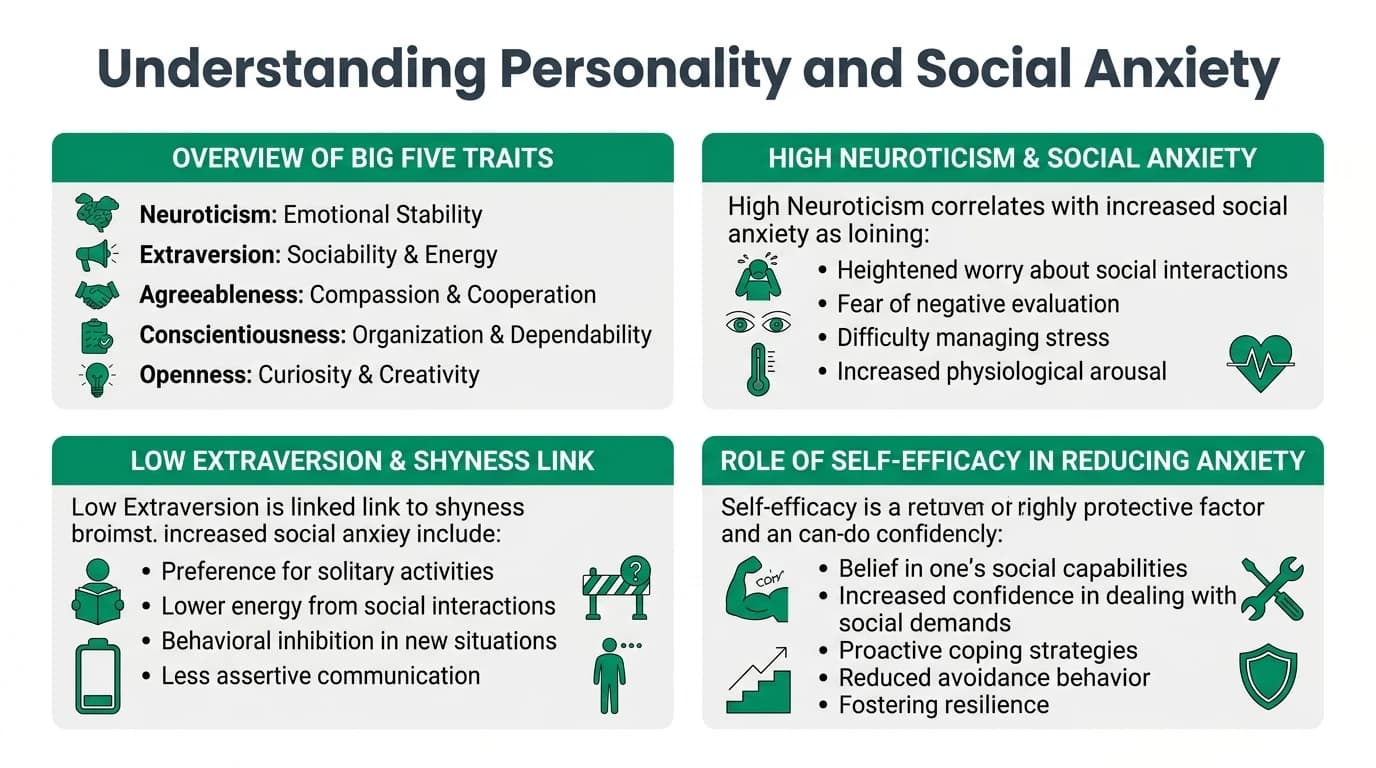
1. High neuroticism positively correlates with anxiety. 2. Low extraversion links to shyness. 3. Low agreeableness, conscientiousness, and openness negatively correlate with anxiety. 4. Self-efficacy can reduce anxiety impact.
Source: PLOS ONE
Executive Summary
Social anxiety can feel overwhelming, especially when you're unsure why it affects you. The Big Five personality traits—neuroticism, extraversion, agreeableness, conscientiousness, and openness—play a significant role in shaping how we experience social anxiety and fear of judgment.
The bottom line: If you struggle with social anxiety, understanding your personality traits can help. Boosting self-efficacy is a practical step to manage anxiety.
Critical Warning: Always consult a mental health professional for personalized advice.
What Are the Big Five Personality Traits?
The Big Five traits are a popular way to describe human personality. Here's a quick look at each:
- Neuroticism: Tendency to experience negative emotions.
- Extraversion: Enjoyment of social interactions and being outgoing.
- Agreeableness: Being cooperative and compassionate.
- Conscientiousness: Being organized and responsible.
- Openness: Being open to new experiences and ideas.
Table: Big Five Traits Overview
| Trait | Description |
|---|---|
| Neuroticism | Emotional instability, anxiety-prone |
| Extraversion | Sociable, energetic |
| Agreeableness | Kind, empathetic |
| Conscientiousness | Organized, disciplined |
| Openness | Curious, imaginative |
How Does Neuroticism Affect Social Anxiety?
Neuroticism is strongly linked to social anxiety. People high in neuroticism often experience:
- Increased worry: Frequent concerns about social situations.
- Emotional reactivity: Strong reactions to perceived criticism.
Important: High neuroticism can make social situations feel more threatening, increasing anxiety.
Why Is Low Extraversion Linked to Shyness?
Low extraversion, or introversion, often leads to shyness. Introverts may:
- Prefer solitude: Find large groups draining.
- Avoid social settings: Fear of judgment or rejection.
Table: Extraversion and Shyness
| Extraversion Level | Social Behavior |
|---|---|
| High | Outgoing, enjoys socializing |
| Low (Introversion) | Reserved, prefers small groups |
Can Other Traits Protect Against Anxiety?
Traits like agreeableness, conscientiousness, and openness can help:
- Agreeableness: Encourages positive social interactions.
- Conscientiousness: Provides structure, reducing stress.
- Openness: Promotes adaptability to new situations.
Table: Protective Traits Against Anxiety
| Trait | Protective Role |
|---|---|
| Agreeableness | Enhances social bonds |
| Conscientiousness | Reduces chaos, increases control |
| Openness | Encourages flexibility |
What Are Personality Clusters in Social Anxiety Disorder?
Research identifies different personality clusters within social anxiety disorder (SAD):
- Prototypical (33%): High neuroticism, low extraversion.
- Introvert-Conscientious (29%): Introverted but organized.
- Instable-Open (38%): Varies in openness, less typical.
Table: SAD Personality Clusters
| Cluster | % of Patients | Key Traits |
|---|---|---|
| Prototypical | 33% | High neuroticism, low extraversion |
| Introvert-Conscientious | 29% | Introverted, high conscientiousness |
| Instable-Open | 38% | Varies in openness |
How Does Self-Efficacy Help?
Self-efficacy, or belief in your ability to succeed, can reduce the impact of anxiety:
- Boosts confidence: Encourages trying new social activities.
- Reduces fear: Lowers anxiety by increasing perceived control.
Important: Building self-efficacy can be a powerful tool in managing social anxiety.
Who Is Most Prone to Social Anxiety?
People with high neuroticism and low extraversion are most at risk. They often experience:
- Fear of judgment: Worry about others' opinions.
- Avoidance behaviors: Skipping social events.
Table: Proneness to Social Anxiety
| Trait Combination | Prone Level | Common Behaviors |
|---|---|---|
| High neuroticism + Low extraversion | High | Avoidance, fear of judgment |
What Helps People Struggling in Social Situations?
Practical steps can ease anxiety:
- Identify traits: Understand your personality profile.
- Boost self-efficacy: Practice small, manageable social tasks.
- Seek support: Therapy or support groups can provide guidance.
Action checklist
- Identify your Big Five traits.
- Practice self-efficacy exercises.
- Consider professional support if needed.
FAQ
Which Big Five trait most predicts social anxiety?
How does low extraversion cause shyness?
Can high neuroticism be managed for less fear of judgment?
What role does self-efficacy play in personality and anxiety?
Are there personality subtypes in social anxiety disorder?
How does agreeableness affect social fears?
Does conscientiousness protect against anxiety?
Notes
Primary Sources
| Source | Type | URL |
|---|---|---|
| NIH/PMC | Peer-reviewed | Link |
| PLOS ONE | Peer-reviewed | Link |
| Uppsala University | Official (study press) | Link |
Conclusion
Understanding how your personality influences social anxiety can be empowering. By focusing on traits like neuroticism and extraversion, and boosting self-efficacy, you can better manage social fears.