personal-development
Personality and Grief: How Big Five Traits Shape Coping with Loss
Explore how the Big Five personality traits influence grief responses and coping strategies after loss.
Quick answer
How do Big Five traits affect grief?
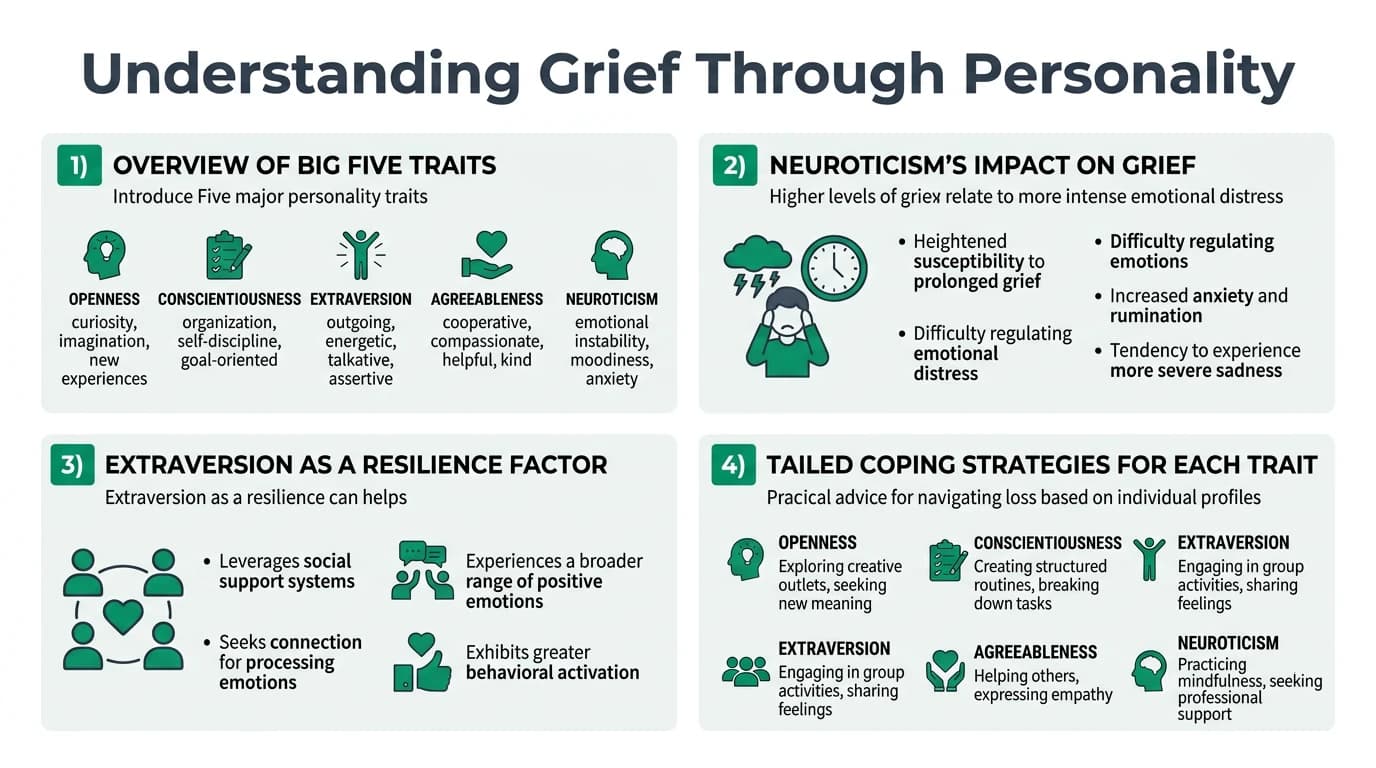
Personality traits like neuroticism, extraversion, and conscientiousness influence how people cope with loss. Neuroticism may increase grief intensity, while extraversion and conscientiousness can provide resilience.
Source: University of Groningen
Executive Summary
Grieving is a deeply personal experience, and personality traits play a significant role in how individuals cope with loss. The Big Five traits—neuroticism, extraversion, agreeableness, openness, and conscientiousness—can shape the grieving process in unique ways.
The bottom line: Understanding these traits can help tailor support and coping strategies to better manage grief.
Critical Warning: Always seek professional support if grief feels overwhelming or unmanageable.
What is the Big Five Personality Model?
The Big Five personality model is a widely accepted framework in psychology that describes five key traits:
- Neuroticism: Emotional instability and anxiety.
- Extraversion: Sociability and enthusiasm.
- Agreeableness: Compassion and cooperation.
- Openness: Creativity and curiosity.
- Conscientiousness: Organization and dependability.
| Trait | Description |
|---|---|
| Neuroticism | Emotional instability, anxiety |
| Extraversion | Sociability, enthusiasm |
| Agreeableness | Compassion, cooperation |
| Openness | Creativity, curiosity |
| Conscientiousness | Organization, dependability |
These traits influence how we think, feel, and behave, including how we handle grief.
How Does Neuroticism Affect Grief?
Neuroticism is often linked to more intense grief experiences. People high in neuroticism may:
- Experience heightened emotions: More prone to anxiety and depression.
- Use emotion-focused coping: May dwell on feelings rather than finding solutions.
- Face prolonged grief: Higher risk for complicated grief.
| Effect | Description |
|---|---|
| Heightened Emotions | Increased anxiety, depression |
| Coping Style | Emotion-focused, less problem-solving |
| Grief Duration | Risk of prolonged grief |
Coping Tips: Consider therapy and mindfulness practices to manage intense emotions.
Can Extraversion Provide Grief Resilience?
Extraversion can be a protective factor in grieving. Extraverts often:
- Seek social support: Engage with friends and family for comfort.
- Maintain optimism: Positive outlook can buffer against sadness.
- Adapt quickly: More flexible in adjusting to change.
| Benefit | Description |
|---|---|
| Social Support | Engages with others for comfort |
| Optimism | Maintains a positive outlook |
| Adaptability | Adjusts quickly to change |
Coping Tips: Leverage social networks and community activities to stay connected.
How Does Conscientiousness Influence Coping?
Conscientiousness is associated with effective coping strategies. Conscientious individuals tend to:
- Plan and organize: Approach grief with structured routines.
- Set goals: Focus on achievable tasks to regain control.
- Problem-solve: Address issues directly rather than avoiding them.
| Trait Benefit | Description |
|---|---|
| Planning | Structured routines |
| Goal Setting | Focuses on achievable tasks |
| Problem Solving | Directly addresses issues |
Coping Tips: Create daily schedules and set small goals to manage grief.
Does Agreeableness Affect Grieving?
Agreeableness can enhance resilience in grief through:
- Empathy and support: Strong interpersonal relationships.
- Cooperation: Willingness to seek help and work with others.
- Conflict avoidance: Less likely to engage in disputes during stressful times.
| Strength | Description |
|---|---|
| Empathy | Builds strong relationships |
| Cooperation | Seeks help and collaboration |
| Conflict Avoidance | Reduces stress from disputes |
Coping Tips: Engage in group activities and seek support from loved ones.
Is Openness to Experience Helpful in Mourning?
Openness can offer unique coping advantages:
- Creative outlets: Use art or writing to express emotions.
- Adaptability: Open to new experiences and perspectives.
- Curiosity: Interested in learning from the grieving process.
| Advantage | Description |
|---|---|
| Creative Outlets | Art, writing for emotional expression |
| Adaptability | Open to new experiences |
| Curiosity | Learning from grief |
Coping Tips: Explore creative hobbies and embrace new experiences to process grief.
How Do Personality Traits Change After Loss?
Grief can alter personality traits temporarily:
- Extraversion may decrease: Reduced social engagement.
- Emotional stability can increase: Greater resilience over time.
- Openness might fluctuate: Initial withdrawal followed by curiosity.
| Change | Description |
|---|---|
| Extraversion | May decrease post-loss |
| Emotional Stability | Often increases |
| Openness | Initial withdrawal, later curiosity |
Key Takeaways:
- Personality traits significantly influence grief responses.
- Understanding these traits can guide personalized support.
- Coping strategies should align with individual traits for effectiveness.
Action checklist
- Identify your primary personality traits.
- Choose coping strategies that align with your traits.
- Seek professional support if needed.
FAQ
How does high neuroticism affect grief processing?
Do extraverts grieve differently than introverts?
Can conscientious people cope better with bereavement?
What role does agreeableness play in loss resilience?
Does openness to experience help or hinder mourning?
How do Big Five traits change after losing a spouse?
Which personality predicts complicated grief?
Notes
Primary Sources
| Source | Type | URL |
|---|---|---|
| University of Groningen | Peer-reviewed thesis/systematic review | Link |
| NIH/PMC | Peer-reviewed | Link |
Conclusion
Understanding how personality traits influence grief can provide valuable insights into coping strategies. By recognizing these differences, individuals can tailor their approaches to better manage their emotions and support others.