career
Personality and Culinary Chef Careers: Big Five Traits in Kitchens
Explore how the Big Five personality traits influence chef careers, from stress management to creativity and leadership in kitchens.
Quick answer
What are the top Big Five personality traits for chefs?
1. Openness 2. Conscientiousness 3. Agreeableness 4. Extraversion 5. Low Neuroticism
Source: Worldchefs
Executive Summary
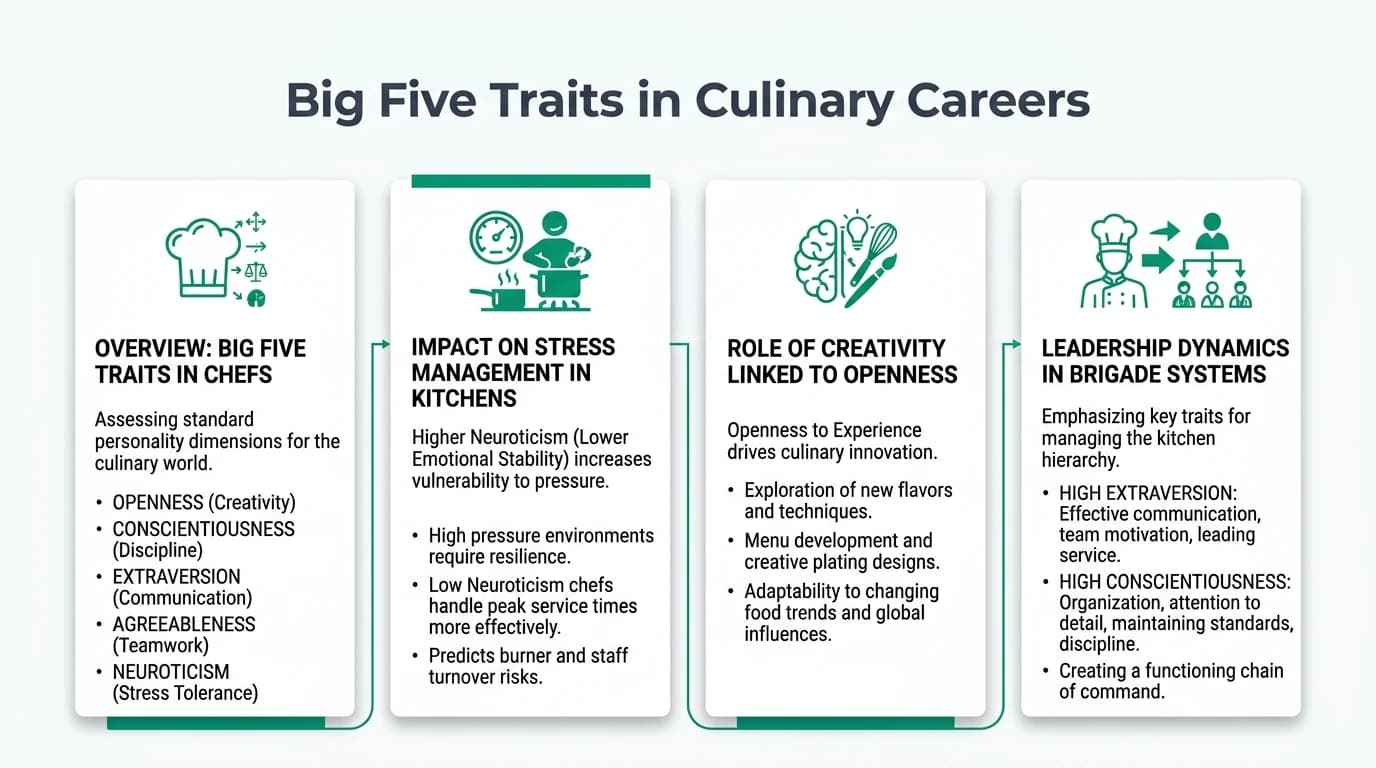
Curious about how personality affects chef careers? The Big Five traits—Openness, Conscientiousness, Extraversion, Agreeableness, and Neuroticism—play a crucial role in the kitchen. They influence creativity, stress management, leadership, and teamwork.
The bottom line: Understanding these traits can help chefs thrive in high-pressure environments.
Critical Warning: While personality traits can guide career success, they're not the sole factor. Skills and experience matter too.
What Are the Big Five Traits in Chef Profiles?
The Big Five traits provide a framework to understand how chefs perform under pressure. Here's a quick look at how these traits rank for chefs:
| Trait | Research Chefs | Commercial Chefs | Hospitality Fit |
|---|---|---|---|
| Openness | High | High | Creativity |
| Conscientiousness | Moderate | High | Reliability |
| Extraversion | Moderate | Low | Leadership |
| Agreeableness | High | High | Teamwork |
| Neuroticism | Low | Low | Stress Resilience |
Key takeaways:
- Openness fuels innovation.
- Conscientiousness ensures reliability.
- Low Neuroticism aids stress management.
How Do Personality Traits Affect Stress and Speed in Kitchens?
Kitchens are high-stress environments. Understanding personality can help manage this stress:
| Factor | Male Chefs | Female Chefs |
|---|---|---|
| Stress Levels | Higher | Lower |
| Personality Dominance | Openness | Agreeableness |
Important:
- Low Neuroticism is linked to better stress handling.
- Openness is the strongest trait for managing kitchen challenges.
Why Is Openness Crucial for Chef Creativity?
Openness to experience is vital for chefs who innovate while respecting culinary traditions:
- Effect: Drives curiosity and innovation.
- Process: Encourages problem-solving and creativity.
- Caveat: Must balance with tradition.
What Role Does Extraversion Play in Kitchen Leadership?
Leadership in kitchens often follows the brigade system, where teamwork is key:
| Trait | Leadership Role | Example |
|---|---|---|
| Extraversion | Influencing others | Head Chef |
| Conscientiousness | Mentoring | Sous Chef |
Key takeaways:
- Extraversion helps in leading teams.
- Conscientiousness supports structured leadership.
How Do Personality Traits Impact Hospitality Performance?
Traits influence how chefs and staff interact with guests and each other:
| Trait | Linked Outcome | Source |
|---|---|---|
| Extraversion | Customer service | Traitify |
| Agreeableness | Teamwork | Traitify |
| Conscientiousness | Reliability | RSI International |
Important:
- Extraversion and Agreeableness are crucial for front-of-house roles.
- Conscientiousness ensures consistent performance.
How Do Eating Habits Relate to Personality Traits?
Chefs' own eating habits can reflect their personality traits:
| Trait | Recommended Foods | Non-Recommended |
|---|---|---|
| Neuroticism | Healthy choices | Emotional eating |
| Agreeableness | Balanced diet | Overindulgence |
Key takeaways:
- Conscientiousness aligns with healthier eating.
- Neuroticism may lead to emotional eating patterns.
FAQ
What Big Five traits make a successful chef?
How does openness to experience help chefs innovate?
Does high neuroticism increase chef burnout?
Why is extraversion important for kitchen brigade leaders?
How do conscientious chefs handle high-speed kitchens?
What role does agreeableness play in restaurant teamwork?
Are introverted people good chefs?
Notes
Primary Sources
Conclusion
Understanding the Big Five personality traits can significantly enhance a chef's career by improving stress management, creativity, and leadership. These insights are valuable for aspiring chefs, restaurant managers, and career advisors.