lifestyle
Personality and Charitable Giving: How the Big Five Traits Influence Donations and Volunteering
Explore how the Big Five personality traits affect charitable giving, volunteering, empathy, and philanthropic decision-making.
Quick answer
Which Big Five traits predict charitable giving?
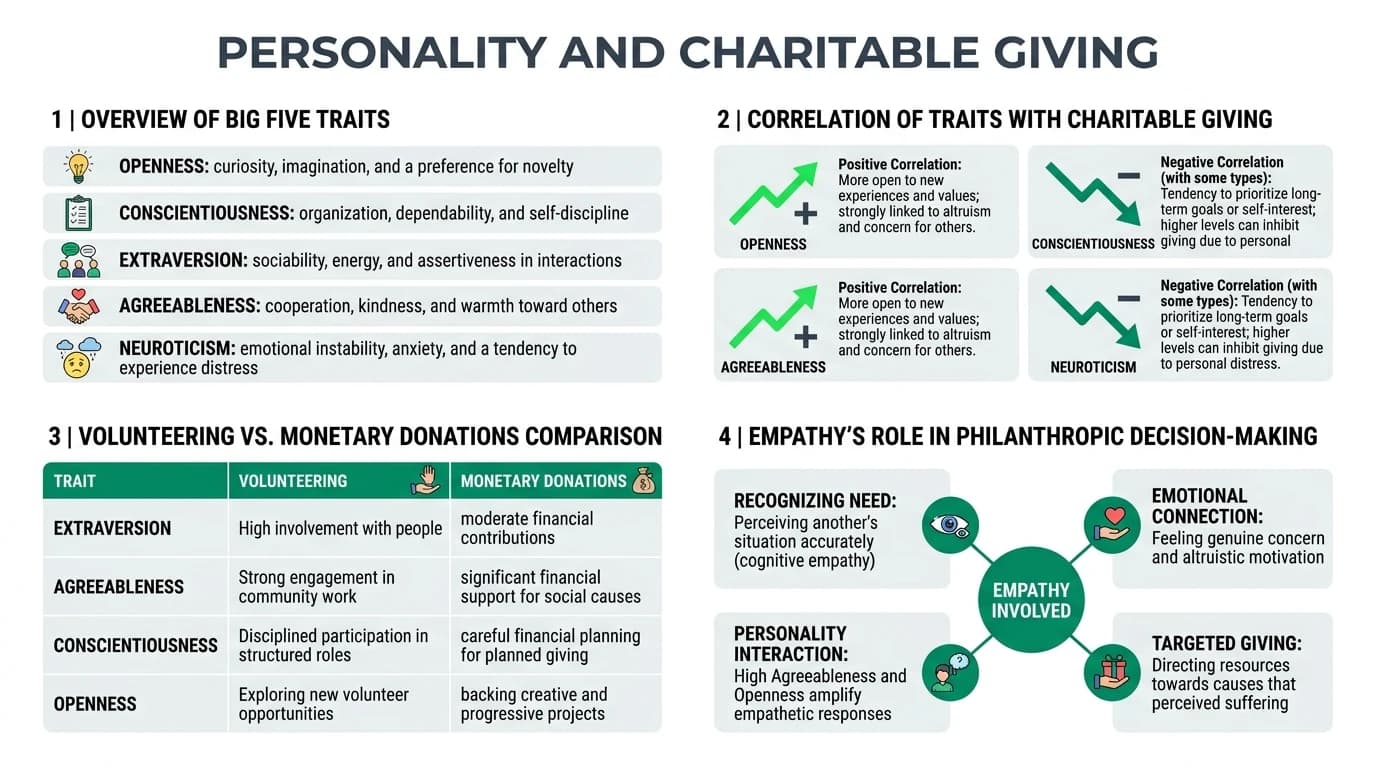
Openness to experience and agreeableness are positively linked to charitable giving, while conscientiousness and neuroticism often show inverse relations.
Source: University of Sheffield
Executive Summary
Understanding how personality affects charitable giving can help nonprofits tailor their approaches and individuals reflect on their altruistic behaviors. The Big Five personality traits—openness, conscientiousness, extraversion, agreeableness, and neuroticism—play a significant role in influencing donation and volunteering behaviors.
The bottom line: Openness and agreeableness often encourage giving, while conscientiousness and neuroticism may deter it.
Critical Warning: Correlations are modest and do not imply causation. Individual differences and external factors also play a role.
What Are the Big Five Personality Traits?
The Big Five personality traits, often abbreviated as OCEAN, include:
- Openness to Experience: Creativity and willingness to try new things.
- Conscientiousness: Organization and dependability.
- Extraversion: Sociability and assertiveness.
- Agreeableness: Compassion and cooperativeness.
- Neuroticism: Emotional instability and anxiety.
These traits help predict various behaviors, including how people engage in charitable activities.
| Trait | Description |
|---|---|
| Openness | Creativity, open-mindedness |
| Conscientiousness | Organization, reliability |
| Extraversion | Sociability, energy |
| Agreeableness | Compassion, friendliness |
| Neuroticism | Emotional instability, anxiety |
How Do These Traits Affect Charitable Giving?
Each trait influences giving behavior differently:
- Openness: Encourages both time and money donations.
- Agreeableness: Linked to financial generosity.
- Extraversion: Favors volunteering over monetary donations.
- Conscientiousness: Often inversely related to donations.
- Neuroticism: Can negatively impact giving.
| Trait | Time (Volunteering) | Money (Giving) |
|---|---|---|
| Openness | Positive, strong | Positive, dominant |
| Conscientiousness | Inverse | Inverse |
Why Is Openness to Experience Linked to Philanthropy?
Openness is associated with curiosity and a willingness to engage with new experiences, making individuals more likely to participate in diverse charitable activities.
- Effect: Strong positive impact on donations.
- Process: Openness encourages exploration of giving opportunities.
- Caveat: Cultural and situational factors can moderate this effect.
Does Extraversion Increase Volunteering More Than Giving?
Extraverts are naturally inclined to seek social interactions, making them more likely to volunteer.
- Key Insight: Stronger link to volunteering than financial giving.
- Reason: Preference for interactive roles.
- Example: Community events, group activities.
How Does Neuroticism Affect Donation Behavior?
Neuroticism, characterized by anxiety and emotional instability, often correlates with reduced charitable behavior.
- Effect: Negative impact on both time and money donations.
- Reason: Emotional challenges may hinder altruistic actions.
- Consideration: Supportive environments can mitigate these effects.
Is There an Overlap Between Personality Traits and Empathy in Giving?
Empathy often overlaps with agreeableness, enhancing the likelihood of charitable actions.
- Overlap: Agreeableness and empathy both promote giving.
- Impact: Empathy drives compassionate responses.
- Research Gap: More studies needed on empathy's role in decision-making.
What Are the Implications for Nonprofits?
Understanding these personality links can help nonprofits:
- Target Fundraising: Tailor approaches based on donor traits.
- Volunteer Retention: Engage extraverts in social roles.
- Campaign Design: Utilize openness to attract diverse donors.
| Trait | Pros for Philanthropy | Cons |
|---|---|---|
| Openness | Diverse engagement | May lack focus |
| Agreeableness | Financial generosity | May avoid conflict |
| Extraversion | Volunteer enthusiasm | May prefer short-term |
Action checklist
- Identify target traits for fundraising strategies.
- Design volunteer roles that appeal to extraverts.
- Incorporate empathy-building activities in campaigns.
FAQ
Which Big Five trait most predicts charitable donations?
Does extraversion increase volunteering more than giving?
Why is openness to experience linked to philanthropy?
How does neuroticism affect donation behavior?
Is there overlap between personality traits and empathy in giving?
Do conscientious people donate less time or money?
What datasets prove Big Five-charity links?
Notes
Primary Sources
| Source | Type | URL |
|---|---|---|
| University of Sheffield | Peer-reviewed | Link |
| PubMed/PMC | Meta-analysis | Link |
| ERNOP | Peer-reviewed | Link |
Conclusion
Personality traits significantly influence charitable behaviors, with openness and agreeableness encouraging giving, while conscientiousness and neuroticism may deter it. Understanding these dynamics can enhance nonprofit strategies and personal growth.