career
Personality and Architecture Design Careers: Big Five Traits in Architects
Explore how the Big Five personality traits influence architects in creativity, precision, client collaboration, deadline pressure, and sustainable design.
Quick answer
What are the top Big Five personality traits for architects?
1. High Openness: Curious, imaginative for creative design. 2. High Conscientiousness: Disciplined, structured for precision and deadlines. 3. Low Neuroticism: Emotionally stable under pressure. 4. Social Responsibility: Concern for fair outcomes and clients.
Source: CareerExplorer
Executive Summary
Curious about what makes a great architect? The Big Five personality traits offer insights into how architects balance creativity and precision. High openness fuels innovation, while conscientiousness ensures accuracy. These traits also influence client collaboration and handling deadline pressure.
The bottom line: Successful architects blend creativity with precision, leveraging their personality traits to thrive in a demanding field.
Critical Warning: While personality traits provide valuable insights, they are not the sole determinants of success in architecture. Skills, experience, and education are equally important.
What Are the Big Five Traits in Architects?
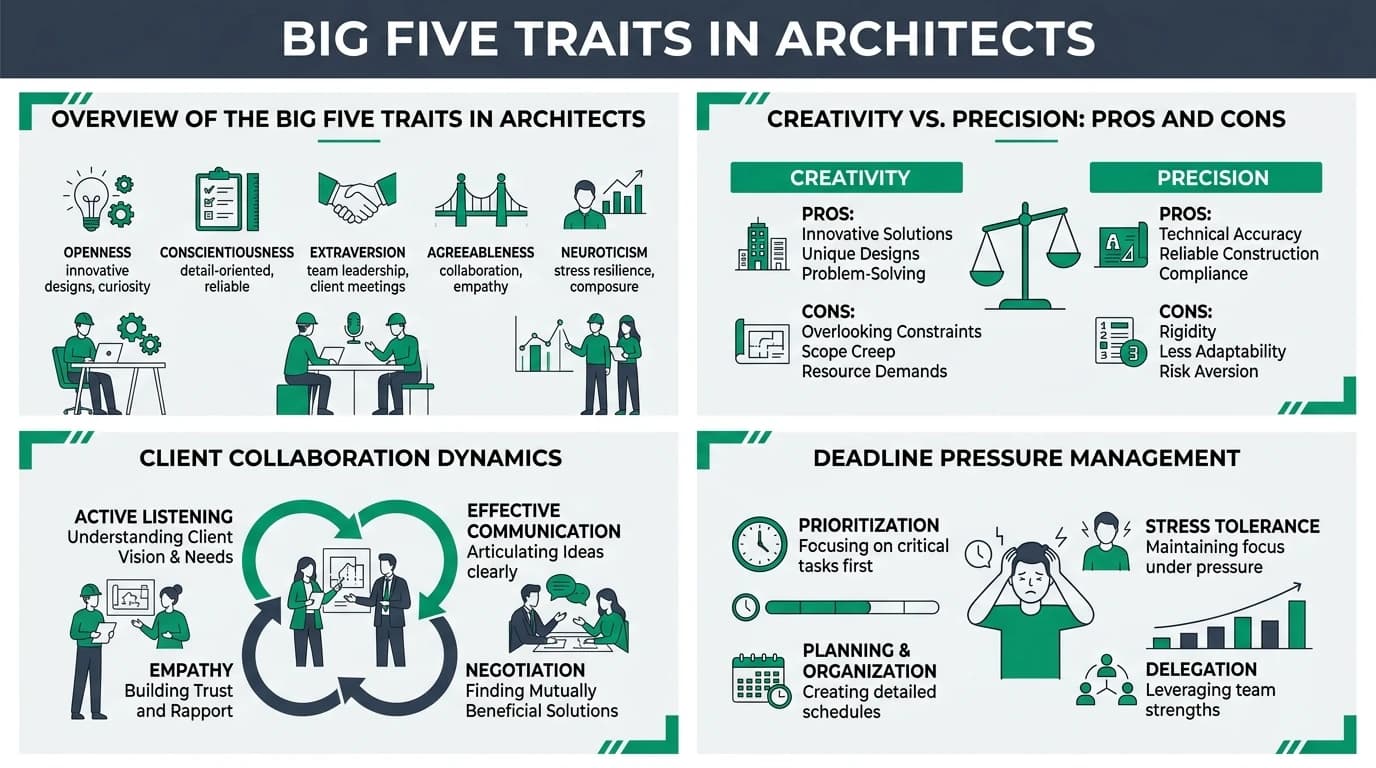
The Big Five personality traits—openness, conscientiousness, extraversion, agreeableness, and neuroticism—play a pivotal role in the architecture field.
| Trait | Description | Impact on Architecture |
|---|---|---|
| Openness | Curious, imaginative | Drives creative design and problem-solving |
| Conscientiousness | Disciplined, organized | Ensures precision and adherence to deadlines |
| Extraversion | Sociable, outgoing | Aids in client interactions and teamwork |
| Agreeableness | Cooperative, empathetic | Enhances client collaboration |
| Neuroticism | Emotional stability | Helps manage stress and high-pressure tasks |
Key Takeaways:
- High Openness: Essential for innovative design.
- High Conscientiousness: Critical for precision and meeting deadlines.
- Low Neuroticism: Important for emotional stability.
How Do Creativity and Precision Coexist in Architecture?
Architects often juggle creativity with precision, a task influenced by their personality traits.
| Aspect | Creativity | Precision |
|---|---|---|
| Pros | Encourages innovation and unique solutions | Ensures accuracy and compliance with standards |
| Cons | May lead to impractical ideas without constraints | Can stifle creativity if overly rigid |
Key Takeaways:
- Balance: Successful architects find harmony between creative freedom and technical accuracy.
- Development: Training can enhance both creative and precise skills.
How Important Is Client Collaboration?
Client collaboration is crucial in architecture, requiring certain personality traits for success.
| Challenge | Ideal Trait | Outcome |
|---|---|---|
| Misaligned visions | Agreeableness | Better alignment and understanding |
| Budget disputes | Social Responsibility | Fair negotiations and client satisfaction |
Key Takeaways:
- Agreeableness: Facilitates effective communication and understanding.
- Social Responsibility: Ensures ethical and fair client interactions.
How Do Architects Handle Deadline Pressure?
Deadline pressure is a common challenge in architecture, where personality traits can make a difference.
| Trait | Low Performer | High Performer |
|---|---|---|
| Neuroticism | Cracks under pressure | Remains calm and stable |
| Determination | Quits easily | Hustles to meet deadlines |
Key Takeaways:
- Low Neuroticism: Helps maintain composure under pressure.
- Determination: Drives perseverance and timely project completion.
What Role Does Sustainable Design Play?
Sustainable design is increasingly important in architecture, influenced by certain personality traits.
| Trait | Application |
|---|---|
| Openness | Encourages eco-innovation and creative solutions |
| Conscientiousness | Ensures compliance with environmental standards |
Key Takeaways:
- Openness: Vital for innovative sustainable solutions.
- Conscientiousness: Necessary for adhering to environmental regulations.
How Do Personality Types Fit in Design Teams?
Different personality types contribute uniquely to design teams.
| Type | Description | Team Benefit |
|---|---|---|
| Type 6 | Loyalist/Skeptic | Provides stability and reliability |
| Type 3 | Achiever/Performer | Drives performance and results |
Key Takeaways:
- Type 6: Offers stability in decision-making.
- Type 3: Enhances team performance and goal achievement.
Action checklist
- Identify your dominant Big Five traits.
- Develop skills to balance creativity and precision.
- Enhance client collaboration skills through empathy and communication.
- Build resilience to manage deadline pressure effectively.
- Stay informed on sustainable design practices.
FAQ
What Big Five traits do successful architects have?
How does high openness help in architecture design?
Why is conscientiousness important for architects?
Can introverted people become architects?
How do architects handle client collaboration?
What personality types excel under deadline pressure?
Do architects need strong social responsibility?
Notes
Primary Sources
| Source | Type | URL |
|---|---|---|
| CareerExplorer | Industry survey | CareerExplorer |
| EngiMBA | Industry analysis | EngiMBA |
Conclusion
Understanding the Big Five personality traits can help aspiring architects identify their strengths and areas for growth. Balancing creativity with precision, managing client relationships, and handling deadline pressures are all influenced by these traits.