career
Personality and Accounting Finance Careers: Big Five Traits in Auditors and Analysts
Explore how Big Five personality traits influence careers in accounting and finance, focusing on auditors and analysts.
Quick answer
How do Big Five personality traits affect accounting and finance careers?
Conscientiousness is key for auditors and analysts, predicting job success through detail orientation and ethics under pressure.
Source: Emerald Insight
Executive Summary
Curious about how personality influences careers in accounting and finance? The Big Five personality traits—Openness, Conscientiousness, Extraversion, Agreeableness, and Neuroticism—play a crucial role in determining success in roles like auditors and analysts.
The bottom line: Conscientiousness stands out as the strongest predictor of job performance, especially in high-stakes environments where detail orientation and ethics are paramount.
Critical: While traits like conscientiousness are predictive, they are not deterministic. Situational factors also influence career success.
What Are the Big Five Personality Traits?
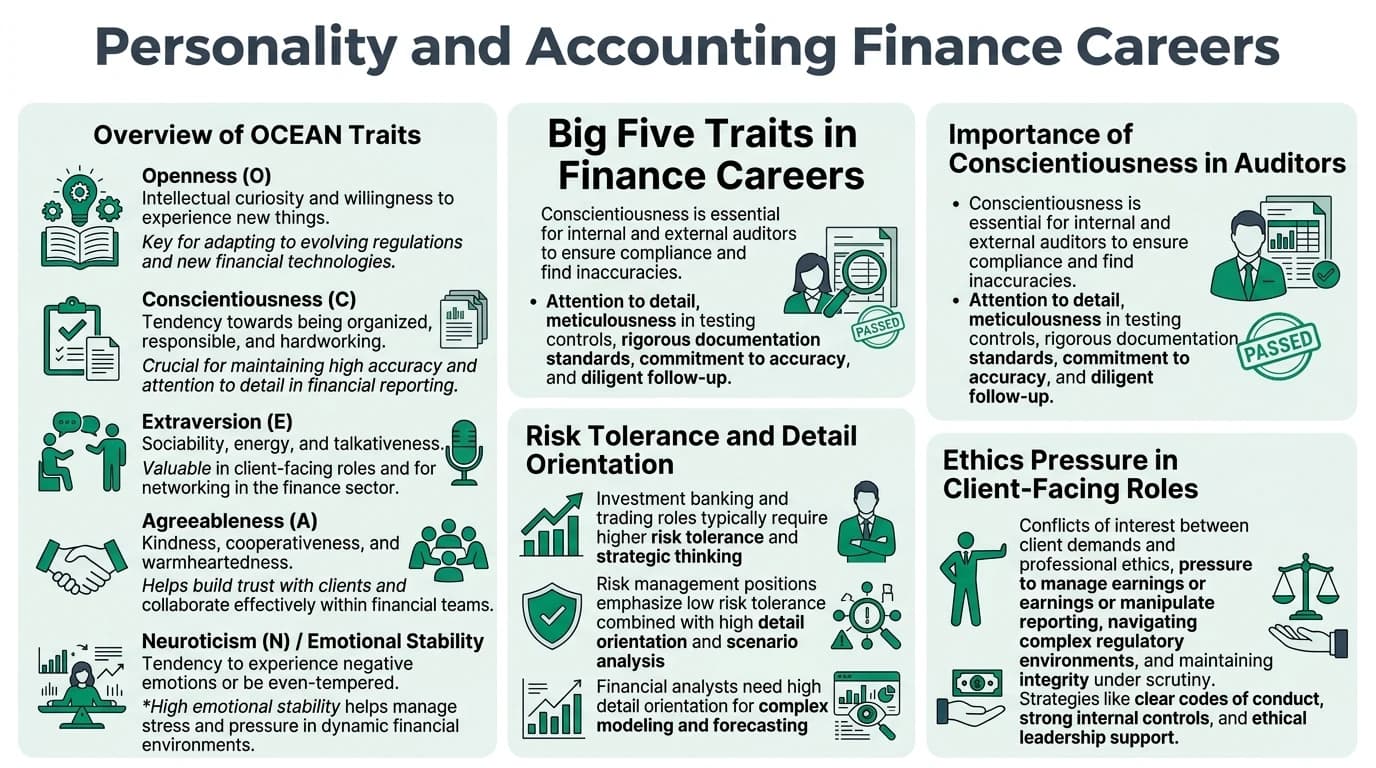
The Big Five personality traits, often referred to by the acronym OCEAN, provide a framework for understanding human behavior. Here's a quick look:
| Trait | High Description | Low Description |
|---|---|---|
| Openness | Curious, creative, open to new ideas | Prefers routine, resists change |
| Conscientiousness | Organized, reliable, detail-oriented | Spontaneous, careless, procrastinates |
| Extraversion | Sociable, energetic, outgoing | Reserved, solitary, introspective |
| Agreeableness | Cooperative, kind, empathetic | Competitive, critical, uncooperative |
| Neuroticism | Emotionally reactive, anxious | Calm, stable, resilient |
Why Is Conscientiousness Important in Accounting?
Conscientiousness is a key trait for accountants due to its link with:
- Detail Orientation: Ensures accuracy in financial reporting.
- Reliability: Essential for meeting deadlines and maintaining trust.
- Ethical Standards: Supports adherence to regulations and ethical guidelines.
| Level of Conscientiousness | Strengths | Weaknesses | Career Example |
|---|---|---|---|
| High | Detail-focused, dependable | May resist change | Auditor |
| Medium | Balanced, adaptable | Moderate reliability | Financial Analyst |
| Low | Flexible, spontaneous | Prone to errors, less structured | Creative Accounting Roles |
How Do Auditors and Analysts Differ in Personality Needs?
Auditors and analysts both require specific personality traits for success, but the emphasis differs:
| Trait | Auditor Ideal | Analyst Ideal | Evidence Source |
|---|---|---|---|
| Openness | Low to Moderate | Moderate to High | Emerald Insight |
| Conscientiousness | High | High | Simply Psychology |
| Extraversion | Moderate | Moderate to High | MAB Online |
| Agreeableness | High | Moderate | Florida Tech Online |
| Neuroticism | Low | Low to Moderate | PositivePsychology.com |
How Does Risk Tolerance Relate to Personality?
Risk tolerance is crucial in finance, where decisions can have significant impacts. Personality traits influence this:
- Openness: High openness supports risk-taking and innovation.
- Neuroticism: Low neuroticism helps manage stress and uncertainty.
| Trait | High Risk Tolerance Link | Example Role |
|---|---|---|
| Openness | Embraces ambiguity, innovative | Venture Capitalist |
| Neuroticism | Handles stress well, stable | Portfolio Manager |
How Do Personality Traits Influence Ethics Under Pressure?
Ethical decision-making in accounting is influenced by:
- Conscientiousness: Promotes rule-following and integrity.
- Agreeableness: Encourages cooperation and ethical collaboration.
| Scenario | Key Trait | Outcome |
|---|---|---|
| Deadline Pressure | High Conscientiousness | Thorough review, ethical adherence |
| Client Negotiations | High Agreeableness | Positive relationships, ethical solutions |
What About Client-Facing Roles?
Extraversion and agreeableness are vital for client-facing roles, ensuring effective communication and relationship management:
- Extraversion: Facilitates networking and presentations.
- Agreeableness: Supports teamwork and client satisfaction.
| Trait | Pros | Cons | Finance Application |
|---|---|---|---|
| Extraversion | Strong communication, persuasive | May overlook details | Client Manager |
| Agreeableness | Builds trust, cooperative | May struggle with assertiveness | Customer Relations Specialist |
How Can You Use This Information in Hiring?
Understanding personality traits can help in hiring the right fit for accounting and finance roles:
- Conscientiousness: Look for candidates who are detail-oriented and reliable.
- Agreeableness: Ideal for roles requiring teamwork and client interaction.
| Job Role | Top Trait | Why |
|---|---|---|
| Auditor | High Conscientiousness | Ensures accuracy and ethical standards |
| Financial Analyst | Moderate Openness | Balances analysis with innovation |
FAQ
What Big Five trait is most important for auditors?
How does conscientiousness predict accounting success?
Are introverts good at financial analysis?
Does high openness help in risk-tolerant finance roles?
How do personality traits influence ethical decisions in accounting?
What personality tests do accounting firms use?
Can low neuroticism improve client-facing performance?
Notes
Primary Sources
| Source | Type | URL |
|---|---|---|
| Emerald Insight | Peer-reviewed chapter | https://www.emerald.com/books/edited-volume/14811/chapter/85902073/The-Big-Five-Personality-Traits-and-Accountants |
| MAB Online | Systematic literature review | https://mab-online.nl/article/116510/ |
Conclusion
Understanding the Big Five personality traits can significantly impact career success in accounting and finance. By aligning traits such as conscientiousness and agreeableness with job roles, individuals and employers can enhance performance and job satisfaction.