personality-tests
How the Big Five Personality Traits Influence Consumer Psychology and Marketing
Discover how the Big Five personality traits shape consumer behavior and marketing strategies.
Quick answer
How do the Big Five personality traits influence consumer behavior?
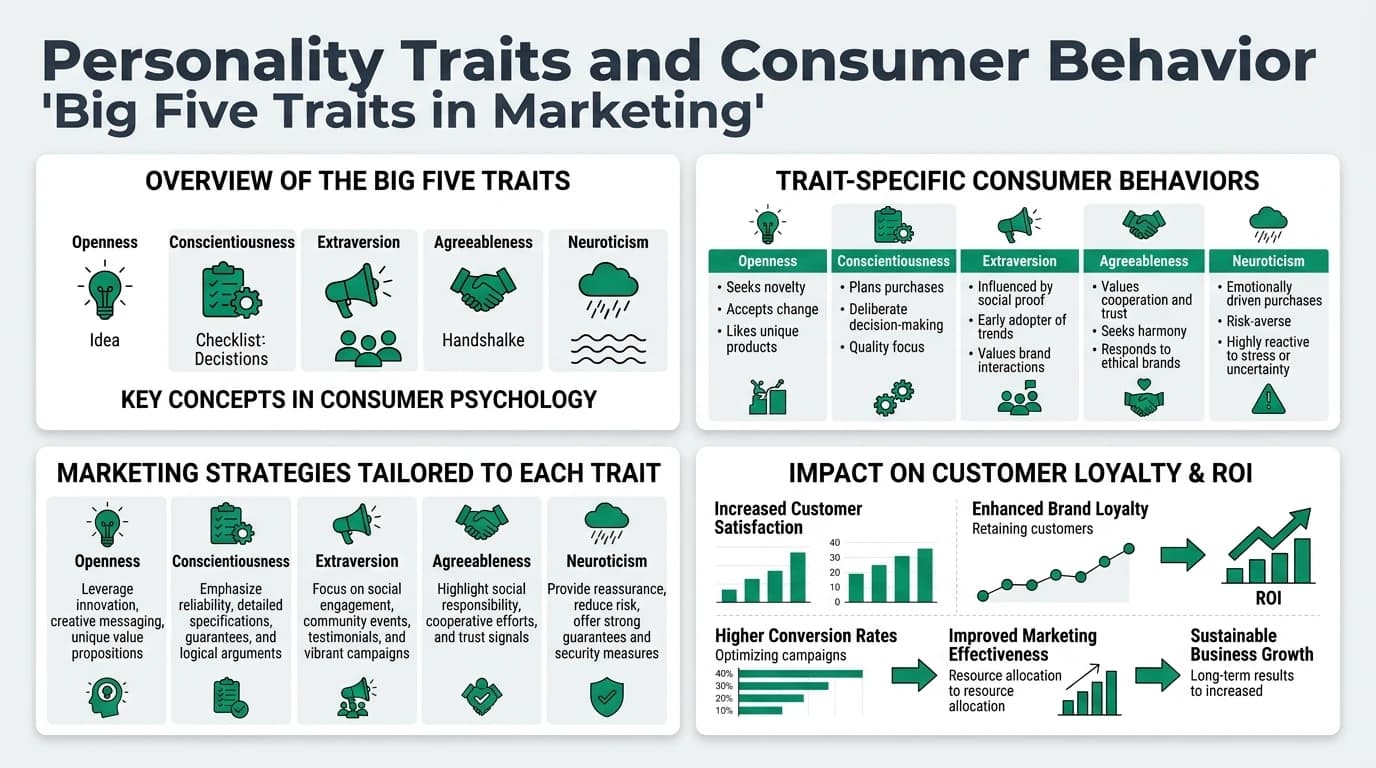
The Big Five traits affect consumer behavior by shaping preferences and buying decisions. For example, openness leads to seeking novel products, while conscientiousness drives loyalty to reliable brands.
Source: PMC/NIH
Executive Summary
The Big Five personality traits—openness, conscientiousness, extraversion, agreeableness, and neuroticism—play a crucial role in consumer behavior. These traits influence how people make purchasing decisions, respond to marketing, and develop brand loyalty.
The bottom line: Understanding these traits allows marketers to tailor strategies, improving customer engagement and ROI.
Critical Warning: While the Big Five provides valuable insights, individual differences and cultural factors can moderate these effects.
What are the Big Five Personality Traits?
The Big Five traits are a widely recognized framework for understanding personality. Here's a quick look at each:
- Openness: Creativity and willingness to try new things.
- Conscientiousness: Organization and reliability.
- Extraversion: Sociability and energy from social interactions.
- Agreeableness: Compassion and cooperation.
- Neuroticism: Emotional sensitivity and tendency towards anxiety.
| Trait | Description | Consumer Behavior Example |
|---|---|---|
| Openness | Embraces novelty and creativity | Prefers innovative products |
| Conscientiousness | Values organization and reliability | Loyal to established brands |
| Extraversion | Energized by social interactions | Prone to impulsive buys in social settings |
| Agreeableness | Cooperative and trusting | Influenced by social proof and testimonials |
| Neuroticism | Emotionally sensitive | Prefers low-risk, secure options |
How Does Openness Affect Consumer Choices?
Openness leads consumers to seek out novel and creative products. Marketers can leverage this by:
- Highlighting innovation: Showcase unique features.
- Offering variety: Provide diverse product options.
- Engaging storytelling: Use creative narratives in ads.
| Marketing Strategy | High Openness Response |
|---|---|
| Innovative Products | High interest |
| Creative Campaigns | Strong engagement |
| Diverse Options | Increased exploration |
Why Do Extraverts Make Impulsive Purchases?
Extraverts thrive on social interactions and excitement, often leading to impulsive buying. Key strategies include:
- Interactive events: Host social shopping nights.
- Engaging environments: Create lively retail spaces.
- Limited-time offers: Encourage quick decisions.
| Strategy | Extravert Impact |
|---|---|
| Social Events | High participation |
| Lively Stores | Increased foot traffic |
| Flash Sales | Boosted impulse buys |
How Can Marketers Target Conscientious Consumers?
Conscientious consumers value reliability and thorough information. Effective tactics are:
- Detailed descriptions: Provide comprehensive product info.
- Trust signals: Highlight reviews and certifications.
- Loyalty programs: Encourage repeat purchases.
| Approach | Conscientious Response |
|---|---|
| Detailed Info | Increased trust |
| Reviews & Ratings | Higher engagement |
| Loyalty Rewards | Strong brand loyalty |
What Role Does Neuroticism Play in Brand Preference?
Neuroticism often leads to risk-averse behavior. To appeal to these consumers:
- Low-pressure messaging: Avoid aggressive sales tactics.
- Secure options: Emphasize safety and guarantees.
- Reassuring communication: Provide clear, calming information.
| Strategy | Neuroticism Impact |
|---|---|
| Risk-Free Trials | Increased comfort |
| Guarantees | Higher conversion |
| Calm Messaging | Enhanced trust |
Does Agreeableness Influence Word-of-Mouth Marketing?
Agreeable individuals value community and social proof, making them ideal for:
- Testimonials: Use customer stories and reviews.
- Community building: Foster a sense of belonging.
- Social responsibility: Highlight ethical practices.
| Tactic | Agreeableness Effect |
|---|---|
| Customer Stories | Stronger connections |
| Community Events | Active participation |
| Ethical Branding | Positive perception |
Can Personality Traits Improve Marketing Segmentation?
Yes, by aligning marketing strategies with personality traits, businesses can:
- Enhance targeting: Reach the right audience effectively.
- Personalize experiences: Tailor messages to individual preferences.
- Boost ROI: Increase engagement and conversion rates.
| Benefit | Outcome |
|---|---|
| Better Targeting | Higher engagement |
| Personalized Ads | Improved relevance |
| Increased ROI | Greater profitability |
Action checklist
- Identify target audience traits using surveys.
- Align marketing strategies with identified traits.
- Monitor and adjust campaigns based on consumer feedback.
FAQ
What are the Big Five personality traits?
How does openness affect consumer choices?
Why do extraverts make impulsive purchases?
How can marketers target conscientious consumers?
What role does neuroticism play in brand preference?
Does agreeableness influence word-of-mouth marketing?
How do Big Five traits predict brand loyalty?
Notes
Primary Sources
| Source | Type | URL |
|---|---|---|
| PMC/NIH | Peer-reviewed | pmc.ncbi.nlm.nih.gov/articles/PMC10814197/ |
| Greenbook.org | Industry research | greenbook.org/insights/market-research-trends/the-trait-theory-of-personality-in-consumer-behavior |
Conclusion
Understanding the Big Five personality traits allows marketers to create more effective strategies by aligning with consumer preferences. This approach not only enhances engagement but also boosts brand loyalty and ROI.